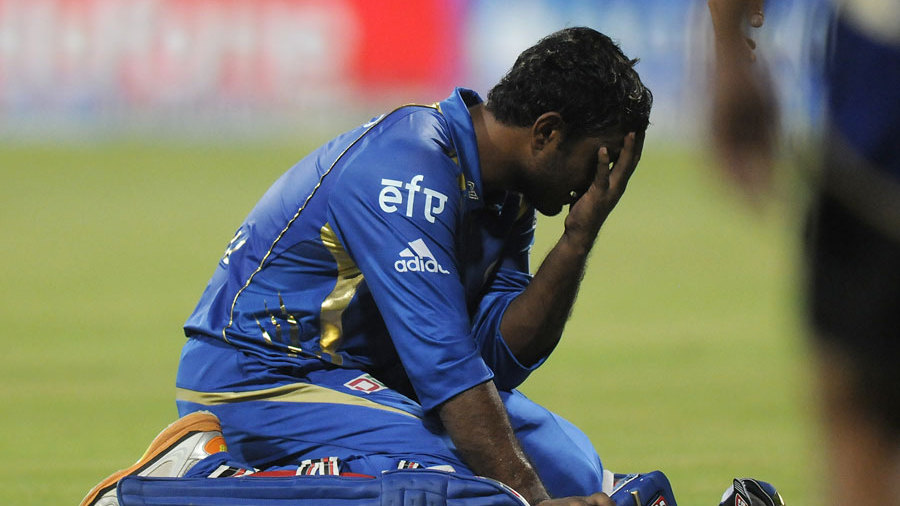





Aaron Finch and Ambati Rayudu pick apart the intricacies of batting and captaincy in the shortest format.
From its scattershot beginnings, T20 cricket has evolved into a highly specialised format, demanding precise and distinct skill sets from batters, bowlers and captains. As cricketers who have seen and been part of this transformation, Ambati Rayudu and Aaron Finch, in a chat during this year's IPL, unpacked the modern complexities of batting and captaincy, and the unique challenges the game's shortest format imposes on players.
Ryan Rickelton, as current and as modern a player as we've had in a while, has said: "I grew up wanting to be a Test player and thought that in T20 you can just whack a few. But T20 cricket is flipping hard. It's different, but it's harder. With T20s, there's a lot more pressure on every delivery. In Test cricket, you can bide your time, work your way through it at a lower intensity." Having experienced the game evolve and played multiple formats yourselves, where would you rate T20 in terms of just difficulty and intensity?
Ambati Rayudu: I think in terms of physical intensity, it is quite high. It's quite tough because it's more like a football game than an actual conventional cricket game. So even mentally you get drained sometimes because every ball is an event. You need to be very focused every ball. It is quite intense and it was a shock for me as well when I just started playing T20 cricket.
Aaron Finch: Having played it from almost the start - I started in 2009 professionally - to see where it is now, I think the training and everything has changed dramatically right throughout that period. And I guess it's like most things - the more information you get, the better you're equipped to deal with it. But like Rayudu said, the intensity that you have to have from ball one and the understanding that one small mistake with bat, ball or in the field can have huge momentum swings in the game, I think that that just gives you a little bit more anxiety than in a 50-over game, where physically it's still extraordinarily hard. But that's purely time on your feet, whereas in T20, it's movement, it's intensity - short, sharp bursts. If you open the batting or you bat for a period of time and then you go out and field, sometimes you might play a day game where it's 45 degrees. So that all adds up to a very taxing game.
Rayudu: And I would say the heart rates are generally very high in T20 cricket. Later on in my career over the last few years, I realised that breathing is a big thing in T20 cricket. I mean, good, deep breathing. Being calm is very important.
 "In T20, the understanding that one small mistake with bat, ball or in the field can have huge momentum swings, that just gives you a little bit more anxiety than a 50-over game"
Aaron Finch
"In T20, the understanding that one small mistake with bat, ball or in the field can have huge momentum swings, that just gives you a little bit more anxiety than a 50-over game"
Aaron Finch

Finch: It's a big thing in life too, man (laughs). The time that we stop is the time that we stop!
So that anxiety in this format, where you find yourself actually investing in the game long before you've actually gone out to bat, and then the heart rate rises, is that different from ODI cricket or Test cricket? Even if there is, say, a pressure situation?
Rayudu: I think I can answer that better, because Finchy has opened most of the time. Being a middle-order batter, you tend to keep playing the sport or keep playing your innings even before you've walked in, because every ball you would be actually involved and thinking that, okay, this ball you are going to do this, or the bowler is bowling a certain pattern, these are the loose balls that you might get. These are the areas that you can target. So the game keeps playing in your head even while you are sitting in the dugout. But I don't know how it is for an opener.
And like we discussed once, you never did the thing of not watching the game while you waited, which people tend to do in a lot of other formats, or even in this format - like MS [Dhoni] will stay out of the dugout.
Rayudu: Even a lot of other formats I would never watch as much. I would want to just keep it to myself. Go and face a few balls and then decide for myself what is happening. But in this format, you can't afford to do that. You have to be really pumped up.
Finch: My career started, for a handful of games, at No. 6. Then I opened the batting, and then towards the back end of my career I batted at No. 4. The big anxiety that I had batting in the middle order compared to the top is [that] you don't know what you're facing. You could bat at No. 4. and you [could be] in in the first over, or you could be in the 20th over or you could be in in the 12th over. Like, you just don't know the situation [you might come in at].
So the ability to remain calm and not overplay every single scenario that you face before you've faced it is a really difficult one, because you can talk yourself out of situations as well at times. But I know from an opening point of view you have an idea of exactly what you're going to face. If I was for Australia against India, I knew that Bhuvi [Bhuvneshwar Kumar] and [Jasprit] Bumrah were coming with the new ball, and then [Mohammad] Shami started to play a bit more, so you could prepare for that both mentally and technically, and you'd understand where your targets were, what you wanted to achieve in the first couple of overs versus coming into the middle order. That's just playing what's already happened in front of you and reacting to that game situation.
'T20 is such a brutal game. One ball can be the difference'

In T20, does the anxiety begin in the preparatory phase, as against when you actually walk out?
Rayudu: Especially for a middle-order batter who would face far fewer balls, yeah, I think you need more practice. At least because the more balls you hit, the more in form you are, in terms of hitting the ball. Otherwise when you walk in, you do not have the luxury of time to get set and hit the ball. So in T20, you tend to practise a lot more - at least the teams that I have been a part of, you want to practise a lot more - than your openers.
Finch: Because you might go two or three games without getting a hit, or you miss out one time and then your team chases down a total quickly.
Is that common to all those guys who play that unique role? Your Tim Davids, your Kieron Pollard, yourself, at times, all of them would spend more time sort of range-hitting than your top three?
Rayudu: The top three play a lot of new ball [spells], they look at their timings, but the middle-order batters tend to practise [facing] a lot more balls. Also because you want your hitting rhythm to be top notch. You can't go there and be rusty.
So when you go into the nets as well, is your preparation that much different? That even on your first ball in the nets, you're looking to just hit, just practise your swing?
Rayudu: I would not do that, in terms of setting my mindset up. Maybe in my early years, but later on it was more [about] also my timing and the rhythm. If it was in place, then you are confident that, okay, you can walk into the game and really do what the team needs you to do. But otherwise, to get into the rhythm itself took a lot of time. So, you know, there's a lot more practice attached to T20 than the other formats, I feel.
Finch: Yeah, and for me you have to break [it] down when you're training. So in the lead-up to a tournament or a series, I would always practise a lot. You'd hit a lot of balls and the first phase of that would generally look like quantity. You're just looking for pure bat on ball. Make sure that your technique's quite sound.
"I think the biggest challenge was playing in an open ground. It tells you how good your game is, generally, when you're hitting a ball. Are you hitting gaps? Are you able to clear the ground easily?"
Ambati Rayudu on the advantages of training in open nets
Because I felt my power was always there. I never had any issues with that. But if I could get off strike, that meant that my technique and my thought process was pretty good. So I was a high boundary-hitter, but a high dot-ball taker as well in the powerplay. A lot of guys are - the field's up, you struggle to get it through. But if I could get off strike, it meant my technique was pretty good. And then I could start to expand into just playing all-out attack.
And the closer you got to the tournament, the more I would get into that mindset of, "I'm hitting from ball one", just as an exercise. Not pre-planning for any particular opposition, but it was just an exercise of, "Right if we're chasing 250, what do I need to do to be able to get us off to a good start?"
And then the tournament starts and you start to get into the rhythm, and you might have travel days where you don't get an opportunity to train. You might play three times in a week without training [sessions]. So then you just have to make sure that that bulk of work is done in the lead-up to the tournament.
The drill of a training session in ODI and Test cricket has somewhat changed when it comes to T20 cricket. You say you practise more balls. The conventional net had to be altered - eventually the roof went away, so you actually know what kind of elevation and distance you were getting. Match simulations came in. What actually helped enhance your skills as a T20 batter, when it came to preparation?
Rayudu: I think the biggest challenge was playing in an open ground, which I was very fortunate [to be able to do] because - I played for MI, who always used to practise in the centre of Wankhede, and also CSK practiced at the centre. A lot of other teams who haven't practiced at the centre have actually struggled a little bit in the IPL. If you look at Punjab Kings, if you look at Delhi, they've never…
So what that does is, it tells you how good your game is, generally, when you're hitting a ball. Are you hitting gaps? Are you able to clear the ground easily? You know which bowlers you are comfortable against. So I felt playing in an open net was very, very key and crucial.
'Centre-wicket practice is a game changer for a T20 batter'

And also at the start of the pre-season, like how Finch mentioned, I personally used to go really hard to see which [shot] is working and which is not, which [ones] I have to work on eventually. So it is like you play all your shots in the first two or three days so that you know which one is coming off, which is not, where you need to spend more time. And then, eventually, you start working on that. And as the season comes closer, obviously you cut down on the amount of practice, but by that time all the rust would have worn off.
Finch: We don't have the luxury in Australia of playing on the centre wicket at practice. So you're just stuck in the nets. The only time you're in the middle, you might be able to do some full-toss range-hitting at some grounds. Only some. Some grounds are very, very particular about you going anywhere near the square.
So we have to do things slightly different, I guess. And we have more indoor facilities and nets, whereas in the IPL and in India, in particular, guys have access to grounds regardless of whether it's the ground that you're going to be playing on. But even just seeing where the ball goes… I mean, the net's a metre away, so you're not getting a huge amount of information. And that's where you can fall into a trap at times of, like, are you hitting it well? It can be hitting the middle of the bat, but is it going where you wanted it to go? Like, you're playing a cover drive and you have in your head where the fielders are. But is it going there? Are you finding gaps?
Let's talk home grounds for now - just knowing that this is how well I need to hit it in order for it to clear X boundary, Y boundary at Chepauk…
Finch: One hundred per cent. And you're also playing [training] on the surfaces that you play on in the ground. You turn up for a game for Australia having not been allowed anywhere near the centre wicket at the MCG or Perth Stadium or Adelaide Oval. So that's quite unique. Maybe touring teams, especially from the subcontinent, that are used to hitting balls out in the middle do find that a little bit difficult because you just don't get access to it in Australia.
"In T20, you can bring your technique, you can bring all the other basic things, but this format is very unique, because on the crease, one ball will dictate how the over is going to be"
Ambati Rayudu
Can you take me through when it started? It had to be somebody's idea that it is going to help us if we start practising on the centre wicket of the Wankhede or Chepauk as against in the nets.
Rayudu: I think it must be Sachin Tendulkar, if I'm not wrong. Because he loved practising. And he loved practising in the centre of Wankhede in Mumbai. [Nobody would] turn the lights off even if he wanted to practise all night there. So that was the luxury that we had because he was around. And everybody used to really hit a lot of balls.
Finch: Because it's new, it's exciting. Because you don't get access to it all that often. And even as simple as doing range-hitting out in the middle, to get your range, to understand...
You can hit as many balls in the nets as you want in Australia with the roof on the nets. And I was always taught to keep the ball in the net as a youngster growing up. But to have the ability to just see where it's going, it's such an advantage.
Did you have fielders stationed as well? Have simulations evolved to see if you're clearing fielders?
Rayudu: I don't think that would matter as much once you have an open net, because you have a fair idea of where the fielders are going to be, where the gaps are. And the best part is, you know how far you're hitting. And also, being a middle-order batter, for me it was more [about] how the surface was. Okay, which length is easier to hit? Can I still hit a ball that is a bowled slow off a length? Can I still go straight? That's the comfort level that centre-wicket practice gives you.
Is there any other aspect in your part of the world, Finchy, where T20 cricket is different from in India?
Finch: All of the grounds [in Australia] are so different. You go to the Gabba and there's always one enormous side and one reasonably short. The MCG is huge square, short straight. Adelaide Oval, short square, huge straight. So you just have to be adept at playing every situation differently, understanding what works in different scenarios.
'Centre-wicket practice is a game changer for a T20 batter'

And I guess it probably makes you appreciate when you get to a small ground and fast outfields like India, where if you hit a late cut off a spinner, it runs away for four. At the MCG, that plugs into the damp grass and you get one if you're lucky. So I think it just gives you a different perspective on the game more than anything. The skills are still there. You still see guys pumping sixes 90 metres at the MCG. Here [in India] you have to hit it 65 [metres to clear the boundary].
We tend to believe that Test cricket tests you every ball, or that's what we thought. But in T20 cricket, are you actually tested more every ball? Is there an expectation for you to actually be at your best every ball in this format as against Test cricket?
Rayudu: You have to be at your best at every ball in every format, to be honest. But you can actually give up a couple of balls without much cost in other formats. If you're feeling tired, you just run three. If it's a hot day you can let a few go and it's not going to be the end of the world. However, you don't have the option of leaving the ball in T20 sometimes.
You can bring your technique, you can bring all the other basic things, but this format is very unique that way because, [on] the crease, one ball will dictate how the over is going to be, how the bowler is going to go. Because if you play four singles, the bowler is under tremendous pressure in the last two balls to bowl to you as a batter. But if you play three dot balls, he knows that he can [concede] a six and still try and get you out. So a lot changes in every single ball that you face as a batter. If you get a boundary off the first ball, obviously it makes things easier.
Every ball is played in a different mindset in terms of a bowler and even a batsman. And sometimes bowlers tend to try and give you singles. They don't try and bowl dot balls. That happens with really experienced bowlers. They know to give a single because the more dot balls [he] bowls, he also knows that you will get pumped. So if you keep giving singles, you know, you [get the batter] off strike.
"In our era it was always 'Don't take risks early, play in the V, don't get out, conserve your wicket.' You see the young kids now walk out and they're hitting sixes first ball. Fourteen-year-old kid walks out, six, thanks for coming."
Aaron Finch
Finch: Yeah, if a batter gets in, you have to get them down the other end. As a tactical move more than anything.
So you're exercising your mind thinking about the bowler more in T20 cricket than you might in, say, one-day cricket.
Rayudu: Obviously. I mean, you try and pick up clues. As a middle-order, lower-order batsman, you pick up a lot of clues.
Is there a difference in how much it takes out of you mentally, and what your thought process is, in T20 cricket as against ODIs?
Finch: Yeah. It's just time, isn't it? Time's taken away from you in T20 cricket, and [the position you play] dictates a lot of how you go about it. In India, generally you're looking at scores of 170 and above. So you know that you've got a big responsibility. There's only six overs [in the powerplay]. You have to make the most of that early on. In Australia, 150 on a lot of grounds is a defendable score. So then you start to manage and sum up the conditions pretty quick.
But you also have to be prepared to take risks early. And that's something that, when you're growing up in the era that we grew up playing - I'm talking about when we're kids - [it was always] "Don't take risks early, play in the V, don't get out, conserve your wicket and then you can flourish later on." You see the young kids now walk out and they're hitting sixes first ball. Fourteen-year-old kid walks out, six, thanks for coming.
The mindset has changed, and I guess from our era it took a little bit of adjusting to that, to almost be prepared to put your wicket on the line so early. It just wasn't the done thing at that time.
So then it's a mindset shift where you go, what if I fail a couple of times? Am I going to keep getting picked? And it's really unique.
Appetite for destruction: the younger generation of T20 players aren't afraid of taking on the game from the first ball
© BCCI
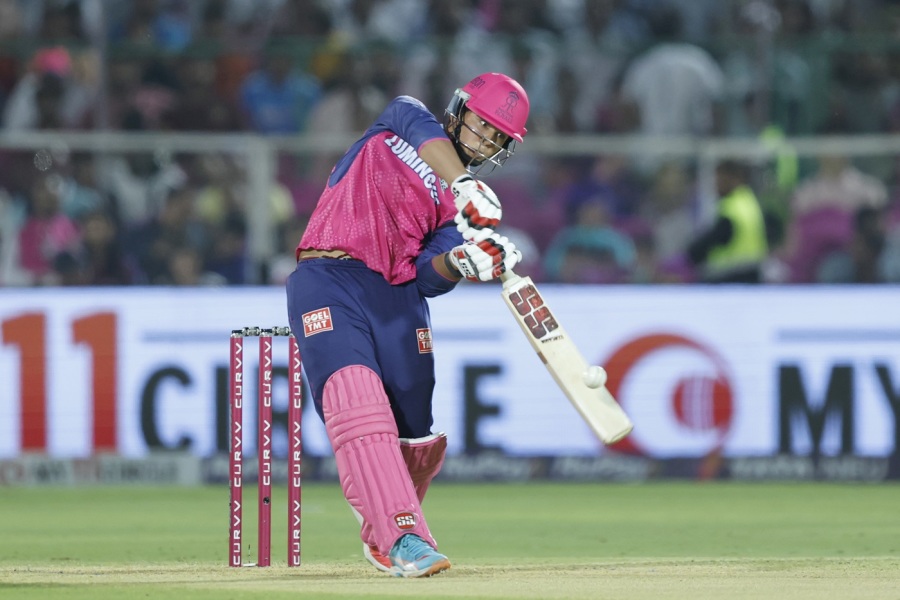
Let's talk about when the game gets challenging, when it comes to scoreboard pressure. And this is all fun to see when they come out batting first, or if they're openers - Vaibhav Suryavanshi, Ayush Mhatre and the like. What separated the men from the boys, if we can call it that, was the ability to finish games - when chases became tough, when the stakes became higher in a playoff or a semi-final or a final in a World Cup. What is the mindset like in a T20 chase, in particular?
Rayudu: I think the biggest aspect of T20 batting is also partnership batting. Generally in other formats, it is you as an individual who is batting most of the time. But in T20 it is also partnership batting, because you have to understand what your partner can do or cannot do, because of the scoreboard and time [pressure]. The scoreboard has to move.
So you have to understand, if I take a single, what is he [batting partner] going to do? Is he going to take the bowler on or have I got to take the bowler on? Especially [at] that point in time. And also, in chases, once you're comfortable in a partnership, you know if you're chasing, say, 50 or 30, all you have to do is get four or five hits. So when are you going to get them? [You have to have] those talks in the middle with your partner.
This is a lot of planning, a lot of conversation, not instinctive. Do you actually work this out as the game evolves?
Rayudu: Absolutely. If the surface is really placid and there is dew and there's nothing going on, then maybe instinctive batting [works], you can just keep enjoying your batting. But when the situation is tough, when you don't have anybody coming [after] you, when you know you are the last [proper batting] pair - that is when you have this conversation. "This bowler is struggling today." Or "he is trying to bowl this yorker, this is the field". Maybe the partner says you can get away on the on side. "You might get a six here. All we need is three or four sixes, already we have two now. Just hang on, hang on."
There is a lot that goes on in a T20, especially at the lower end of the chain, because these guys [openers] are powerful. They're the millionaire batters. [The ones lower down] are the guys that get it done!
"In other formats, it is you as an individual who is batting most of the time. But in T20 it is also partnership batting, because you have to understand what your partner can do or cannot do, because of the scoreboard and time pressure."
Ambati Rayudu
Finch: You're the guys that get the job done.
One thing that probably gets overlooked is your team culture at a time like this. And the reason I say that is because [you need] to be able to be really vulnerable with your batting group. If Rayudu and I were batting together, he destroyed spin. I was very good at playing offspin, not legspin. So for me to have the courage to say to the group, "Say, you know what? I'm not comfortable taking that on." I can try. The odds will be against me but in his favour. So if we're batting in a partnership, to be able to swallow your pride and say, "You know what? I'm not comfortable facing this bowler, I need a bit more time. Can you take him?" "Yes, no worries. I'll take the risk here because your match-ups are still coming [later]."
And I'm not sure that that is happening as much in the very modern game, because everybody wants to be the hero. Not too often do you see guys walk out and go, "What does the game need from me right now?" My batting partner is flying. My job is to get down the other end, get him on strike so he can destroy whoever you're playing against.
Whereas everyone wants to walk out and go, you know what, I can compete with [my partner]. I spent most of my career trying to compete with David Warner. That's not a game that I'm going to win all that often. So to be really vulnerable as a group and have those conversations where you say, "I'm not comfortable here", because people don't like to feel weakness or they don't want to show weakness. And I think it's such an asset [to be vulnerable].
Rayudu: When we talk about batsmanship in general, all these things matter. I'll give you an example. It is like if somebody is struggling with spin - I won't name them - I used to be halfway down [the pitch] even if he dabs it to point or short third, because you want him to get off strike, and you want to help your partner. And then he will help you out when you are struggling.
See, that is how partnership batting [works]. These small things really matter when your team's winning, or when you want to build that culture, like Finchy said. That is an amazing culture to have as a whole unit.
Finch: "I spent most of my career trying to compete with David Warner. That's not a game that I'm going to win all that often"
© ICC/Getty Images
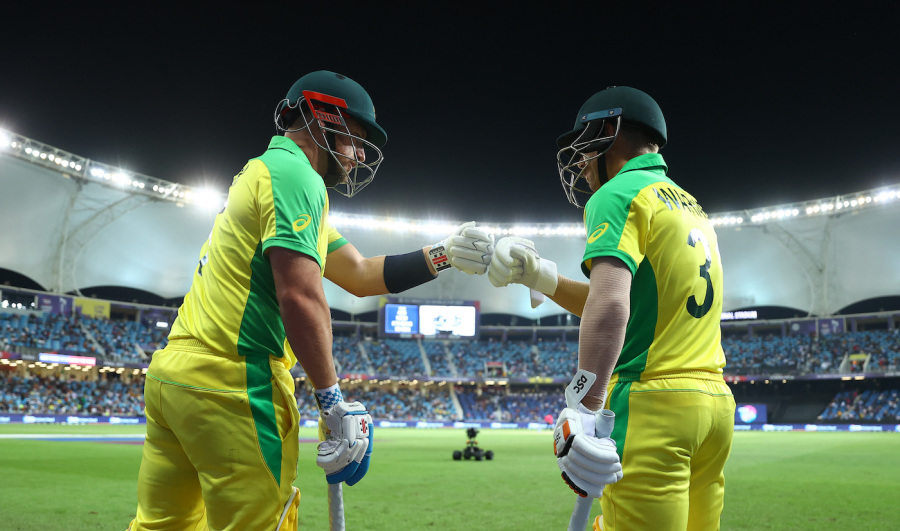
Finch: But the modern way is that the youngsters don't want to show vulnerability. They want to stick their chest out and show that they can take on everyone, dominate everyone. But everyone has different strengths and weaknesses. So identify that. Find your best match-ups in the opposition, and if your partner happens to [be one of them], if that's one of his big ticks, say, "So Rayudu, over to you. I'll take the others."
Could you give me an example from a high-pressure game where, say, you and Dhoni, or you and Ravindra Jadeja, or you and whoever you batted with in a big game, did something similar?
Rayudu: There were a lot of times that MS Dhoni used to tell me, "I will take the bowlers on, you play [within yourself] till the end so that you can hit the fast bowlers, you can use the pace." And even with Pollard that used to happen. We used to run a lot [between wickets]. And he also used to help me, because for me, I don't like playing a lot of dot balls. I'm not a big six-hitter like him, so I had to get myself going. So he used to run.
Finch: And if you bat with somebody who doesn't run, that kills all of your momentum.
Rayudu: Correct. And he [Finch] understands that. And I also understand that. For a proper batsman, you need someone to run. That sets a lot of momentum. And also in chases, like you're saying, it's always partnership batting, it is never one person.
So from how much you're expending mentally, you have to be switched on all the time. Is there anything you can do to sometimes switch off in a T20 game, just to bring the heart rate down?
Rayudu: Bringing heart rate down I feel is a lot to do with breathing. I mean, at least I and a lot of guys I know that are real good batsmen in the death used to do that. At least Indians.
"The modern way is that the youngsters don't want to show vulnerability. They want to stick their chest out and show that they can take on everyone, they can dominate everyone. But everyone has different strengths and weaknesses. So identify that"
Aaron Finch
And also staying at the non-striker's end, it is important to be very aware of what is happening, to pick up those cues in the game. Who is going to bowl the next over? What is the boundary size? Where are you going to target him? Do you really want to take on these next two balls or do you have enough coming later?
So it comes with experience, which we are not seeing in the game because a lot of youngsters have come into the T20 format. So it will take them a little time to become real masters of how to go about things.
Finch: That's taking nothing away from the skill that they've got, because these youngsters are so much more skilled than the players that I played with in T20.
Rayudu: They're at least a hundred times more skillful than I was. But they still have to show batsmanship.
Finch: Yeah. And the reality is that they probably just haven't played enough cricket just yet. That will come with time and that will come with failing as well.
And I think accepting failure in T20 cricket is really important. Because it's such a brutal game. One ball can be the difference in the momentum. It can have a big impact on your season.
So understanding that it's a game of failure, you have to work around that and you have to be comfortable with the decisions that you make. If you made the right decision and your execution's wrong, no problem. But if you're making the wrong decisions, then you start to have to draw it back a little bit and say, right, how do I go about planning out my innings? Whether it's with bat or ball.
Rayudu: "The biggest aspect of T20 batting is partnership batting and understanding what your partner can or cannot do, because of scoreboard and time pressure"
© BCCI/IPL
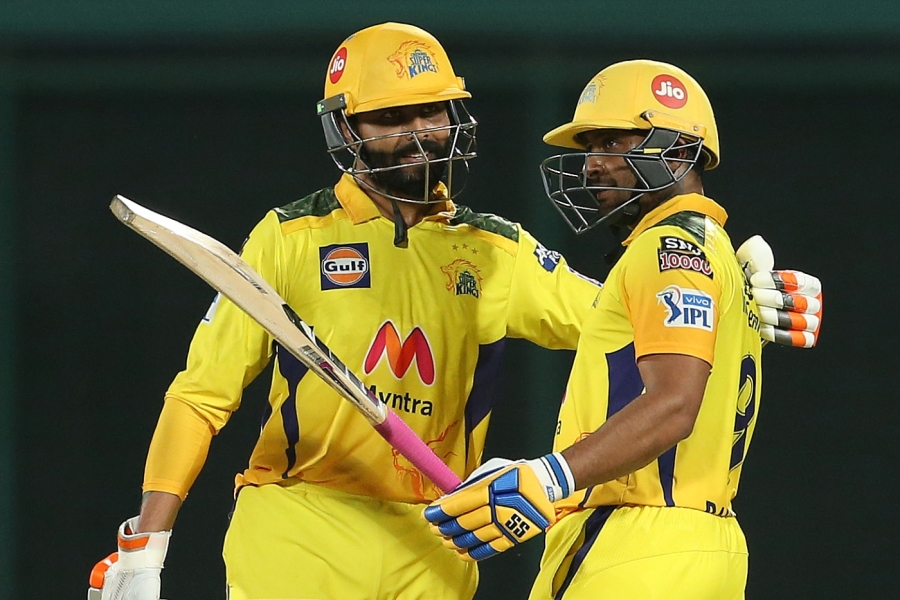
he biggest aspect of T20 batting is also partnership batting. Generally in other formats, it is you as an individual who is batting most of the time. But in T20 it is also partnership batting, because you have to understand what your partner can do or cannot do, because of the scoreboard and time
We've grown up hearing batters say, in Test cricket, that you need to put a high price on your wicket. Whereas T20 cricket has rewired you to say, don't worry about wickets.
Finch: Well, when I first started T20 cricket and opened the batting [for Victoria], I'd open with Brad Hodge. Great Australian player. Greg Shipperd was our coach and he coached a lot in the IPL for Delhi at the start. A lot of success with Victoria and the Sydney Sixers in the Big Bash. His theory was: none down, 45 on the board after six [overs] and then it gets to the point where, oh, maybe we can push it out and we can afford to be one down. That was as detailed as it was at that time. Don't take too much risk because we can't afford to lose any wickets, just score a few more runs than you would normally.
Now it's first six overs, we want to be 60, 70, 80 in. I think 120 is the highest we've seen in six overs.
Finchy, you made 172, the highest ever T20I score at the time, in 2018. By then had you transformed mentally by saying, I'm liberated here, I don't need to worry about batting seven, eight overs, or six overs, 45 without loss. Was it liberating, not fearing for your wicket?
Finch: Yeah, it was. And there was a key part in my career and it was the conversation with Andrew MacDonald, the Australian coach, and I was going through a bit of a form slump. He said to me, "What's the difference if you get caught at first slip or get caught at mid-off?" And I said, "Well, one looks rubbish as an opening batter to get caught [at...]", and he goes, "But you're still out, so what are you worried about?" He said, "You're so worried about not getting out in a way that looks bad, that you're actually forgetting the fundamentals - that you're out there to score runs, you're out there to take risks. So if you hit one straight up, it doesn't matter. You'll get them next time." And that was probably a bit of a light-bulb moment for me.
It's 100% right. Because if I get out nicking off to first slip, and everyone says, oh, that was a good ball, it doesn't matter, I'm still out. I can hit the same ball to mid-off and they say, oh, it's a rubbish dismissal.
"I had to really formulate a way for myself to think where it doesn't matter where I'm batting. What are the balls? And then, what is it that the team needs right now? What is it that I can do on that surface?"
Ambati Rayudu
For me, going down the ground was my main strength. So if I think the ball's in the right zone and I take it on and get out, it's okay. Because it was the right decision, wrong execution. And I think separating those things are really key in T20 cricket because you're up against the best, so there are going to be mistakes, but make sure you're making a skill error, not a mental error.
Rayudu, when you achieved that liberation - that you're not worried about your wicket, instead you want to create an impact like you've done on multiple occasions - how did you reach that? Was there a sort of a chat you had with anybody in particular that changed that thought process?
Rayudu: Not really. I've really thought about it for quite a while in my career, and I found a way where I would go and do [certain] things in the middle. One is being very flexible in your head, especially if you are playing at different numbers and different situations.
All I was doing was calculating the number of balls left. So if it was, say, about 20, I would [say], half is what I am going to face. So how many hits should I get in that? So if I say, okay, given the situation on the scoreboard on that day, on that surface, if I had to get two hits, will I be getting it now or will I be getting it against a bowler that is yet to bowl?
These are the small things that you have to think about as a batter when you're facing. You can't just go in and play on instinct sometimes. You have to plan. But also, your instincts are sharpened with the practice that you do.
Finch: Did you do a lot of the practice by yourself? Not with a coach directly saying, "This is what you should do in this situation?"
The Rayudu rulebook: have all the shots in your arsenal, but know what to play when
© BCCI/IPL
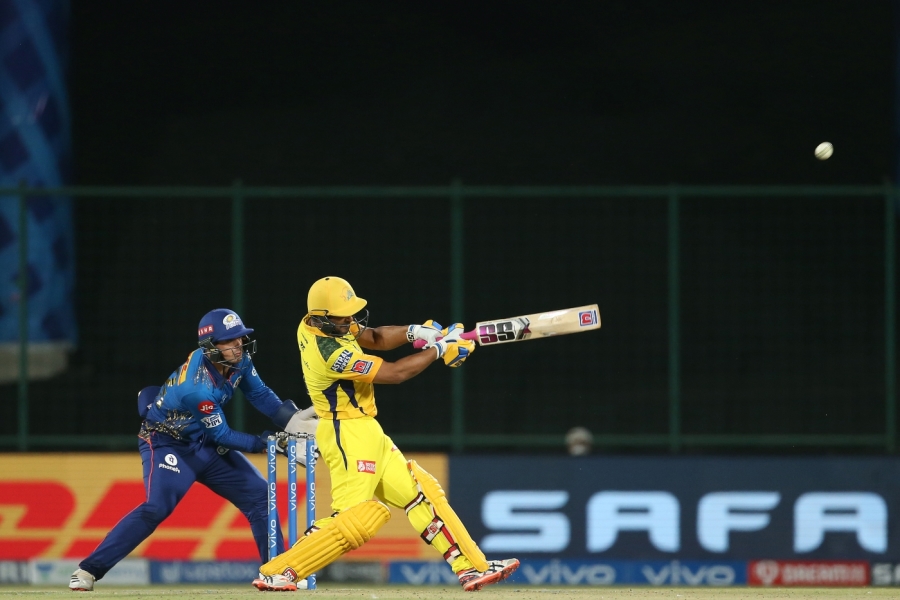
Rayudu: No, I've done it all myself most of the time. So this is the mindset that I've developed because I've never batted at one position in my career. I had to really formulate a way for myself to think where it doesn't matter where I'm batting. What are the balls? I divide it into half. And then, what is it that the team needs right now? So that is all I used to think.
Are you saying this kind of detailed thought process is applicable by and large to most batters, or do very few batters actually do it?
Rayudu: I think a lot of people don't have that clarity most of the time, because they have the skill, they have the instinct, but they get lost when they are in the middle. I have seen that. I have batted with a lot of batsmen who are lost. Sometimes in a partnership, you have to wake them up. That is very important.
You've come back to partnership batting.
Rayudu: Everybody is human. You sometimes are not in the zone. You need someone to just wake you up. And also, there are a lot of times when people are not hitting well. It is just a small little trigger - maybe you can stand a little bit on the off stump or you can stand slightly outside. And these are the conversations of partnership batting that I'm talking about, which makes your partner that much more important. And you need experience for all these things to happen in the middle.
How much of a role did data analysis play in you reflecting on your own game? Many times we hear about batters who are either dismissive of it, not as welcoming, or batters who get confused by that aspect. How much did it help or how much did you have to mentally add it on as one more thing to take into account?
Rayudu: Very important. When you know that your team is going to be in the playoffs or the business end of the season, you still keep watching all the games. You try and pick out patterns of what the bowlers are trying to do under pressure. You keep watching games so you know that when the time comes, this is where [the bowler is] going to go to.
"Andrew McDonald said, 'You're so worried about not getting out in a way that looks bad, you're actually forgetting that you're out there to score runs, you're out there to take risks. So if you hit one straight up, it doesn't matter"
Aaron Finch
Most of the time, as batsmen, you practise all your skills, but you don't have to play that [shot] when it is not necessary. You can still play good cricketing shots and finish a game. But when you really need something, you can bring out something they don't expect, especially in a tournament like the IPL. You can bring out a reverse sweep when they don't expect it, when they are thinking that you'll step out and hit. So always try to be slightly unpredictable if you are someone like me.
Because someone like Finch, when you have all the power, you can really play with a little more ease. For someone like me, who doesn't have much power...
So because you feel like you are limited in the power aspect, you have to think perhaps that much more. For that 2023 IPL final, when you came in and had to play a really important short innings against Mohit Sharma, was that a result of anticipation, preparation?
Rayudu: Yes, because I knew that he's going to bowl a slower ball first up. And because I saw him just move the long-off fielder to the left, I knew he was going to bowl a slower ball wide of off stump. Because under pressure, they are never going to bluff. Very rarely.
Finch: Not when you're ahead of the game. If you're behind the game, maybe you can.
Rayudu: Maybe you can, to pick a wicket. But they were ahead of the game. They knew that. As a batsman you pick those things. And then I knew he would go for a yorker and then I knew he would bowl [another] slow ball because third man, point, was up, fine leg was up.
T20 finishing or batters who stay through to the end and have that high-pressure job - it's quite an intelligent game, isn't it?
Rayudu: But also, you should have the skill to play something else. If he doesn't bowl [what you think he will], it is not like you can just be a one-trick pony. You have to be cricket-smart. See, that's why they [Australia] win so many World Cups. They're so cricket-smart. The [2024] World Cup final in Ahmedabad, the way they played, came and bowled slow into the pitch with a square leg, that was a masterclass in terms of bowling.
Glenn Maxwell: works best with an instruction manual
© AFP/Getty Images
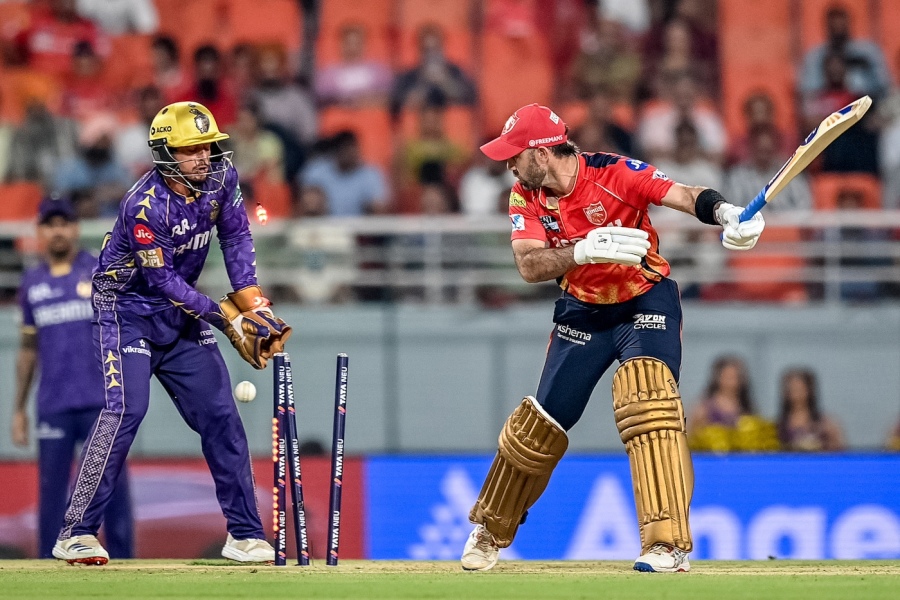
Finchy, you said once that Glenn Maxwell is great when the game is in front of him. That's when everything sort of switches on and happens and whatnot. You know the guy well. Is there anything you can just sort of tell me, from your own experience, how there's such a difference at times in a batter mentally applying himself and mentally disconnecting completely?
Finch: Oh, it's a big question because I think everyone's after that. Everyone wants consistency, and particularly somebody who plays such a high-risk, high-reward game like Maxi does.
You have to accept that there are going to be inconsistencies and there's going to be times where he doesn't get it right consistently. And that's okay. I think that when the game is laid out in front of Maxi, and the situation is black and white, and you say, right, this is what the game needs from you right now, he can do that more often than not.
I think there's times when he gets stuck a little bit and he gets wrapped up in his own head and he says, well, do I take this risk now or do I just hold [back] a little bit, or who am I targeting? And before you know it, you're out because you're not 100% committed to the plan that you've got.
And that's very common with a lot of players. I mean, you just get into a situation where you second-guess your natural instinct. But when it's laid out in front on a platter, I mean, he got 200 batting at No. 7 [No. 6] in an ODI. He's got four [five] T20 international hundreds in different positions too.
Do you fail more often in this format than other formats? Or do you find the rate of failure to be consistent across formats? Do you have to deal with more failure in T20 cricket?
Rayudu: Depends on what you define failure as. In T20 I think it has to be defined slightly differently.
I wouldn't mind somebody [getting out] trying to do things for a team. Say, if you need 30 to win in ten balls, if somebody is going for it and getting out, it's not a failure. I mean, stats would say he has failed…
"T20 cricket is much harder for a batsman, if you look at it, because most batsmen field on the boundary, and you are doing a sprint almost every single ball. And then if you have a good innings, you have run about 50 to 60 singles"
Ambati Rayudu
Finch: I define it more as impact on the game. So you look at the end of the game and you say, right, who had the biggest impact today? Someone might have got 70 off 50 balls in a 200 [innings total] game. Is that impact? Probably not, but someone might have got 30 off ten. That's a huge impact because you swing the momentum. And it could be opening the batting. It could be at No. 3, it could be at No. 7.
It depends what the game needs from you at the time. If you need a run a ball and you [try to hit big], it's like, what are you thinking? But if the game dictates that that's what is required, no problem, go for it. Do whatever you want.
Rayudu: See, that's where I would say the management really has to have great conviction. You need unit conviction as a management because most of the time broadcasters like stats and players [look at] stats. Players also like being there [in the media] with their photos or whatever it is. So once you see that, [things that are] not a failure also will feel like a failure. So people tend to want to be seen rather than do things for the team where you don't [get much visibility].
Finch: Particularly in a franchise set-up, compared to playing for your country, where it doesn't matter what you do, you're just doing everything to win. I mean, if you've got the option to wear the orange cap at the end of the season or finish second [on the runs list], some players might just think, you know what, I'll just knock them around a little bit there.
The extent to which social media has now injected itself into it - when you've had a good day and you get your phones back at the end, and you had the 60 off 20 or played the match-winning shot, you might not have sleep that night because you are sitting and scrolling through your feed.
Finch: I could not care less.
Rayudu: Yeah, I could not care less as well.
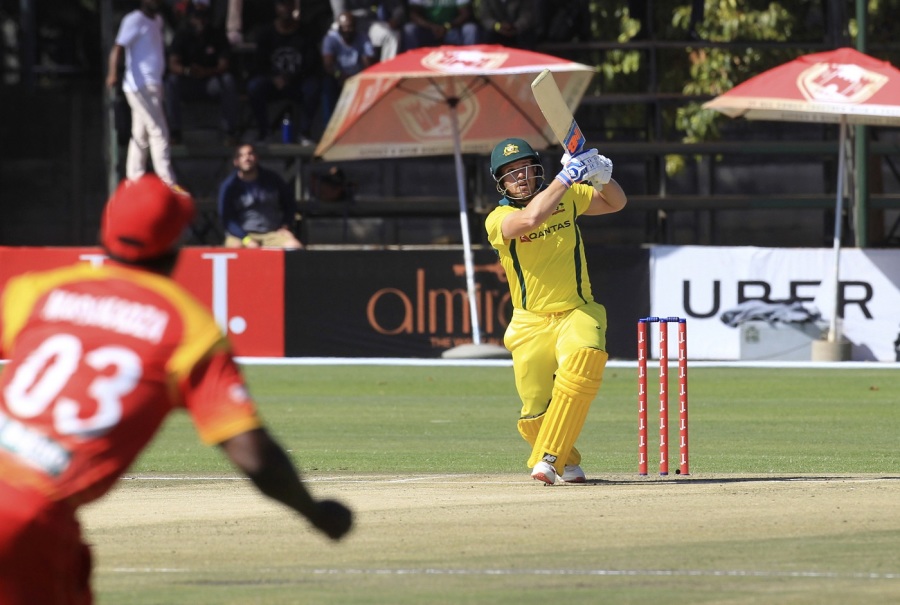
Finch's 172 off 76 balls against Zimbabwe in 2018 still remains the highest individual score in T20Is
© Associated Press
What about other players?
Rayudu: No, because on my phone, except for maybe one or two friends, I don't think anybody has ever messaged me. There were days when I was even Man of the Match, and I used to show my phone to one of my team-mates, saying, see, not a single message. At least that's how I lived. But generally there are a lot of people who love to be in the limelight. And there's nothing wrong with it as long as you know where to draw a line and the team doesn't suffer because of whatever you do.
We've spoken of the mental investment in the T20 game. But is there something you want to tell us about just how much of a toll T20 cricket took on your body in comparison to the other formats?
Finch: Yeah, I think it takes a huge toll and you have to stay on top of it. I was always somebody who was naturally heavier, so I had to make sure that my stretching was right, otherwise my back and hamstrings and everything would get so tight. Because especially games that are in the evening, you generally try and wake up mid-morning and then you might sit around. And before you know it, you've been sitting or laying in your bed for a while, and then you play a game at such high intensity, and then you go and sit on the bus again, you go to sleep. If you don't prepare and then cool down correctly, you're in for some real trouble. And then you're on a flight the next day. Before you know it you're sitting in a seat [hunched] like this for three hours, and then you're on buses. It can be really brutal.
Rayudu: T20 cricket is much harder for a batsman if you look at it, because most of the batsmen field in the best positions on the boundaries, and every time the ball goes to the other side, you are near the 30-yard ring. So you are doing a sprint almost every single ball. And then if you have a good innings, you have run about 50 to 60 singles. So a bowler generally doesn't do as much in a T20 format.
Finch: You know they are going to come for you now after this!
Rayudu: But you know, in terms of fielding, it is like football. The formation is still going up and down.
"I never felt weighed down by the captaincy because I enjoyed that challenge. And if you do all your planning and preparation, then it's the fun stuff"
Aaron Finch
Finch: For Australia, I know we used to wear GPS every game. Some players get around 10km covered in a T20 game. That's high.
And in comparison, what was that like in ODIs?
Finch: I think the most that I've seen in an ODI was Mitchell Starc one game, and he was up around 19km.
I guess we're talking about intensity here as well. Whereas in ODI cricket you're not under that kind of time pressure.
Rayudu: See, in ODI cricket, from midwicket, you won't come into the 30-yard circle every ball, but [in T20] you would. As soon as the ball goes to the sweeper, you are in. Or you're guarding your boundary left and right. And you keep coming in and going out, coming in and going out. Nobody sees that on camera. But your fielders are always coming in and going back out. So it is quite intense.
Finch: Yeah. And that's why I was lucky at the end of my career, being captain, I could field at 45, inside the circle, and then you're fielding at cover, so you're not doing as much work around the boundary. But I mean, that's when the mental load comes in, and you're weighing out the physical versus mental load of T20 cricket. It's hard.
What about the IPL? In the evening when you're so emotionally charged, say, after a close game, and when you're in the hotel, do you find yourself awake, charged, and you're not sleeping till 3-4am?
Finch: Yep. It's such a unique position. So as you get close to midnight, Rayudu might come in and bat at No. 6 and have to be at his absolute peak. And you're right, your emotions are so charged up. That's where the team that you play for has a really big role in the preparation of the players. So understand that some players might not get to sleep till 4, 5, 6 in the morning after a game, and if you've got a mid-day flight the next day, you're just ruined and that wipes you out for a couple of days. So you can't be at your best for the next match.
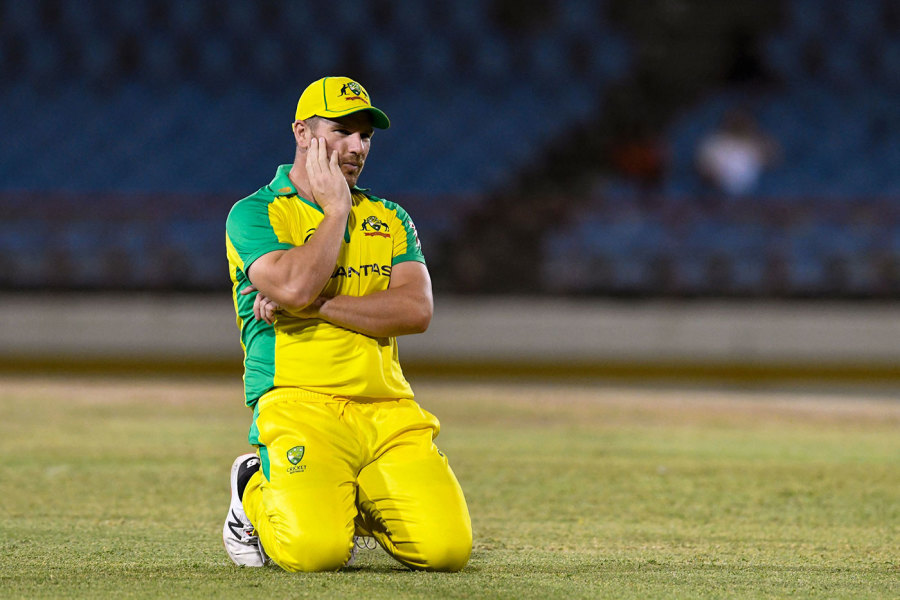
Feeling the Finch: "The mental challenges are there in all formats of the game. But geez, T20 is hard."
© AFP/Getty Images
Rayudu: Yeah, that's why CSK always used to take evening flights. No matter what. Because you can't recover if you don't have good sleep. And also, I think sales of a lot of caffeine tablets, caffeine chewing gum, and Red Bulls would have gone up.
Finch: Take that at 11 o'clock at night, see how you go!
Captaincy in T20 cricket - what did it take out of you in this format versus, say, one-day cricket?
Finch: Well, you're just under the pump from ball one. You can have the best-laid plans and they go out the window after six balls.
I love the planning and preparation side of T20 cricket. You'd get with the analyst and the coaching staff and it'd just be quite informal. The analyst in the Australian set-up would collate hundreds and hundreds of pages of data. His job was to collate that and put it in a way that is understandable for me and relevant to the opposition and to the ground. So then you start going through some numbers. There's still huge amounts of data. And it's just trying to find 1% edge on Virat Kohli in an ODI in India when he's in good form.
But that's what I love the challenge of - just going in and finding ways to be creative to find that little edge. Once I got out onto the field, I felt as though I'd thought about every scenario that could possibly happen. So nothing was a shock. It never really weighed on my mind, a decision that you're going to make.
"MS Dhoni was quite unique, and that is the reason why he was very unpredictable, because he would never do something that the stats say. And that has been his greatest asset as well."
You sense it came naturally to you, that you were already in a position where you could process a lot of match situations, a lot of data, and it didn't bother you? It didn't confuse you?
Finch: Yeah, I never felt like it confused me. I'd often use other players and senior players and people who you'd played with for a long time - you'd ask them for their opinion just to see if they were seeing the game differently to you at the time, because as an opening batter, I can see the same game as everybody else, but everyone just has one little [extra] piece that they've seen and [you'd go] well, maybe the wicket's doing this. Let's change and go here.
And you do go with it sometimes, but I never felt weighed down by the captaincy because I enjoyed that challenge. And if you do all your planning and preparation, then it's the fun stuff. Going through all the numbers and sitting down and trying to find the gold nuggets, that was work. And then you got out on the field and that was the cool stuff.
I was lucky enough to captain some of the greatest, like Starc, [Pat] Cummins, [Josh] Hazelwood, [Adam] Zampa. They're four of Australia's greatest ever white-ball bowlers. And I was pretty blessed in that regard. So you understand that you have to make some moves every now and then. And from the outside, there'll be a move that you make and people will go, wow, that was outrageous. But you've already thought all that through. There's maybe once or twice in my career that I had to make a move that I hadn't thought of at all.
We've seen in the IPL, Rayudu, that there are certain players on whom the captaincy crown doesn't sit well. You've played under some of the best captains in Rohit Sharma and Dhoni. Where do you sort of analyse how much captaincy takes out of a player, at least a high-quality player?
Rayudu: I think, you know, having a great captain at the helm is really important for a good team, because you want him to be really calm, you don't want him to be anxious. Or you want a captain to be very certain of himself and his decisions.
Same same but different: MS Dhoni and Rohit Sharma embody two wildly different but equally successful styles of T20 captaincy
© BCCI
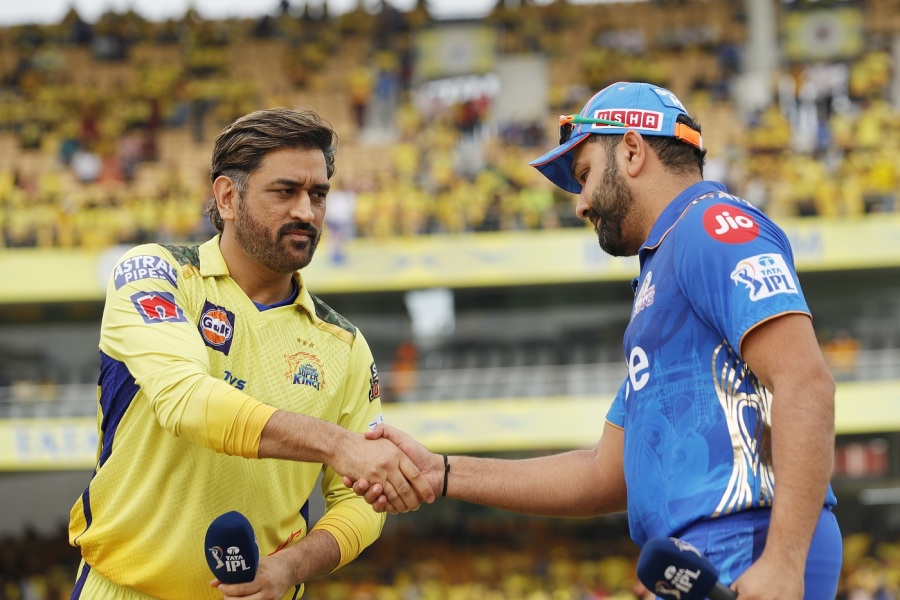
Even if they go wrong, you want him to stick by [their players], and not throw people under the bus. Rohit was the sort of a captain who's very data-driven and also used to plan a lot in terms of MI's backroom. Also for the Indian team - I know for a fact that he does a lot of planning. And he goes about things that way.
But MS was very different. He used to analyse things on the ground. And he used to pick up the body language of the players that he has on the ground, if they can really come in and do it [make an impact] at that point in time. There's so much to MS Dhoni's instinctive captaincy, because I don't think he went into a lot of stats at all.
But do you sense now that perhaps that is potentially dated, that even the great MS Dhoni will have to evolve? What is the currency of the game right now?
Rayudu: No, I think the biggest challenge with CSK that he is facing this year [2025 season] is, he doesn't have the personnel that he always had. With them he could get these things easily done on a cricket ground. But the auction didn't go right for CSK.
I come back to that, that you actually need to pick at the auction from more than your cricketing instinct. You have to pick perhaps with the use of a lot more information and tools that other franchises seem to be having. Do you sense that's the future for every captain now? That it'll be unlikely we'll see another Dhoni-type captain?
Rayudu: Dhoni-type captain I don't think will happen in this era of cricket at least, because people want so much more stats. That's not wrong, because it is also giving you a lot of information. But MS Dhoni was quite unique. And that is the reason why he was very unpredictable, because he would never do something that the stats say. And that has been his greatest asset as well.
It can go both ways though. Rishabh Pant at times goes against the trend and we crucify him in terms of tactical blunders.
Rayudu: Rishabh Pant is too young in terms of his captaincy. I mean, [in his career] MS has done captaincy for such a long time.
"There's times in your career, and I felt it playing in the IPL, you turn up and you want to impress so much that you try too hard. Like you want the outcome so desperately hard that you forget about the process."
Aaron Finch
The game's changing, though, isn't it?
Finch: It certainly is changing. I felt as though I was an instinctive captain on the ground, but I had a lot of data to back up most of the decisions that I made. So you still go into that creativity of captaincy, but at the end of the day, if you win the game, everything's good. If you lose, everyone looks at you.
I want to end by asking both of you: if you could go back to a young Aaron Finch or a young Ambati Rayudu at age 20, tell them about what to expect, how to deal with the intensity of the T20 game, what it's about to become - what you would say to them?
Finch: It's a good question. I think it [would be] back your skills in and you don't have to prove anything to anyone. There's times in your career, and I felt it playing in the IPL, you turn up and you want to impress so much that you try too hard. Like you want the outcome so desperately hard that you forget about the process. The process that gets you to be a good player has obviously worked for a reason. So trust that. Just trust the process.
Rayudu: I feel, especially in India, I've seen a lot of young boys grow up and get lost in the system, because they don't really separate the skill side of the game from the mental side of the game - [which are] two really different things. So your skill is like an arsenal, like an army having all the weapons, but how to use them, when to use them and how much to use them is your mental side of the game. So [you need to] differentiate that. And when you go into a game, you do not think about your technique or your bat coming down a certain way, but it is very, very important to have all the skills. Every single shot in the book. Keep learning, keep improving. But you also should know when to use [what], how to use it and when not to use it.
Can we then say that this is actually the most demanding format in terms of intensity and mental challenges?
Finch: Intensity, absolutely. The mental challenges of playing Test cricket are ridiculous. And it's just different in T20 cricket. The mental challenges are there in all formats of the game. But geez, T20 is hard.
Raunak Kapoor is deputy editor (video) and lead presenter for ESPNcricinfo. @RaunakRK
© ESPN Sports Media Ltd.