




Extreme pitches aside, the year's red-ball contests were fierce, and home advantage wasn't as marked as before. And India's world title raised hopes for a revolution in the women's game
Tears come with the territory in sport. They are a release. Mental and physical reserves have been stretched to the limit. The toil, the longing, the days you have spent living for this day, this moment - they are over. There is nothing left for you to do, and there is nothing left in you. You can let go. You can let your opponent see you are human. Roger Federer could stay impassive through the tempest of a match, but he cried when he won, and he cried when he lost.
It's not like 1983, but maybe it also is
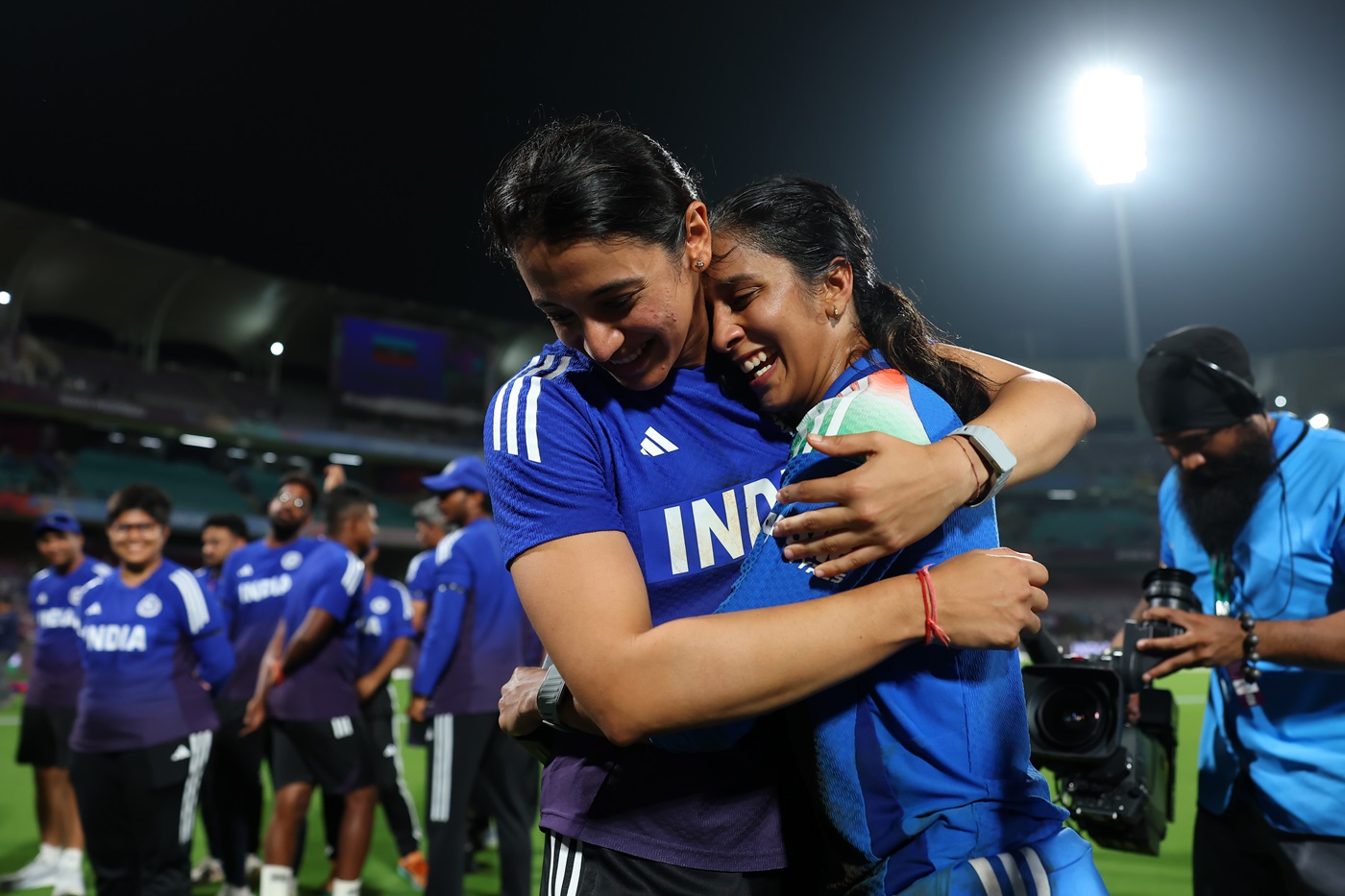
When Jemimah Rodrigues sobbed through the post-match interview after delivering India to the World Cup final, there was the sense of something bigger in store. Yes, there will have been elation and relief. India had achieved the near-impossible. Australia are a win machine in the guise of a cricket team. They have won about 84% of their World Cup games this century, and hadn't dropped a game in the tournament since 2017. Ten of them could bowl and ten could bat. This was a semi-final. India had lost their most prolific batter before the game. No women's ODI team had ever chased down what Australia set in this game. And India were two down in the first ten.
From there, having played one of the greatest innings in her sport in the biggest match of her career, and having been there when her team went over the line in the final, tears were inevitable. Her team-mates were wailing around her, and eyes were moist in the stadium and in living rooms.
But beyond that, there was catharsis, profound and palpable. It spoke of the journey of women cricketers in India, of overcoming conditioning, prejudice, and as in Rodrigues' case, identity-based persecution. It spoke of having to overcome apathy and indifference to start with, and then having to measure up; of not mattering at first, and then having to prove that you are worthy of mattering; first, of a lack of opportunity and then of missed opportunities. No words were needed to spell this out.
We did it, friend: Smriti Mandhana and an emotionally and physically expended Jemimah Rodrigues soak up that winning feeling after beating Australia in the World Cup semi-final
© ICC/Getty Images
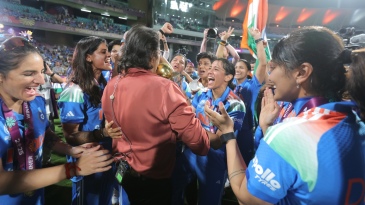
The watershed World Cup win of 1983 by the India men's team has been evoked in the wake of the women scaling the summit after 47 years. But unlike in 1983, when Kapil Dev's team started the tournament as 66-1 outsiders, there was nothing fluky about this. Harmanpreet Kaur's squad were firm favourites to reach the final. They had the players, a lovely mix of the battle-hardened and those unencumbered by history. They planned meticulously and prepared well. They did not stumble upon glory; they found fulfilment.
The real comparison with 1983 will be in what this could unleash, not only for the game in India but for the women's game globally. It was not long ago that the broadcast rights for women's cricket were handed out as a sweetener along with those for various men's tournaments. This World Cup final attracted numbers - over 440 million on digital platforms - comparable to those for the men's 2024 T20 World Cup final and surpassing the combined number for the last three women's world events. When the game gets bigger in its biggest base, it grows in other places too.
The only thing that one hopes doesn't change about women's cricket - or change too fast - is its refreshing authenticity, some of which has been lost in men's cricket to the compulsion for posturing and drumming up aggression. Sports heroes are admired and worshipped for their exploits on the field, but they also endear themselves to us by showing us their true selves: as flesh and blood and as vulnerable as the rest of us.
Two days is too short
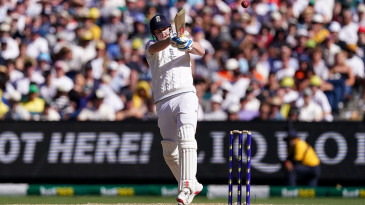
The Boxing Day Test at the MCG is winding down as I write this. It's the second two-day Test of this Ashes series. About a month ago we had another ending in well under three days, in Kolkata. Quite obviously, all these matches were played in extreme conditions. Perth had pace and bounce and some side movement, in Kolkata the ball turned square from day one, and at the MCG, the ball jagged around off the seam.
When slow cricket got fast: the Melbourne Test was watchable, and good for the narrative of the series, but bad for Test cricket in the long run
© Getty Images
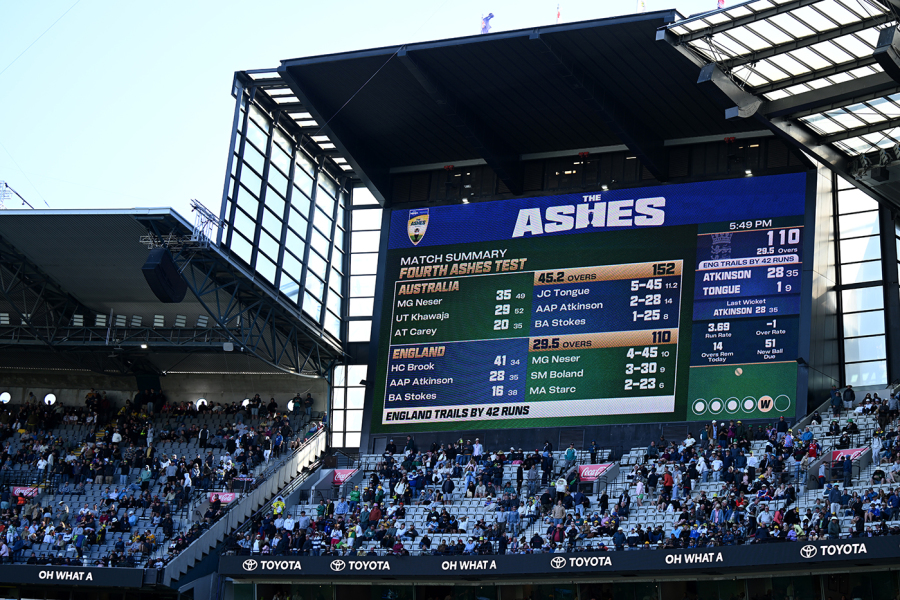
Occasionally pitches like these can be fun, for everyone apart from the batters, of course. There can be thrill in jeopardy, when a wicket lurks around each corner and every run scored feels like a million bucks. For this site's tireless scoring team and editorial desk, a short match can be welcome.
That pitches have become more result-oriented in the era of the World Test Championship, with cricket boards inclined to maximise home advantage in the pursuit of points, isn't by itself an awful thing. But it has pressured curators, who are sometimes prodded further by team managements, to err on the side of the extreme.
While a secondary debate rages on about which kind of extreme pitch is worse, the rank turner or raging seamer (in my book, underprepared pitches designed to assist spin from the get-go can only get progressively worse, while a moist or grassy pitch can flatten out and get easier for batting over time), there is broad agreement that two-day Tests are a disservice to the game.
Exaggerated assistance to bowlers reduces Test-match batting to a lottery and blurs the line between the great and the average, both in batting and bowling. It cheapens the value of wickets, which are meant to be events of utmost consequence in Test cricket, and it upends one of the foundational qualities of the format: the better team doesn't always win in two-day shootouts. Of course, these brief encounters also short-change spectators, particularly the Test-match faithful, who are drawn to the full course. And they are terrible for broadcasters, who must fork out the full fee irrespective of how many advertising spots they lose out on.
But as Greg Chappell has argued with passion, modern batting philosophy is equally to blame: the prevailing instinct is to swing at the first sign of trouble, fuelled by the fear that a ball "with your name on it" is inevitable. It is no accident that this Ashes series has produced two two-day Tests - a statistical anomaly not seen in a long time. Nor is it a coincidence that the most recent example of a batter willing to put his limbs on the line and absorb torrid spells of fast bowling on Australian shores was Cheteshwar Pujara, a man for whom Test cricket was life. While it is difficult to grudge modern players for prioritising ball-striking over the preservation of wickets, preventing premature finishes requires shared accountability: more mindfulness from curators, and more bloody-mindedness from batters.
But let's not beat ourselves up too much. It wasn't a bad year for Test cricket. In fact, it was a bloody good year. India and England, two imperfect teams missing some of their greatest match-winners, produced perhaps the most riveting series of recent times, full of texture and variety, which culminated with 56 minutes of breathtaking cricket on the final day at The Oval, providing the experience of a lifetime for those who lived it from ball to ball. England were a blow away from victory, with Chris Woakes, in what would be his final minutes for England in whites, at the non-striker's end, dislocated shoulder in a sling inside his jumper. But India won by six runs to square the series on a wicket that got better and better as the match went on, and Mohammed Siraj, bowling with the air of a man who wouldn't, couldn't, be beaten, won the hearts of everyone watching.
And as if to underline that Test matches can be as compelling when seemingly nothing is happening, the final day of the third Test, at Lord's, produced only 112 runs from 57 overs, with a 21-over stretch between lunch and tea yielding only 35 runs and no wicket. As Ravindra Jadeja and Jasprit Bumrah played out ball after ball to keep India from losing, Test cricket was sending out a message to a world forever in a hurry: resistance can also be edge-of-seat and full of intent. It was a bowler with a broken finger - Shoaib Bashir - who would break India's will. But redemption would await Siraj, the batter involved in that heart-wrenching dismissal at Lord's. Another life lesson from a sport that so mirrors life.
Bavuma's South Africa stand tall
No story could have been as heart-warming as South Africa's Test-match ride in 2025. They were deemed to have sneaked into the Test Championship final on the back of the vagaries of scheduling - they had won only one Test against a top-tier team (India), and beaten Pakistan and Sri Lanka at home, and West Indies and Bangladesh away. But after being behind in the game for the most part, they found the resolve, and a saviour, to achieve what no South African cricket team had done in an ICC final before: pull off a chase.
Temba Bavuma is South Africa's leading Test run-scorer since 2020, but many still question his place in the side
Alex Davidson / © ICC/Getty Images

Aiden Markram was the hero of the fourth innings, with an epic, momentum-seizing hundred, but the win belonged as much to his captain, Temba Bavuma, who has for long been deemed to have made it into the national team because of skin colour, and not because he has been South Africa's most prolific Test batter in the last five years. Bavuma has built a Test team in the image of his tenacity, and his 66, while battling a pulled hamstring and going against medical advice, formed part of a decisive 147-run partnership with Markram.
Just in case that win was considered a one-match aberration - after all, the Test championship doesn't involve the rigours of a tournament - South Africa won two Tests on subcontinental pitches that were designed to defeat them. Then, in case it was considered that better teams don't always win on surfaces where batting can be a lottery, they sealed their year with a win on a traditional Indian wicket that lasted the distance. On the second of those pitches where batting seemed like a lottery, Bavuma played the defining innings of the series, displaying a fast-vanishing virtue against the turning ball: nimble footwork.
A requiem for Bazball?
It was ironic that England finally won a Test in Australia by batting in the spirit of Bazball after having appeared to bury it during the course of their defeat in the previous Test , which consigned them to another soul-crushing Ashes loss. And it was doubly ironic that Bazball, a strategy designed for flat beds, succeeded on the spiciest pitch of the series.
Perhaps in that lay the most valuable lesson for the England management.
At inception Bazball was a piece of strategic genius, a masterclass in masking the weakness of a generation of English batters whose technical foundations weren't solid enough for the examinations of red-ball cricket but whose ball-striking ability flourished in the freedom provided by a philosophy of unrelenting aggression without fear of consequences. On pitches made to demand, it brought spectacular, breathtaking success that included some of the tallest fourth-innings chases, and on one occasion, resulted in England scoring over 500 in a day.
Ben Stokes' Bazball philosophy did not have a good year
Robbie Stephenson / © PA Photos/Getty Images
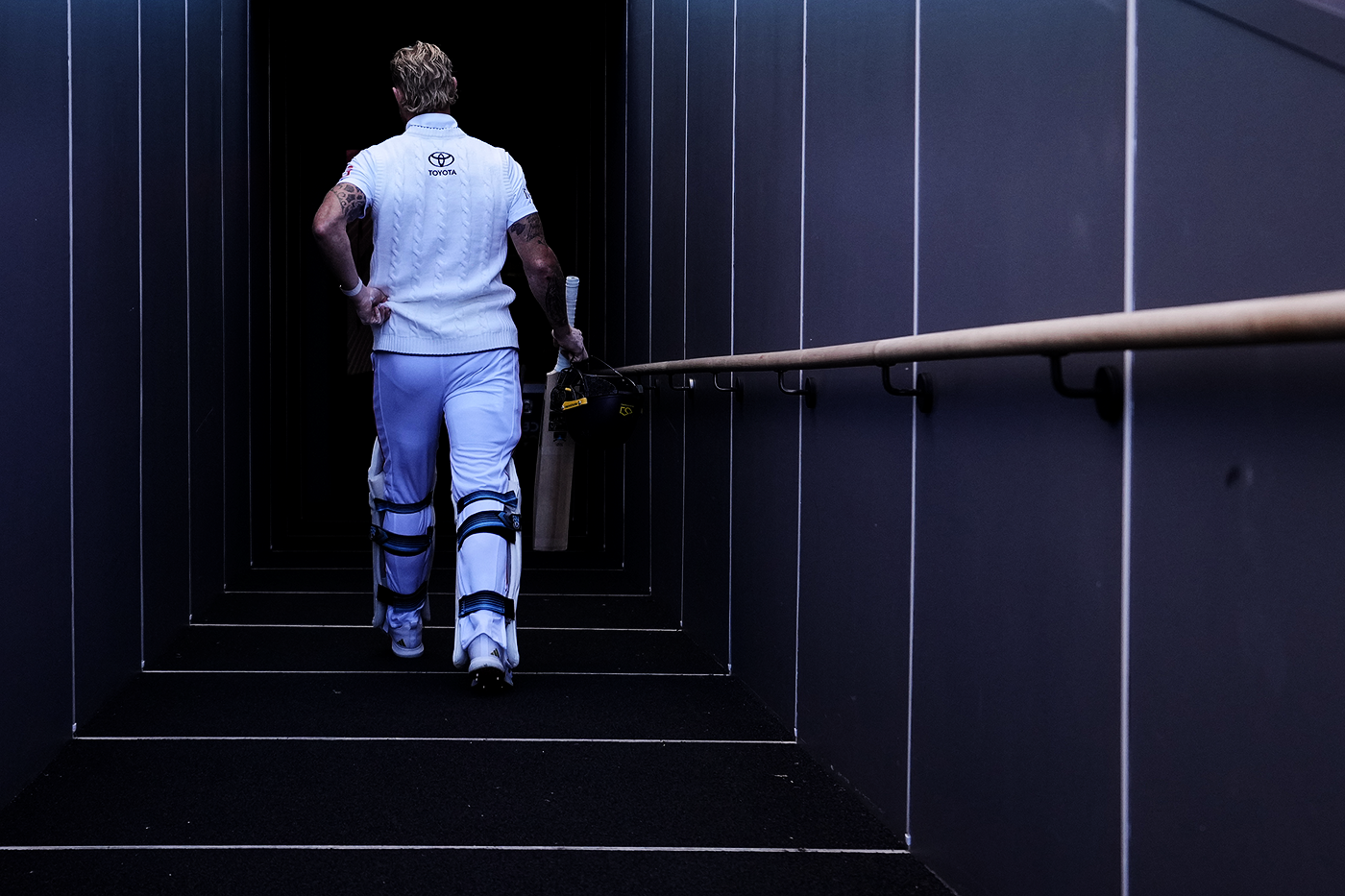
But what began as a strategy became a cult along the way, a rigid, singular ideology that collided with the reality that Test cricket is a multi-dimensional game that brings varied challenges in different circumstances, with situational awareness being fundamental. Alongside strokeplay, Test cricket demands resilience, patience, discipline and adaptability. Twice this lesson was handed out on the subcontinent, where England imploded to crushing series defeats after brilliant starts (1-4 in India and 1-2 in Pakistan). Harry Brook is a batter capable of sensational innings and has scored four hundreds in Pakistan, including a triple. But when Pakistan recalibrated their pitches, switching from absolute belters to turners, his scores read 9, 16, 5 and 26.
As ever, the glare on English cricket is harshest when they play Australia, and the outrage at, and condemnation of, their tactics has been damning. In some ways, it obscures how good Australia were in the first three Tests despite missing their top bowlers. The way England got down to the demands of the job in the final innings in Adelaide pointed to a chastening acknowledgement that vibe has its limits.
But as the way they approached the challenging chase at the MCG demonstrated, attacking batting need not be abandoned. It was unlikely that a cautious approach would have taken England over the line on a pitch still tough to survive on. It is inconceivable that Ben Stokes and Brendon McCullum have been impervious to the nuanced challenges of Test cricket, and it is tough to speculate whether they were blinded by their own publicity when they were winning.
At its best, Bazball has shown what is possible. The revolution will not have been wasted if comprehension of the limitations of the approach is finally drilled in after this latest failure - which must sting the most.
The mega-auction may be past its sell-by date
In its early days the IPL auction made traditionalists cringe. The idea of cricketers - both greats of the game and greenhorns - being bid for in a marketplace, bought and rejected by wealthy owners, was an affront to their sensibilities. But over time, its merits became undeniable. It allowed franchises to build their squads in a transparent and fair way, preventing the kind of monopolies seen in European football leagues, where top clubs hoard talent through sheer financial might. Unlike the NBA draft, where rookie salaries are fixed to slots, the IPL auction allowed market forces and real-time demand - rather than rigid bureaucratic structures - to dictate pay.
Bid you to stay: IPL franchises must be rewarded for nurturing talent, which the mega auction takes away from them
Biju Boro / © AFP/Getty Images
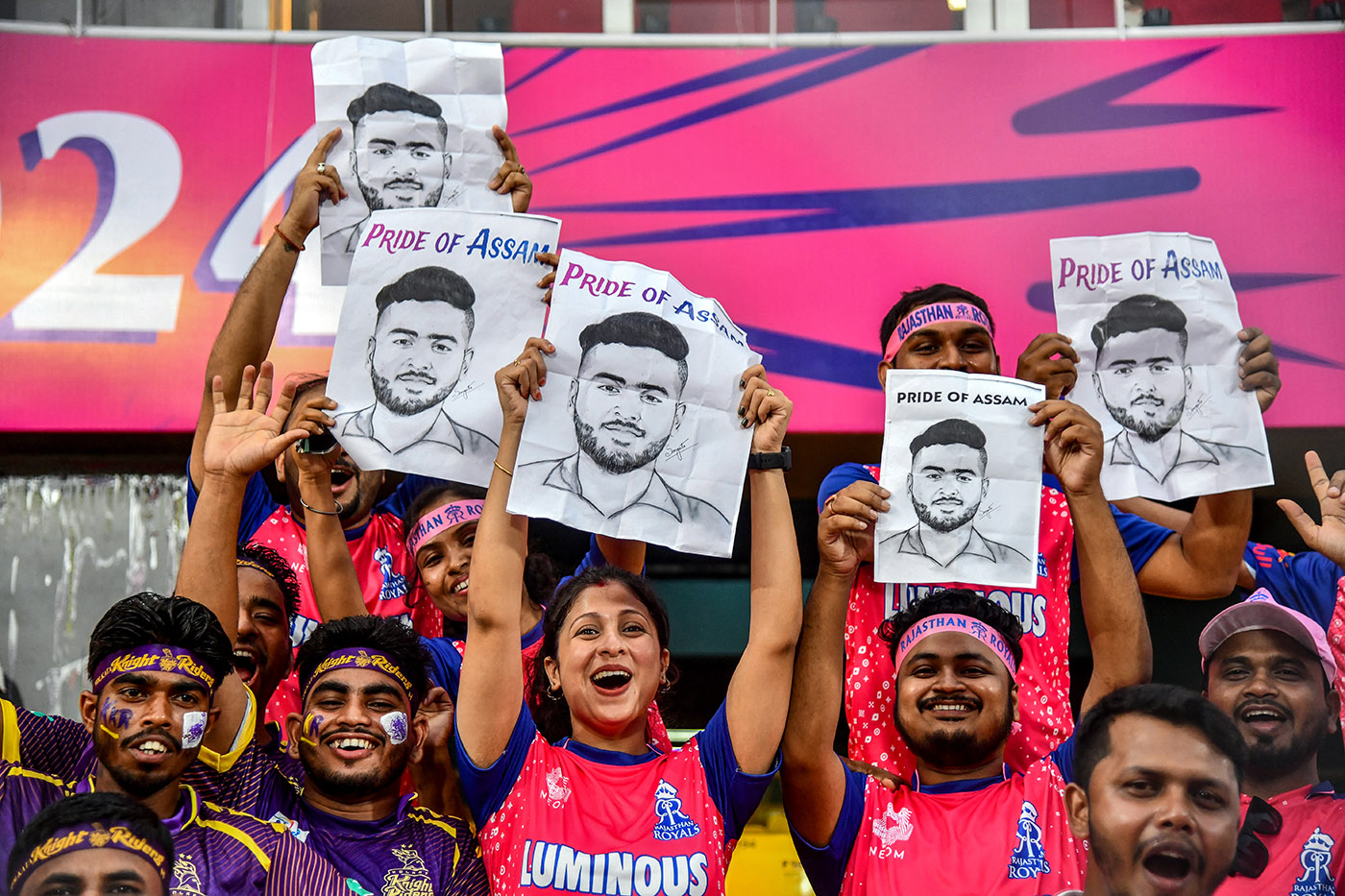
It also created a unique spectacle: a day, sometimes two, of high-stakes drama played out on live television, generating the publicity that a new league desperately needed. We at ESPNcricinfo love the buzz and engagement an auction creates, auction days routinely are the biggest traffic generators for the site outside of marquee matches. But as the league nears two decades of existence, with its primacy in the world of cricket emphatically established, it is time for a rethink.
The mega auction was a necessity to allow newer teams to build from scratch. However, assuming the IPL has now settled into a ten-team structure, franchises must be allowed to develop long-term associations. This helps them build stability, but more importantly, it nourishes fan loyalty - the ultimate marker of a league's success. Franchises must be rewarded for scouting and nurturing talent. Imagine if, after spotting, rehabilitating, and training Lionel Messi, Barcelona had to fight to buy him back in an open auction.
Finally, there is the question of player agency. In the current system, cricketers have near-zero sovereignty over their own employment. Beyond setting a base price, they have no negotiating power regarding their salary or choice of employer. If the IPL were governed by standard labour laws, this would likely be considered an abomination.
Enterprises evolve. What is ideal for a start-up may not be so for a mature organisation. The IPL has been a trendsetter in many ways. It's time now to move from a system designed for disruption to one designed for legacy.
A rivalry missing sporting flavour
What happens when a sport stops being a sanctuary and starts mirroring the ugliness of the world? The tragedy of the India-Pakistan rivalry is no longer seated in the rarity of bilateral cricket between the two but in the rotting of the contest itself. We have reached a point where the cricket field is no longer a theatre of skill but a laboratory for performative and uncouth nationalism.
Wins, losses and stalemates are common in sport and war, but in sport it's easy to admire and appreciate the skills and performances of the opponent. Respect, grace, integrity, fellow-feeling and camaraderie are ingrained values of sport. Ugliness can creep in in the heat of the moment, but what often remains is warmth and wonder, and memories of shared experiences.
Better if they don't play each other?
© AFP/Getty Images

To watch an India-Pakistan cricket match today is to witness a spectacle stripped of its essential grace. The problem isn't the intensity; it is how that intensity manifests. When a dropped catch is treated not as a sporting error but as a national betrayal, or when a dismissal is celebrated with choreographed hostility that borders on the vitriolic, it ceases to be sport. It becomes a proxy for grievances that no sport is equipped to resolve.
What began with a refusal to shake hands from the Indian players in the Asia Cup, played in the wake of a brief war between the two countries following a terror attack on tourists in Pahalgam, soon escalated to Pakistani players miming firing guns and plane crashes. The chill has continued through subsequent tournaments, including the Under-19 Asia Cup, where Vaibhav Suryavanshi pointed to his boots after being dismissed in the final. But how does one hold a 14-year-old accountable when the air surrounding him is charged with so much ill will and toxicity?
Shashi Tharoor, politician, author, former diplomat, and cricket lover (and at one time a contributor to this website), wrote an evocative piece after the Asia Cup that recalled previous instances of cricket during hostilities between these two nations, most notably during the 1999 World Cup. Even though a war was still raging in Kargil, the players shook hands. He wrote in the Indian Express:
"That handshake was a testament to the fact that even amidst conflict, civility could prevail in the sporting arena, and that human connection, however fragile, could find a moment to exist. It recalled the 'Christmas truces' of World War I, when British and German soldiers would emerge from the trenches where they had been shelling each other to death and play a friendly game of football to honour the Messiah of Peace".
The handshake isn't merely just another tradition in sport; it speaks of an honour code that distinguishes sport as a form of human combat that leaves no one on the floor. If the players cannot find it within themselves to respect the sanctity of this, if they cannot distinguish between being fierce competitors and being boorish antagonists, then perhaps it is not worth carrying on playing.
The cricketers of the year
Smriti Mandhana: For over 1700 silken runs this year, each scored with unhurried grace, sixes caressed and never bludgeoned, for carrying India through the business end of their first World Cup win, and for her dignity.
Mitchell Starc: 55 Test wickets from 11 Tests at 17.32 and a strike rate of 28.36. At the age of 35. No Tests missed due to injury. No loss of pace. Still swinging. Carried the Australian attack with Pat Cummins and Josh Hazlewood missing most of the summer. Won the Ashes. Case closed.
The T20 World Cup can't come soon enough
It feels like yesterday that Rohit Sharma and Virat Kohli were locked in that poignant mid-staircase embrace wiping away tears of joy and fulfilment after the 2024 T20 World Cup, but the next edition can't come any sooner.
The tournament makes cricket feel more egalitarian, more inclusive, more worthy. Of course, there will be too many games, there will be mismatches and inconsequential matches, but for a few weeks, a sport with cricket's relatively small global reach will have a flavour of the Olympics, bringing together seasoned champions and spirited amateurs. Who wouldn't be stoked at Italy having made the World Cup, maybe to pull off an upset, or at least threaten one? And Nepal pulling off a win or two for their effervescent and passionate fans, whom cricket should cherish and be grateful for.
Sambit Bal is editor-in-chief of ESPNcricinfo @sambitbal
© ESPN Sports Media Ltd.