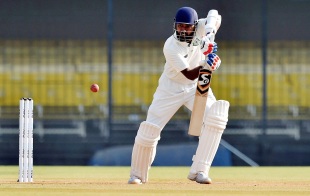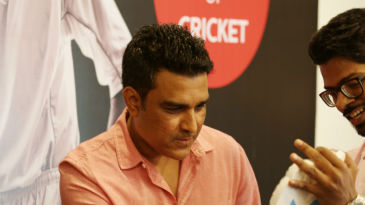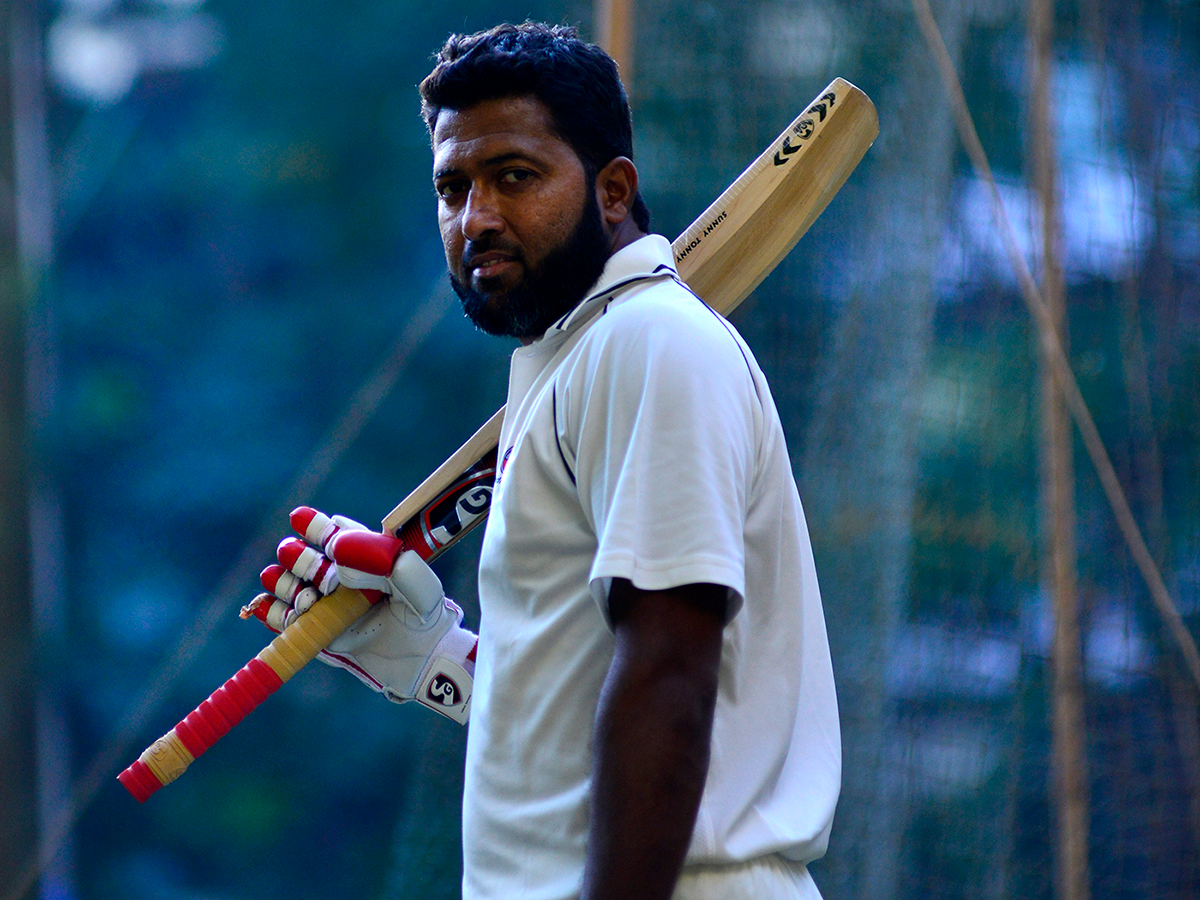





The former India batter on his life and times: playing school cricket alongside Sachin Tendulkar, his appetite for runs, and the famous India wins he was part of
A domestic cricket titan with a career spanning 24 years, Wasim Jaffer holds the record for most runs in Ranji Trophy. In between, he also had a 31-Test career with India, winning series in the West Indies and England alongside Sachin Tendulkar, Rahul Dravid and Anil Kumble. In this interview, Jaffer, now a coach and television commentator, talks about his journey from Mumbai school cricket to India colours, and why today he advises young players not to be like him.
The first thing I wanted to talk about is your origins in the game. When did you fall in love with the game and think: I want to bat, I want to play cricket?
I used to live in Bandra [in Mumbai] in a chawl [tenement]. And in a chawl, there is generally a team for tennis-ball cricket. My older brother used to play in Shivaji Park under [Ramakant] Achrekar sir [former cricket coach] and I used to play on the streets. Sometimes I used to go with him. I was a decent player. There was a guy in our colony who suggested to my family: make him play, invest in him. I was in fifth or sixth standard. I think I had that natural gift. I didn't have much power, but I could hold one end up.
I used to study in Bandra Urdu High School. We played against Shardashram [Vidyamandir]. Sachin Tendulkar had just made his Ranji Trophy debut and he got 170 against us. It was a treat to watch. He hit some seven-eight sixes. Next season, because I aimed to play higher, my family decided to move me to Anjuman-I-Islam. They had a much stronger team.
By then you had already heard about Tendulkar and Vinod Kambli. Did you try to sledge them and get under their skin or were you in awe of them?
It was more of awe. Amol [Muzumdar] got a double-hundred in that game, but it was more about Tendulkar. Amol batted literally the whole day, but Sachin was something different.
In Bombay school cricket, I remember a certain respect had to be given to the umpires. If you appealed and the umpire said not out, the whole team was supposed to say: sorry, sir. Was that there in your time as well?
Hundred per cent. "Leg stump, please, sir", "Sorry, sir." That was taught to us. Don't want to upset the umpire because otherwise you won't get the decision in your favour. Just the etiquettes.
'I grew up in an era where pretty 60s and 70s didn't get you anywhere'

So what was that phase of going through school cricket for you?
After I moved to Anjuman-I-Islam, the talk in our house was only about playing the higher level. Getting into the Shatkar Trophy [the Mumbai Cricket Association's Under-23 tournament] was the first hurdle. After seventh standard, I never took studies seriously because the only goal was to play cricket and make a name for myself.
It was my father's dream for one of his sons to play for the country. He was a diehard cricket fan. He knew some former players also. He was a fast bowler. He used to keep telling us stories about Amar Singh, Mohammad Nissar, CK Nayudu.
My second brother used to play cricket. He was the guy who coached me from the start. He used to be with me in Anjuman-I-Islam. He would watch my games. If any Times Shield cricket was happening, we'd go and watch.
Even in school, I would leave the house at 6.15 in the morning, practice from seven till 9.30-10am, and then attend school till 12-1pm, have lunch and then from 2pm to about 5-6pm, I will practise again. That was the schedule every day for the next four years.
Your beginnings were humble. Your father drove a bus for BEST, the public transport undertaking. How easy or difficult was it to get into cricket?
It was tough, but cricket wasn't as expensive as it is today. I remember the Kashmir willow bats were Rs 400-500 [US$5-6 by today's conversion], the English willow would be somewhere around Rs 1600-1800 [$18-20]. It was difficult because my father used to only earn a limited amount. But the school fees were not huge like it is today.
I remember getting my first bat was a task. Getting shoes, getting anything, was the talk of the house - how we needed to manage it.
You remember your first bat?
V12, I remember. There was a friendly game happening. I had gone shopping with my mum somewhere and ate some pani puri on the way and I couldn't play the game the next day [because of a stomach upset]. I was vomiting and crying because I wanted to play with that bat.
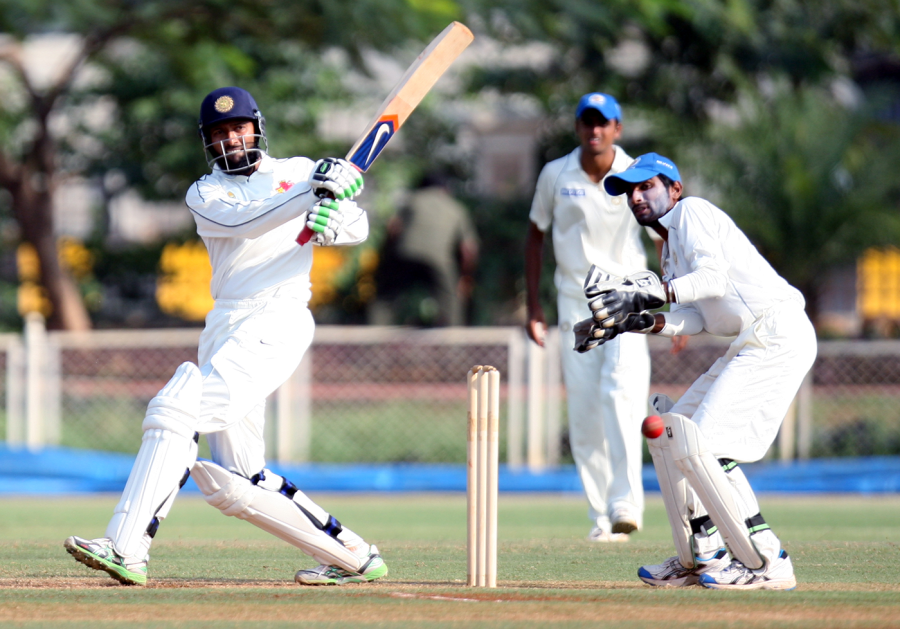
Jaffer on his way to a hundred against Saurashtra in 2010: "When you come into the Mumbai side, you are expected to perform straight away. You get only two-three opportunities"
Kunal Patil / © Hindustan Times/Getty Images
The path to Mumbai cricket has always been such a tough journey. There are so many dominant school teams. How did the next step happen for you?
I think I got some runs in that Shatkar Trophy but wasn't picked in the Mumbai team. Eknath Solkar sir was our coach. Ajit [Agarkar], Amit Pagnis were the guys I played with. I wasn't picked and I was so disappointed, but the talk at home was that you need to make more runs.
I think next season I scored a lot more runs in school cricket, got picked in the Mumbai Under-16s. I remember Sudhir Naik sir - he was the Mumbai selector for the senior team - saw me play somewhere and he wanted me to play for National Cricket Club, which had a lot of senior players, like Nilesh Kulkarni, Sunil More, Rajesh Sutar… Zaheer Khan, who came in a lot later. Then Indian Oil gave me a job when I was only 18. That was a big help.
Did you actually have to go to the office?
Just to sign the document, but I do go now. Now we have Rohit Sharma, Cheteshwar Pujara, Ajinkya Rahane, Prithvi Shaw, Yashasvi Jaiswal in Indian Oil, but I was the first player from Indian Oil to play international cricket.
Do you remember getting the call-up to play for Mumbai?
I was picked for the Ranji quarter-final against Tamil Nadu in 1995-96, but I didn't play the game. The next season Sanjay Manjrekar was my captain and Balwinder Sandhu was the coach. He was very different from other coaches. The fitness and fielding drills we see today, he had introduced to the Mumbai side back in 1996. The first game was against Gujarat at the Wankhede. I think I got out for 18 [11], lbw.
The next game was in Rajkot against Saurashtra. I told my brother that I have to score in this match because I don't know if I'll get another opportunity. Luckily, I got 314 not out. It was a very flat track. We lost the toss and Saurashtra made 595 for 4 declared. We were in the field till the third day. Manjrekar had left mid-match to play the Titan Cup final for India. The stand-in captain, Sameer Dighe, was telling me: Wasim, you need to cheer up, you stand at silly point without talking at all. And I was like, forget that, am I going to get to bat at all!?
I think around lunch on the third day we were asked to bat. Sulkashan Kularni was asked to open. It was his breakthrough. He got 240-odd, I got 314.
'Winning the 2007 series in England was outstanding'

When you come into the Mumbai side, you are expected to perform straight away. You get only two-three opportunities. As soon as you get into that dressing room, you are expected to excel straight away. Otherwise you will find it very tough.
So like Sameer Dighe said, you're not talking at silly point, not sledging. Did your personality change after that?
No, I was very much an introvert. In that team, I did not need to say much. Sameer himself could talk, Amol was very fiery, Sulakshan, Sunil More, there were plenty of guys [to give it to the opposition]. I was just a quiet boy - something that I could have changed probably.
But you have a wicked sense of humour, which shows on your social media. Did it never come out that time?
I was good in that one-liner way. Myself, Amol used to have fun in the slips, but saying something to the opposition to get them frustrated was not in my nature.
Were there bowlers of reputation who you enjoyed playing against?
After that first season, I started scoring consistently. I got picked for India A. The quality of bowling [in India] was so good, especially the spinners. I remember playing against Venkatpathy Raju, Narendra Hirwani, Rajesh Chauhan at such an early age. Unfortunately I could not play [Javagal] Srinath and Venkatesh Prasad, because they were obviously busy [representing India], but there were enough bowlers to trouble you.
Who was your biggest influence at this stage in terms of a coach?
I think it has to be my brother through and through, but there were so many coaches who came and helped. Like I said, Balwinder Sandhu, Eknath Solkar sir. But I would always go home and my brother would be watching the game. He used to travel quite a lot with me as well, especially in Mumbai. He was always there and I listened to him and applied it to my game.
What is the best bit of coaching advice you got in your formative years?
Just to score heaps of runs. That was in my nature. It's something we talk about when we talk of Pujara nowadays - that it was built in right from the start. We were playing in that era when pretty 60s-70s did not help. If you bat, the minimum target was to get a hundred. And if you get a hundred, the next target is 150 and 200. That was the Mumbai style of batting. I was never happy just getting a hundred.
Jaffer with his wife, Ayesha, shopping during India's tour of Bangladesh in 2007
Santosh Harhare / © Getty Images

Pujara strikes me as someone who was really mentally into it and it takes a lot out of him to spend that amount of time at the crease. You strike me as someone who was just so calm, someone who will get 300 and still not feel tired. Mentally, did it take a lot out of you as well?
No, I did not get that tired. Pujara was similar, in fact. I do not think he got tired. I remember when I was playing for India, he had just come into the Indian Oil side. He batted the whole day, he got 99-100 and he felt: you know, I did not get that feeling [of scoring a hundred]. This was after batting 100 overs. And I think the next game he got a double.
How would you describe your own personality at that point? That is a big part of this appetite for runs you had. Were you very mature for your age?
I was a very shy, very introverted guy. If I can go back, I would like to change that. My family protected me so much that I learned a lot of things a lot later, like socialising, making more friends. For me, it was all about cricket. Now that I coach, I keep telling people that you need to relax, you need to have a little bit of a life after cricket. Don't put too much pressure on yourself. Eventually you will get what you are destined to get.
So for you, beyond cricket there was nothing else?
I think so. Making a life out of cricket, earning money, stabilising my family, looking after the parents, responsibilities… I probably needed to relax a little bit.
At that time, when travelling with the Mumbai team, you would have had a lot of experiences of sharing rooms with team-mates. Do you have a room-mate who you spent more time with than anybody else?
The first time I was in the dressing room, in 1995-96, it was with Sulakshan Kulkarni. He was the senior-most guy. He spoke non-stop about cricket. Similar to me - eat, sleep cricket all the time. A lot later, I roomed with Manish Patel, the fast bowler, Santosh Saxena, another fast bowler, Ramesh Powar. Zaheer and I shared [a room] when we played for Mumbai and West Zone.
Do you recall the moment when you were told you were selected for the India squad against South Africa in 2000?
I remember the Indian team had a very tough tour of Australia [in 1999-2000]. So I was kind of expecting [a call-up] because I was scoring runs. South Africa came to India for a couple of Tests. I was picked for the Board President's XI. I think I did okay in that game [at Mumbai's Brabourne Stadium]. And the first Test was in Wankhede.
'I had my successful time under Dravid, but I really admire what Ganguly did'

I was lucky I was debuting at my home ground. It didn't go as well as I would have wanted, but it was a dream come true for my family, my parents especially. My parents were in Hajj at the time. Everybody was over the moon.
Who told you that you were going to be picked?
I think I was told on the morning of the Test, because I remember it was between me and Nikhil Chopra - whether we would go with an extra batter or an extra spinner. I think I was told about ten to 15 minutes before the toss that I was playing. Kapil Dev was our coach. It was Sachin's last series as captain.
You feel nervous because you are playing South Africa - Allan Donald, Shaun Pollock, Lance Klusener, Jacques Kallis. Hansie Cronje was the captain. Such a strong team. And they outplayed us in both Test matches.
I think that was the last time India lost a home series [till 2012].
Did the thought that you might have blown your opportunity creep in after the debut?
Looking back, I felt I wasn't ready for such bowling. Sometimes I feel I wasn't mature enough for Test cricket then. I learnt a lot playing in those two Tests. I got dropped again, went back to the drawing board, got a lot of runs. I was picked again in 2002 and played five Tests - three in West Indies, where I got runs, and two in England. I think I got 50 at Lord's, then got dropped again.
Then three years of toil in domestic cricket. I made my comeback again in 2006, which was a slightly longer and more successful [stint]. Looking back, had I been more mature, had more knowledge about it… But I was only one among a select few to get the opportunity to play Test cricket for India. I was No. 225.
You've actually featured in a lot of prominent overseas Test wins for India - there was Jamaica and Johannesburg in 2006, Trent Bridge in 2007. The ones in England and West Indies were also series-defining wins. Given how rare overseas Test wins were for India then, do you remember your emotions about them?
I think England and West Indies came back to back. Rahul Dravid was the captain. And we were lucky to get a draw in the first Test at Lord's. I think MS [Dhoni] played a very good knock [scoring 76 in over three hours].
Jaffer made 62 and 22 in India's famous win at Trent Bridge in 2007
Nick Potts / © PA Photos/Getty Images
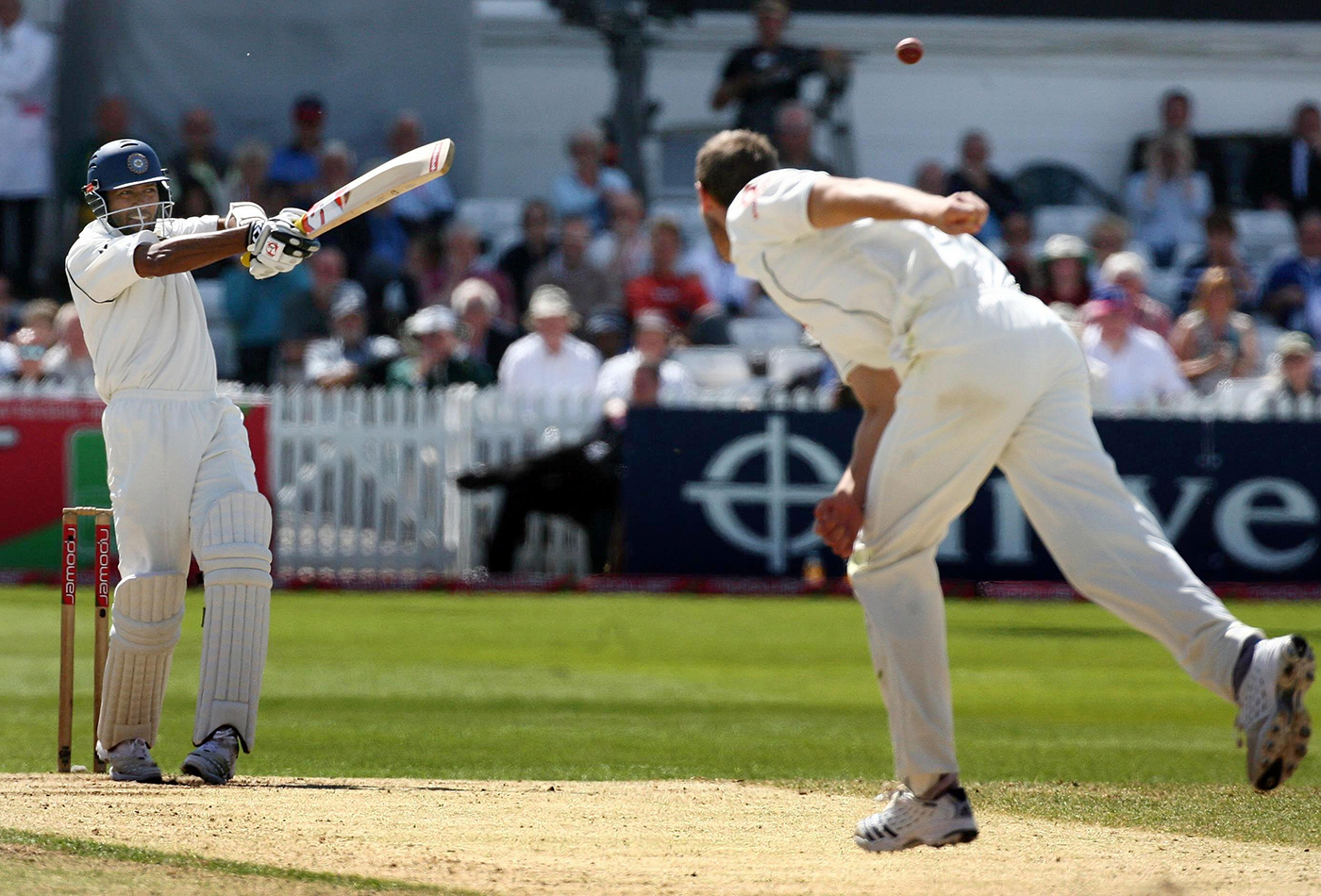
But in the second Test, we played really well. Zaheer bowled outstandingly. [As did] Sreesanth and RP Singh. Then myself and Dinesh Karthik had a really good partnership, close to 150. That set the game up. I think it was the only series where none of the batters got hundreds. Anil Kumble got a hundred at The Oval, but everybody chipped in with some scores. I think we dominated the Oval Test also. We should have won that Test.
It was outstanding, especially because England was so strong at that time. Sachin, Sourav [Ganguly], Rahul and Anil [Kumble] hadn't won too many series outside India. For them, it was fantastic. Again, winning in the West Indies after [35] years. Jamaica was a little up-and-down wicket and Rahul played outstanding knocks in both innings.
You played under quite a few captains, starting under Tendulkar, then Ganguly, Dravid, Kumble and Dhoni. How was Dravid, under whom you won series in West Indies and England, different from the others?
I think he was a very successful captain. It was just unfortunate that he was captain when Greg Chappell was there [as coach]. He was very supportive, a decent communicator, a very easy, approachable guy. He could speak really well. I was very surprised that he decided to step down after the England series [in 2007].
There was so much happening in Indian cricket in those years from your debut till these iconic Test series wins. After your debut came the match-fixing scandal for Indian cricket and for Cronje. Then in 2006-2007, India won the T20 World Cup, but there was also the falling out between Greg Chappell and Sourav Ganguly. As an active cricketer at that time, how did you view all of it?
It didn't have much impact, to be honest. I was out of the team and I wanted to cement my place, so I was more worried about those things.
But you could see there were some tensions going on. I remember it was such big news [the fallout], because Sourav went out of the way to get Greg Chappell [appointed as India coach]. He admired him as a player. Obviously, Chappell was a great, great player, but then Sourav was removed from captaincy, Rahul was made captain and some senior players were not happy, for whatever reasons. I think Rahul found himself in a very difficult situation.
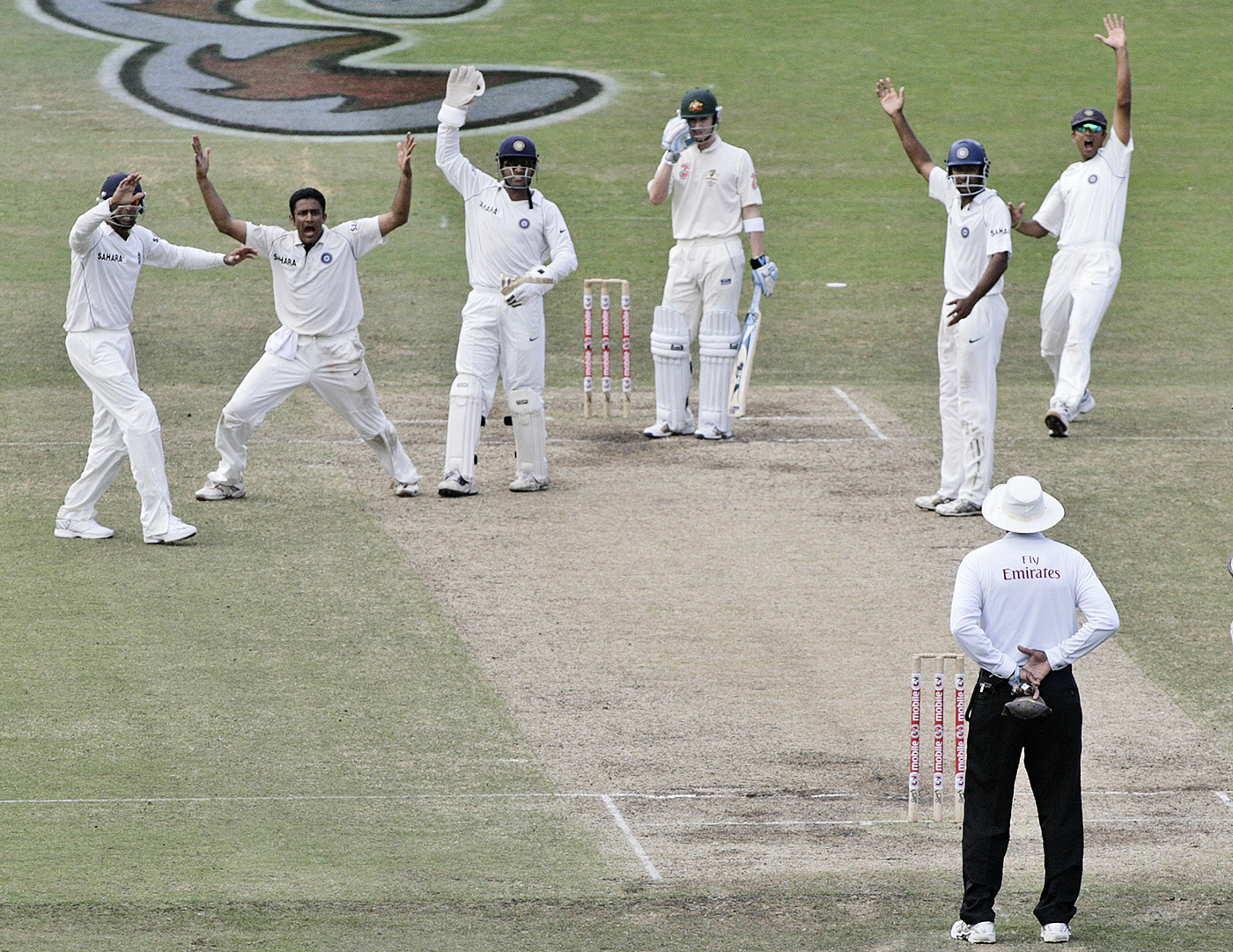
VVS Laxman, Anil Kumble, MS Dhoni, Jaffer and Rahul Dravid appeal for Michael Clarke's wicket in the Sydney Test of 2008. Jaffer says that while he had a short India career, he feels fortunate to have played with legends of the game in some memorable series
Rob Griffith / © Associated Press
You did work with Greg Chappell. What was your experience like?
I think he was very straightforward. He was a very Australian, no-nonsense kind of a guy. He wanted Indian cricket to go to the next level, but I think the process he took was not the right one. In that process he upset a few people and he didn't understand the Indian way of getting things done. He was very blunt, something that players who have played so much don't like.
You think it was a personality thing? That his intentions were always good?
I'm sure somebody who takes up a head coach job, obviously the intention has to be good. I can't imagine any coach would want to not win, but I think the way he got those things done, the miscommunication that happened - players felt he was talking behind their back.
Who was the best captain you played under?
I had my successful time under Rahul Dravid, but as an Indian fan or as an Indian cricketer, I would say I really admire what Sourav did in his time. It was a very difficult time to be a captain, and how he built the team and how India became a strength away from home under him... We competed with Australia. We drew the series in England in 2002 as well.
Like Chappell, Chandrakant Pandit, a coach you played under in domestic cricket, was also known to be straightforward and no-nonsense.
A lot more [than Chappell]. I think Chandrakant Pandit's way of operating will work in the domestic circuit. It probably won't work at the higher level but he knows how to get things done. He was the head coach when I was at Vidarbha [winning Ranji titles in 2017-18 and 2018-19]. I also played under him when he was Mumbai coach.
He is very old-school, very strict, 24x7 involved in cricket. That was something Vidarbha needed at that time. He has his own style and there are trophies to back his way. Sometimes I feel he does go over the top but his methods work. He is always after you but he is too involved in the game. He watches the game like he is playing in it. He likes players who are very studious. But he was a very good captain in his time as well, so he always thinks like a captain, and Vidarbha needed a coach like him to make them believe in themselves.
What was it like for a first-class player when you started in 1996 and when you finished in 2020?
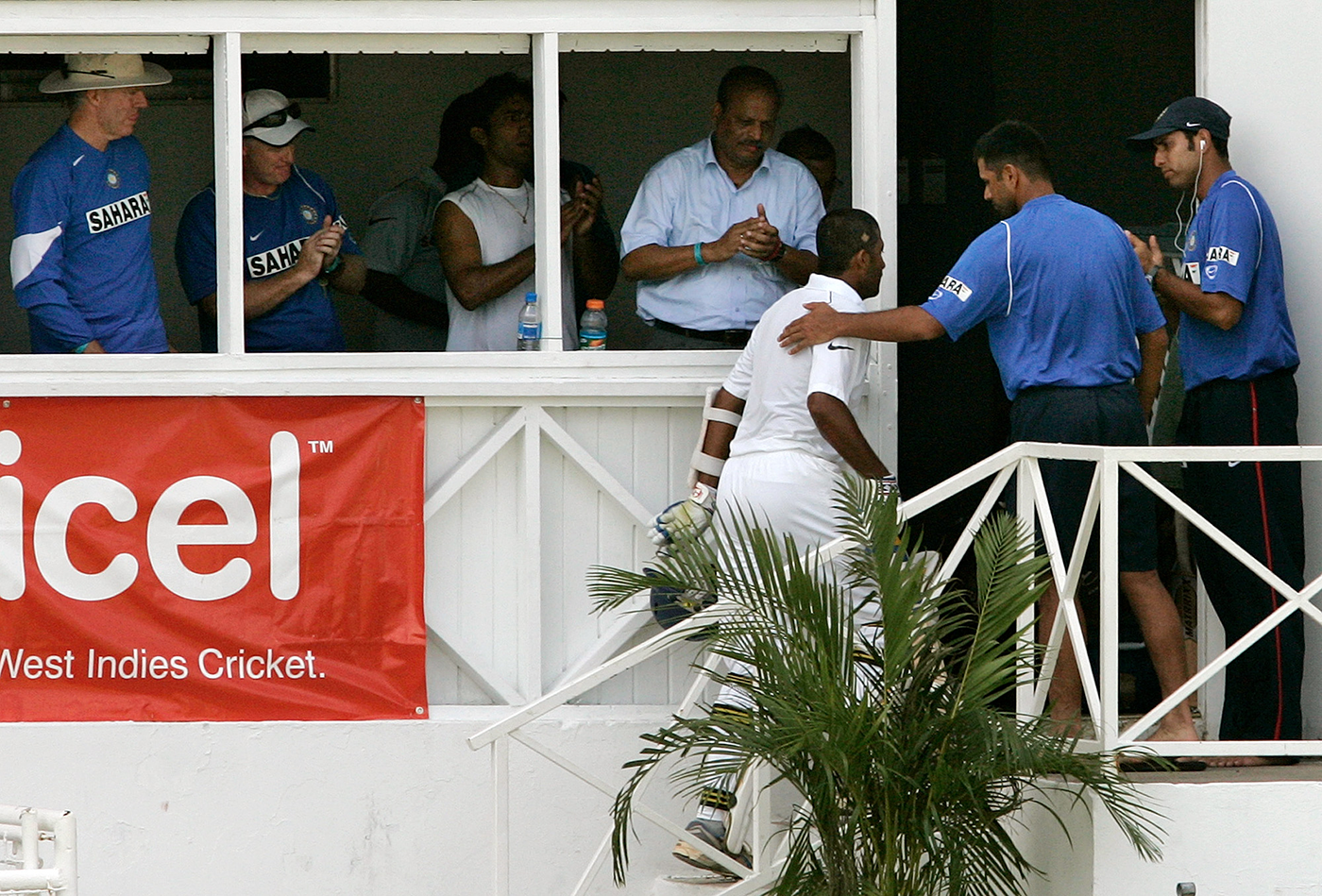
In Antigua in 2006, Jaffer batted for over eight hours to score a Test-best 212
Andres Leighton / © Associated Press
In my time, four-day cricket was the biggest thing. One-day cricket was also picking up but it was not your priority. The priority was always Test cricket. But now I think the priority has changed. My advice when I coach is to tell people: there is nothing wrong in prioritising T20 cricket, but you need to accommodate red-ball cricket also up until you are 32-33. It is fine to be not so good in one format but you cannot ignore red-ball cricket.
By the time you finished, the youngest player in your team would have been about 15 years younger than you. Do you feel like a lot has improved in terms of the quality of infrastructure, facilities, training for domestic players?
I think the facilities have definitely improved. Some of the states were not so good when I started. The competition was between only a few teams. But by the time I was finishing, literally any team could beat anybody, especially the elite teams. A lot of the credit needs to be given to the BCCI, because the infrastructure has improved so much. For example, Vidarbha built an indoor facility, an in-built academy where the boys from the district could come and play and stay there for literally the whole season.
Saurashtra improved so much, Gujarat, I remember, were very much the underdogs when I was making my debut.Then once Parthiv Patel started playing, they got so strong. Kerala and Karnataka as well.
You have also been an active T20 coach, including in the IPL. How much did you have to change yourself for that role?
When I became a coach in the IPL [for Kings XI Punjab], I was not talking much, because Anil Kumble was the [head] coach. We had players like KL Rahul, Chris Gayle, Glenn Maxwell. You don't need to talk too much to them, given what they have achieved in this format. So I was learning and helping the Indian players be comfortable, be ready for the games if they got selected.
But I have learnt a lot. I have coached Uttarakhand, Odisha, Punjab, now I am working again with Vidarbha. I think I am learning my way.
Coaching established internationals is one thing, but, say, you work with Prabhsimran Singh, the kind of batter that a Chandu Pandit or Vasu Paranjape or Ramakant Achrekar at the Mumbai school level would have thrown out if he played that kind of game. But now that is what you have to encourage.
I think now it's about getting the best out of them rather than changing them into something else. The great example is that Gabba Test we saw India win [in 2021].
The leading all-time run-getters in Ranji Trophy history - Jaffer, with over 12,000 runs and Amol Muzumdar, with over 9000 - are from Mumbai
Kunal Patil / © Hindustan Times/Getty Images
You have Cheteshwar Pujara, who is taking blows ball after ball, batting for the whole day, scoring 56 or 60. And there is Rishabh Pant, at the other end, playing extravagant shots. But both have scored runs. As a coach, you have to understand your Pujaras and Pants. You can't ask Pant to bat like Pujara and Pujara to bat like Pant. That's the most important thing for a coach to understand - the personalities - and make them prosper in their own way.
How do you look back at your highs and lows today? Do you have regrets?
I think I will have to be very content. From where I have started to where I am sitting now, I have been very fortunate. I need to be very grateful to the almighty that I could play for the country and achieve so much.
Even though I'm remembered more for my domestic record than for my international cricket, I will take it, because I was fortunate enough to play 24-25 seasons. In that period I also played for India, played a few good innings, played in a few really good series, played with the legends of the game. I was very fortunate.
Who would have imagined playing with Virender Sehwag, Rahul Dravid, Sachin Tendulkar, VVS Laxman, Ganguly, Javagal Srinath, Anil Kumble? I was very fortunate to share the dressing room with them. Really happy memories.
You could regret so many things, but the important thing is to become a better part of you every single day. Even now, I want to become a better coach, a better broadcaster. There is always room for improvement.
I could say: I could have played 100 Test matches, I could have got 10,000 runs, but I am really thankful to the Almighty for giving me whatever he has given me.
Do you still have that V12 bat of yours?
Unfortunately not. But I have got a lot of bats that I have scored runs with. The one with which I scored the triple-hundred in the Ranji Trophy, the bats I got hundreds in Test matches with. They are under my bed.
Raunak Kapoor is deputy editor (video) and lead presenter for ESPNcricinfo. @RaunakRK
© ESPN Sports Media Ltd.