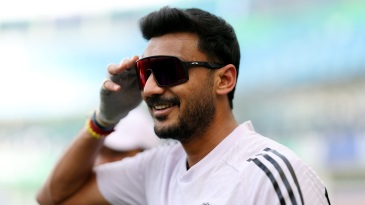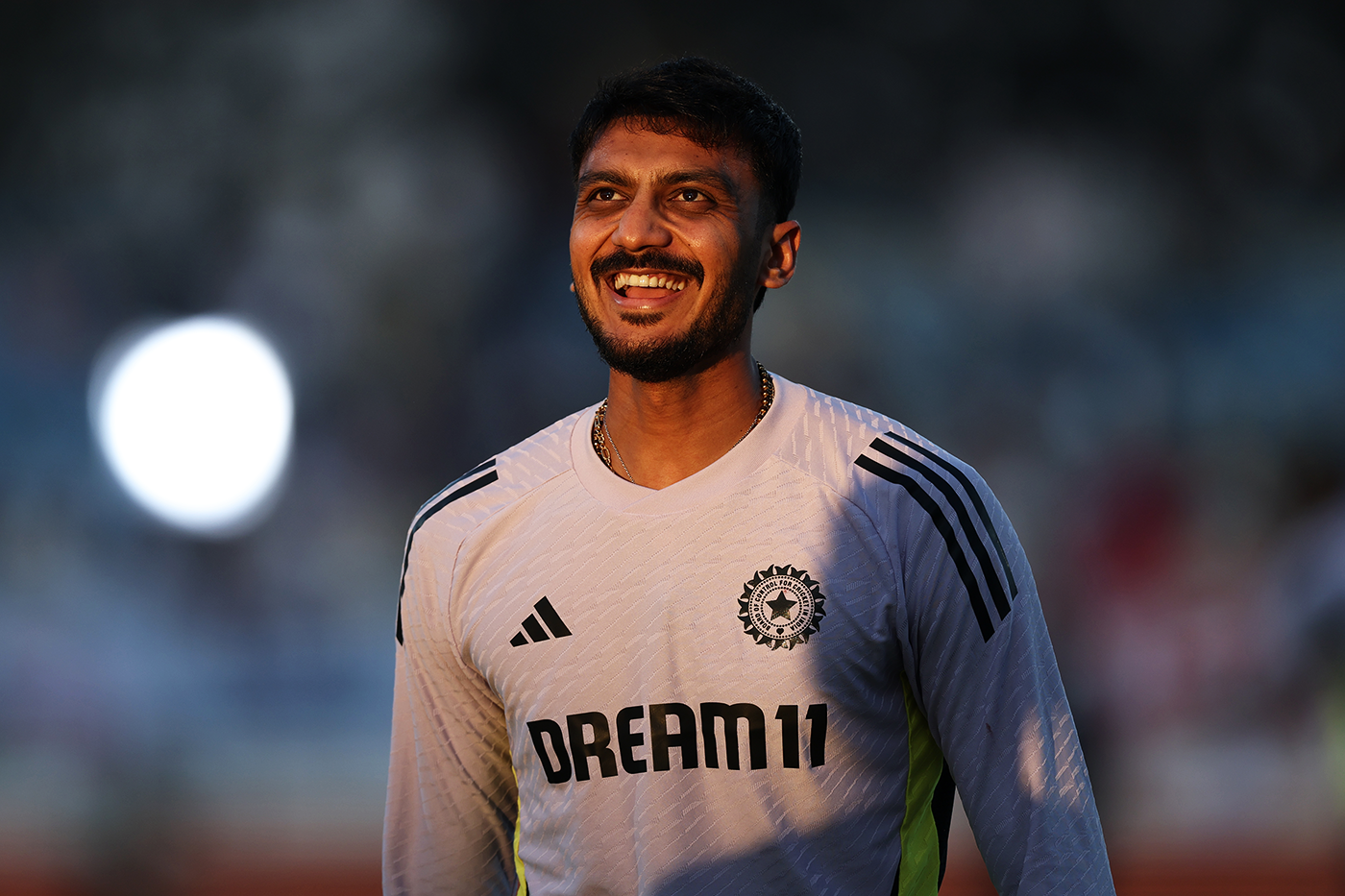
Life Ax: "I like to be in a frame of mind where I can give my best, where I keep laughing and cracking jokes"





Life Ax: "I like to be in a frame of mind where I can give my best, where I keep laughing and cracking jokes"
India's vice-captain at the T20 World Cup and key allrounder doesn't like to look too far ahead; that way disappointment lies
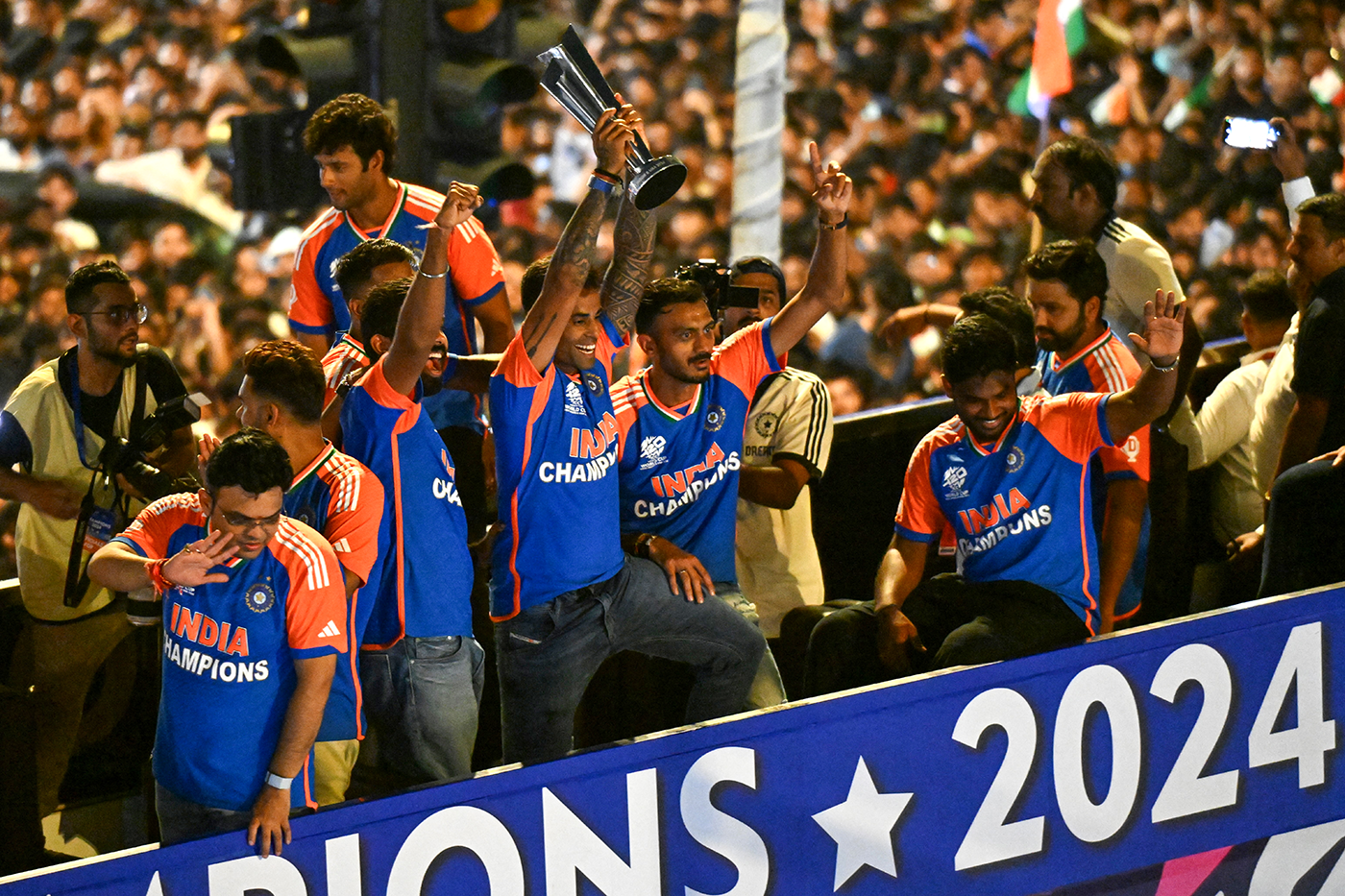
"I never felt like this before that day," Axar Patel says, shaking his head and smiling. He is looking at a reel on his Instagram, at my request - one he posted from the victory parade in Mumbai on July 4, 2024, days after India's T20 World Cup win in Barbados.
"I don't think anyone other than the 15 players who were there will [know what it was like]... This was something different - the experience, the atmosphere, the praise we got, the public, I had never seen such a big [crowd] altogether and shouting just one thing: "India! India!" This was something different."
We are in Delhi Capitals' team hotel in Chennai in April 2025, during the IPL. Axar has walked in fresh after a shower following the team's afternoon training session. It has been a long day for him, having started at about 7 in the morning, when he had to go to a specialist to tend to a finger niggle.
Gully cricket is where many of India's cricketers cut their teeth. Axar was no different. Growing up playing tennis-ball cricket in the streets, he fell in love with the game young. He would often sleep with ball and bat in his bed. If he lost one of them, he would moan and wail until his parents got him a replacement.
The biggest influence on his cricket remains his father, Rajesh. "Even if Zimbabwe and West Indies were playing, he would stay awake and watch the match," Axar says of him. "That passion passed over to me easily."
It grew when he found he was good at the game. He started out playing with his cousin Sankship, nine years older, and his friends. The older boys, in a show of largesse, would give Axar, the youngest, a few token deliveries to face. "When I started to hit," he says, "they realised I was good enough to join the team."
His wristy flicks and strong on-side play earned him comparisons to a Sri Lankan legend - "Nadiad ka Jayasuriya", he came to be called. "In gully cricket there's barely any areas to score, but for me, leg side was the best access," he says.
'My dad asked me to fulfil my grandmother's last wish by becoming a cricketer'

Soon he was good enough to be able to charge a match fee of Rs 500 to play in tennis-ball tournaments Sankship would enter the team in during the summer, in and around their home town. When he was in the eighth grade, Axar moved to a new school, where he quickly formed a bond with half a dozen boys who would soon become close friends.
One of them entered the team in an inter-school tournament at one point and later said to Axar that they needed to have training sessions to prepare. "I said, 'Let's practise in gully cricket,'" he says. At this point, it was revealed the inter-school tournament would be played with a real cricket ball.
"I told him, 'Have you seen a leather ball in your life, close?'" Axar asked the friend to pull the team out of the tournament. But the Kheda Cricket Association warned them that they would be disqualified for three years as a penalty if they did. They decided to play, lose and bow out respectfully.
They spoke to a senior schoolmate, who played club cricket. He helped school them in the basics of playing the cricket ball. "I had no idea what a leather ball was until then," Axar says. "When we went to train with this guy, we practised on concrete pitches, where the ball was made of cork."
They had just two kitbags between everyone in the team - one given by the school, and the other owned by a boy who had wicketkeeping gloves and demanded he be picked to keep wicket. There were no volunteers for the opening position and Axar, a fast bowler then, opened with bat and ball.
In the first match, he was out on 20. "A fast bowler from St Mary's school bowled me, chucking." He refused to walk. "I told the umpire, 'Bhai woh throw ball dal raha hai, so main out nahin hoon.'" (He is throwing, so I am not out.) The umpires wouldn't budge, but Axar was adamant on not leaving the field. Finally, the senior player who helped the team train had to help usher him out.
It was a two-day match. Though his team took the first-innings lead, which counted as a win if there was no outright result, Axar went in to bat in the second innings and insisted on facing the same bowler who got him out the previous day. "I hit five fours off five consecutive balls," he says.
Crowd pleaser: Axar Patel (fifth from left) and his team-mates soak in the adulation during the open-top bus parade in Mumbai after winning the 2024 T20 World Cup
Punit Paranjpe / © AFP/Getty Images
Impressed by his skills, officials from the Kheda Cricket Association asked him to enter a camp for the district team. He signed the forms but did not go, until his father, on request from the Kheda officials, asked him to go to the camp a few times a week.
The reluctance was because his dream then was not to be a cricketer. "I wanted to become an engineer," Axar says. "I played for the sake of playing, but never thought of it as a career. From year one to ten [in school] I would always be in the top three. I would compete with my friends as to who was the best. I was a bright student."
When he kept hearing from his family that Sankship had done his Bachelors in computer science, and then a Masters in it, he resolved to do something as impressive, if not better. "I had confidence always. But I was not serious about cricket. I told myself - you [Sankship] have done MCA, I will do BE [Bachelor of Engineering]," he says.
Axar was picked for the district team soon and was named captain in his third match. He was called up for state trials at 14, in year ten of school. Rajesh prodded him, and in an inversion of the usual script applicable to Indian schoolboy-cricketers, encouraged Axar to stick to the game, despite the boy himself wanting to give up on it.
About a year later Kheda were playing an away match against Gandhinagar in the inter-district tournament. At midnight on one of the match days, Axar got a call from his friend, who told him his grandmother - Rajesh's mother - had died of a heart attack. His father, though, had not called, and Axar was confused about why.
He called home but Rajesh didn't say anything about his mother's passing. Nadiad and Gandhinagar are about 90 minutes apart by road. Axar, when he asked about going back home, was told by the team manager he couldn't leave during the game. He spent a sleepless night, crying. Two days later, when he got home, his father hugged him and told him he did not want to disturb him during the match by telling him of his grandmother's death on the phone.
That night Rajesh asked Axar to fulfil a wish of his. "He was dithering, but he eventually said: 'Look, my mother's last wish was, she felt you will play cricket for India. So I am asking you to fulfil her last wish: play good cricket.'"
"If I am clear and calm, I can execute. It is only when you are in two minds that things go against you"
Randy Brooks / © AFP/Getty Images
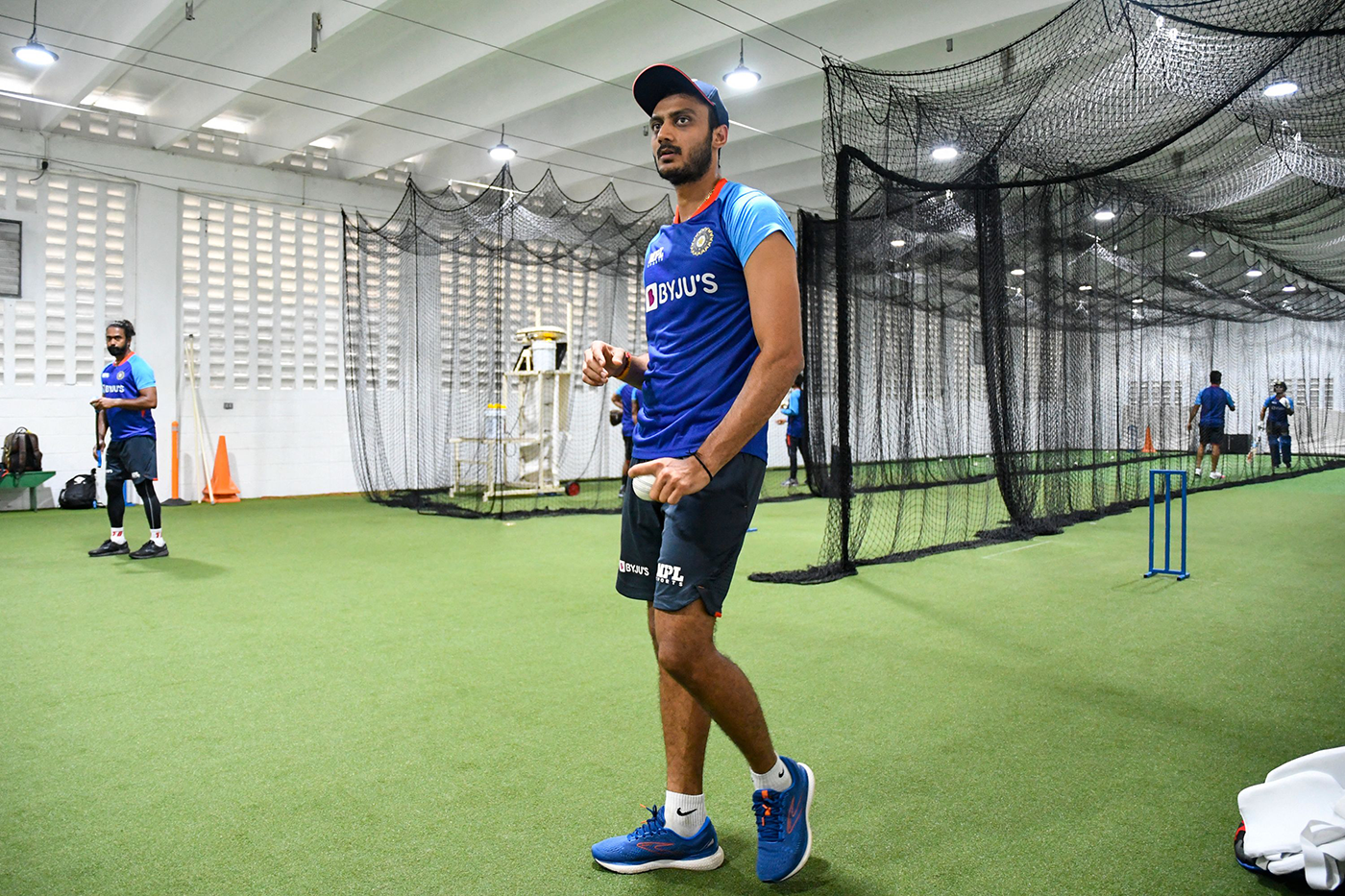
Axar gave his father his word. "I became serious then [about cricket]. I told Dad, 'I'll play for India, at least one match. I will come on TV. Whether I will play or not, I don't know, but I will get selected for one match at least."
On June 15, 2014, Axar made his international debut, becoming the 202nd player to play ODIs for India, in an away series in Bangladesh. He was at Eden Gardens the afternoon the selection meeting to pick the squad for the tour was held; he was due to play Qualifier 1 of the IPL, for Kings XI Punjab against Kolkata Knight Riders.
"I was sitting in the corner seat in the dressing room when Cheteshwar Pujara congratulated me [on being picked for India]. I asked our manager for my phone. I called my dad first. It was the second time I had heard him cry [the first was after his mother's death]. I told him, 'Yeh ho gaya! Ek baar toh aa hi jaoonga TV pe blue jersey pehen ke.' [It's happened! I'm going to be on TV at least once wearing a blue jersey.] Hard work was there, but destiny supported me."
After Kings XI made the final that season, his first in the IPL, Axar came home to a grand welcome. "My name had come in the Indian team. About 500-600 people came to receive me. They put me on top of a Thar jeep and took me on a tour around Nadiad. There was a crowd following us. After that, things changed completely."
Like many other young Indian cricketers to come through in the past 15 years, Axar names MS Dhoni as a key influence.
In October 2014, Axar was named in the India squad for the final two ODIs of the five-match home series against West Indies, having done well in the Champions League T20 for Kings XI Punjab. He joined the squad in Dharamsala, ahead of the fourth ODI.
Blue-collar struggles: Axar made his India debut in 2015, but found it difficult to really cement in place in the side in the early part of his career
John Pryke / © AFP/Getty Images
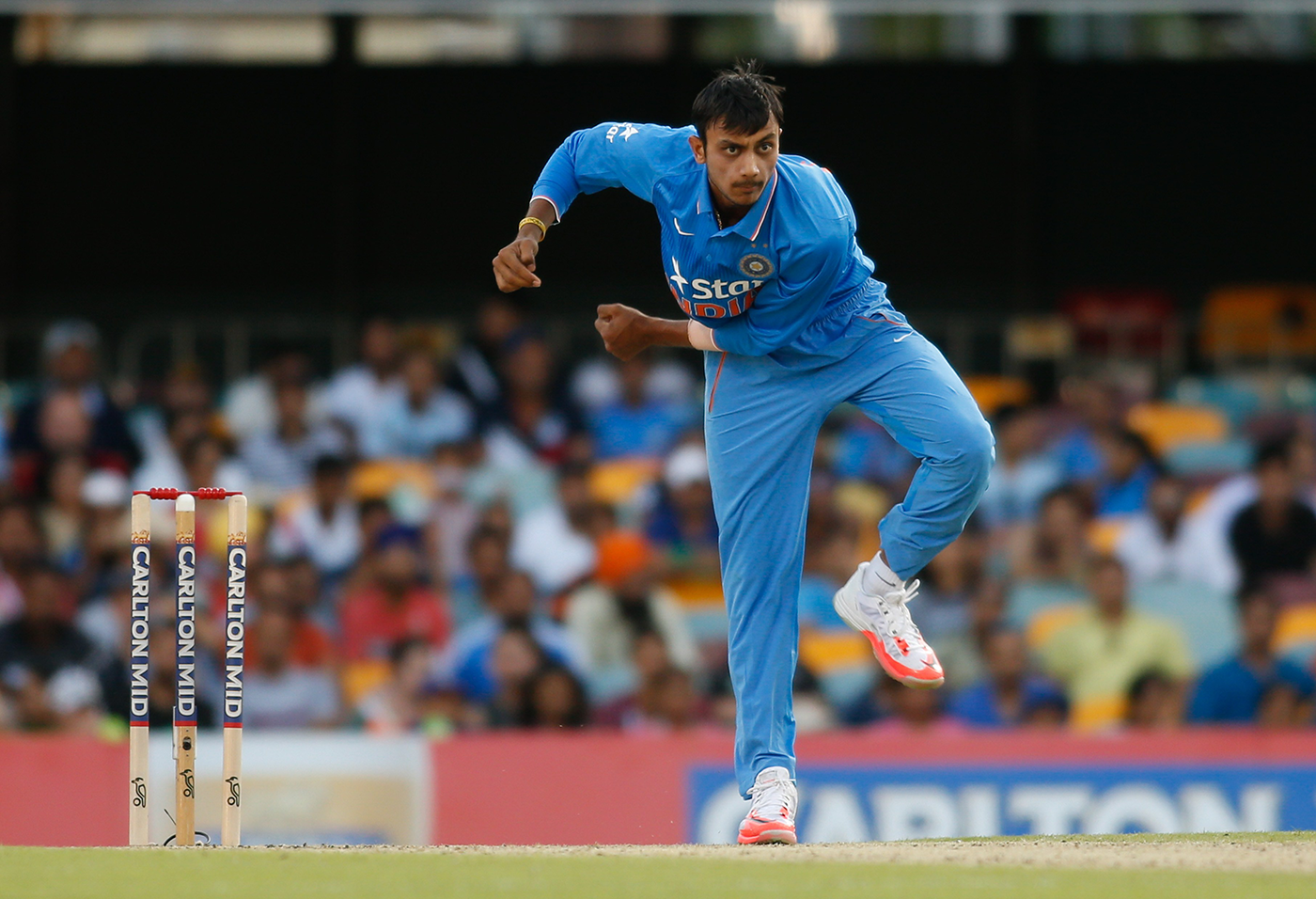
He was late boarding the bus on his first training day. He had not been added to the squad instant-messaging group yet and was told he would be informed about when the bus would leave, but when the call came, he was in his hotel room and it was to say the bus was ready and everyone was waiting for him. Axar was especially embarrassed because it was his first time meeting the main India squad members, including Dhoni, the captain. "I kept my head down and walked quickly to the last row."
As he sat in the middle seat there, he looked to his right and saw Dhoni in the corner. "He said, 'Bhai, idhar aa ja. Jaldi bahar jaana hain kya tujhe? [Come sit here. Do you want to get out of the bus quickly?]"
"That path [the aisle, which Axar was facing] shows the quickest route out," Dhoni said. Axar smiled back nervously. In the minutes that followed, nervous about saying or doing something silly, he just answered Dhoni's questions quickly.
Soon enough, though, he got comfortable with the captain, and was able to express himself clearly during their chats at different points over the years. Dhoni, Axar says, has empathy, like any good leader. He brings up a conversation about five years into their relationship.
For the 2021 T20 World Cup, Dhoni travelled to the UAE as India's mentor. Axar was part of the Indian contingent but a reserve. On a training day in Dubai, en route to the ground, he approached Dhoni, in his favourite corner seat in the last row of the bus. As Axar slid in next to him, Dhoni said: "Yes, I knew you'd come. I was just waiting to see when you'd come."
Axar said: "Mahi bhai, in international cricket I haven't been able to prove myself exactly what I can do, especially in batting more than bowling. You have seen me for a long time. What can I do?"
Mahi mentor: the guidance of MS Dhoni (right) has been invaluable to Axar
Lakruwan Wanniarachchi / © AFP/Getty Images
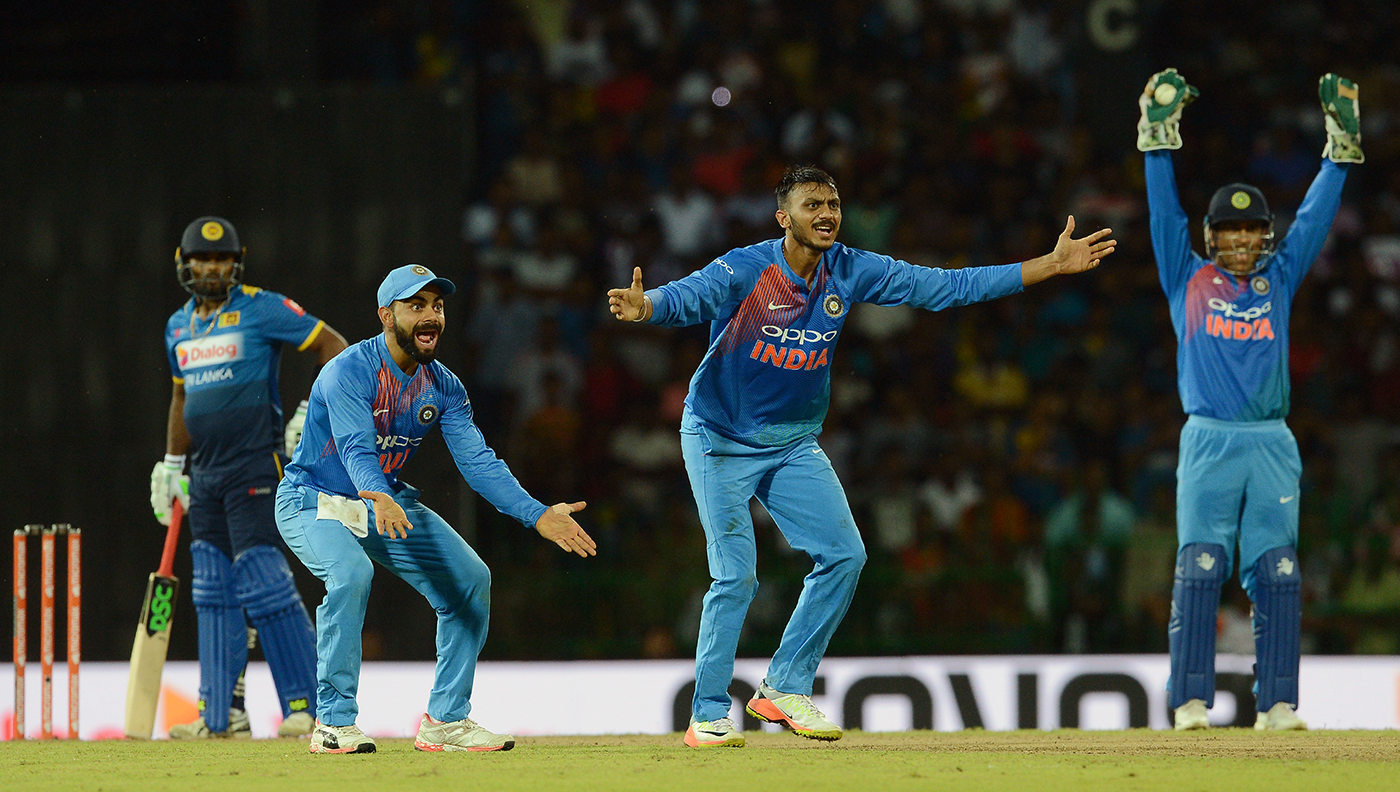
Dhoni's response was insightful. "He said: 'When you came in, you were 19 years old. A few times you were out early, facing yorkers. I remember watching you get lbw early on to an ball from Dale Steyn that cut in [in a 2015 ODI].
"All these things are not leaving your mind - at times you've got out to a good ball, but you are stuck thinking about those failures. When you go to IPL, where you have made runs, you never think about all these things, but as soon as you return to play internationals, you start saying or thinking, 'I have to prove this. I have to tell this person this. I have to play this way.' So the way you play in domestic [freely] and make runs in IPL, when you go to internationals, settle down, take singles and doubles, become comfortable and then attack. Play your game. Don't go with the burden that if I get out, I will be a failure if I don't make runs again, because I am playing as an allrounder. Thinking on those lines, you are adding pressure on yourself.
"I can only tell you so much. Eventually you will have to sail that boat towards that goal."
Dhoni's advice proved valuable in difficult times for Axar. Between 2014 and the time he was ruled out in the 2018 Asia Cup with a finger injury, he played about 50 white-ball games for India. He would only return two and a half years later, in 2021, because the team think tank stuck with the wristspinner pairing of Yuzvendra Chahal and Kuldeep Yadav in the interim. Also, Ravindra Jadeja, who replaced Axar in that Asia Cup tournament, seized his opportunity, having sat out for a year himself, and Hardik Pandya filled the seam-bowling allrounder's role.
"In those three years I worked really hard on my batting, bowling, fitness, everything," Axar says. "My mind also. I understood that despite not doing anything wrong I have not been or am not being selected for whatever reason. So what can I do? What can I focus on? Obviously there was domestic cricket and IPL, so I performed consistently there. The performances in Ranji Trophy, India A and IPL helped me grow in my role, and when I got the call in 2021, things changed.
If Axar's injury reopened doors for Jadeja in 2018, the boot was on the other foot in 2021, when Jadeja was ruled out of the home Test series against England, and Axar excelled, taking 27 wickets in three of the four Tests and finishing as the second-highest wicket-taker behind R Ashwin. Soon, he was among the first-choice bowling allrounders across the three formats.
Bags, say I: Axar took 27 wickets in his debut Test series, against England at home in 2021, but hasn't managed to take more than nine in each subsequent series, all played in the subcontinent
Pankaj Nangia / © BCCI
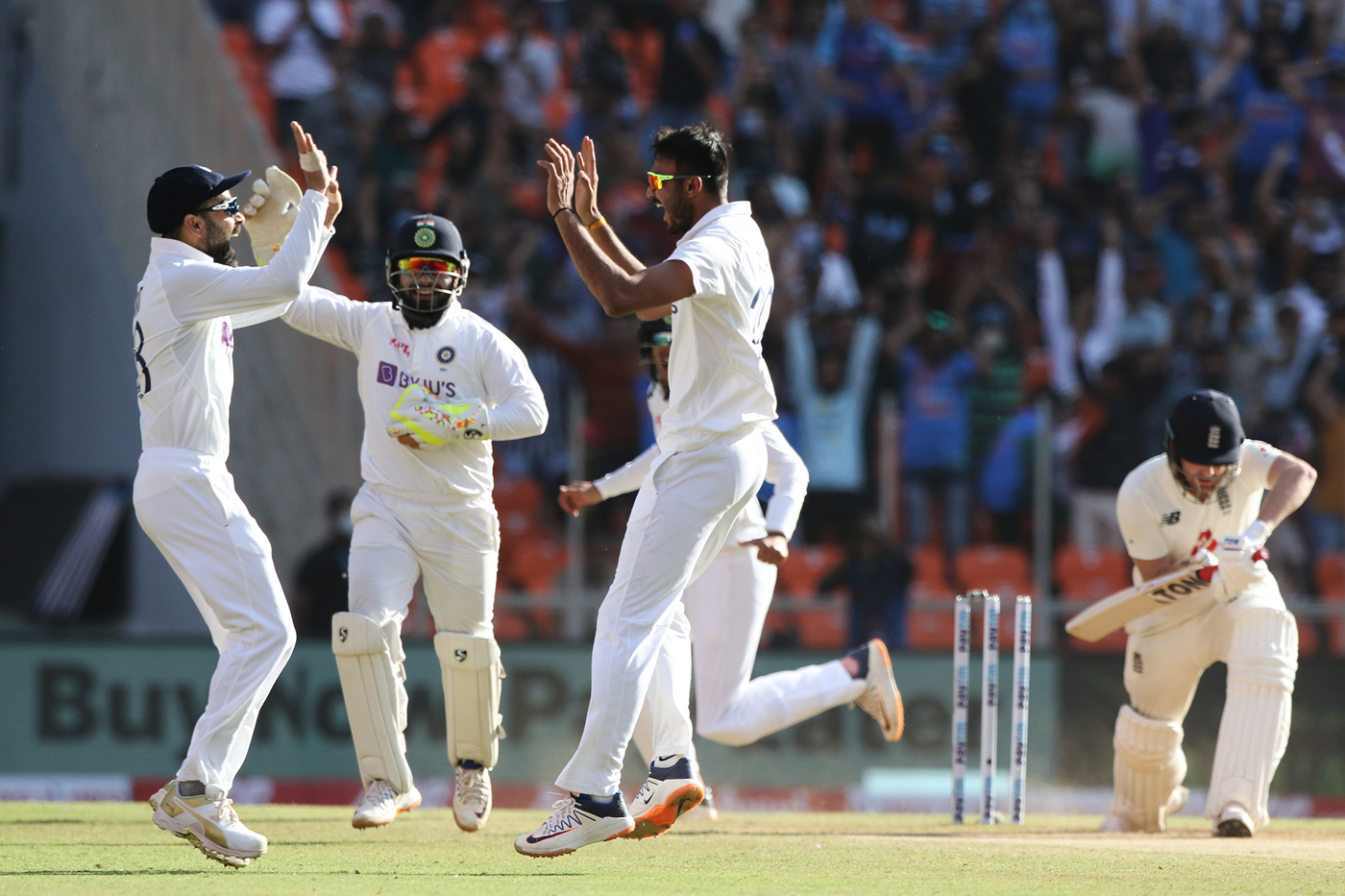
Axar's ability to consistently produce impact performances has regularly been on show since that England series. He has proved a catalyst in high-pressure matches: from the 2024 T20 World Cup group match against Pakistan to the semi-final and final, and the following year, a string of performances in the Champions Trophy, including in the final, which Rohit Sharma's India won.
He says he was nervous going into the 2024 World Cup, considering he had not had good experiences in the 2022 edition, where India were beaten by ten wickets by Jos Buttler's team. He was anxious when India faced England in the semi-final once again, this time on a slow turner in Providence, Guyana.
Having batted in the lower order earlier in the game and made ten off six balls, Axar realised the pitch was slow and had low bounce. "I knew batting on the wicket was not easy. I bowled in the powerplay and got Buttler on the very first delivery." Buttler attempted a reverse sweep, which he top-edged to be caught.
"I am used to bowling in the powerplay," Axar says. "I always stick to my strengths without trying anything extra just because it was a semi-final."
England did not recover from there, and Axar picked up the wickets of Jonny Bairstow and Moeen Ali soon after. Through his spell, he darted his deliveries in at 90-kph-plus speeds. "My average speeds are usually around 90-92kph," he says. "As a spinner I vary my pace as per the pitch and also based on how the batter reacts. You come to know in the first two or three deliveries how the pitch is behaving and you decide accordingly. In the semi I did bowl quicker on purpose because I knew the ball was not just skidding a bit but also at times would grip the surface, so it would stop and come."
Knockout nous: Axar offered up match-turning performances in the 2024 T20 World Cup semi-final and final and the 2025 Champions Trophy final
Randy Brooks / © AFP/Getty Images
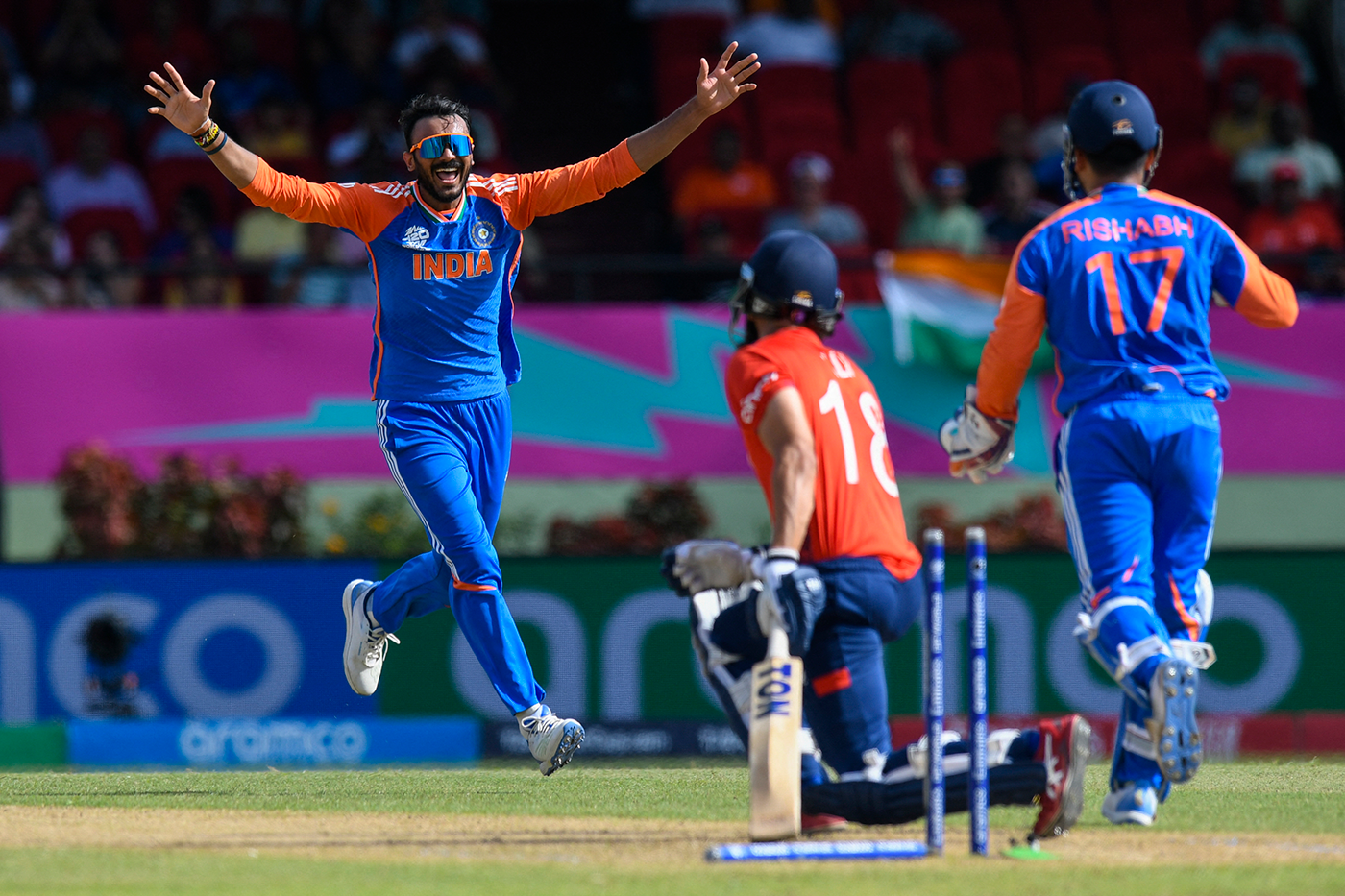
How important Axar has become to India was evident in the final, when Rohit and India head coach Rahul Dravid decided to promote him to No. 5 at a time the team were wobbling at 34 for 3 in the powerplay, two of the batters having been dismissed by South Africa's lead spinner, Keshav Maharaj. It was a key strategic move: Maharaj bowled only one more over and did not finish his quota, likely because of the favourable match-up for Axar against Maharaj's left-arm spin. Not only did Axar dominate the 72-run partnership with Virat Kohli, importantly, he upped India's scoring rate, making 47 off 31 balls, which included four sixes.
"I didn't know I was going to bat at 5. It all happened suddenly. It had happened against Pakistan too [he batted at No. 4] but here the circumstances were totally different, as this was the final. Rohit bhai and Rahul bhai decided and I didn't even have time to think."
He wanted to play measuredly early in the final and rotate the strike, but he got a hit-me delivery from Kagiso Rabada first up, full on his legs, which he flicked for a four. If there were nerves, they dissipated then. "When [Aiden] Markram came to bowl the final over of the powerplay I thought I could take him on, but Virat bhai told me it was important to focus now on building a partnership, so I took time.
"With Virat bhai at the other end, and the way he was calmly manoeuvring the situation, I did not need to worry that much. If the match-up was in my favour, I would go for my strokes and then rotate the strike. Getting about ten runs an over was good, and that is how we calculated our approach."
Recognising the breeze was blowing towards the shorter boundary, on the leg side, Axar attacked Markram in the eighth over, lofting him for a six. The next over Maharaj was defending the longer leg-side boundary, but Axar hit him for a big six.
He took that mindset into the middle in the Champions Trophy final against New Zealand early in 2025. Shreyas Iyer had just got out after a 61-run stand with Axar, who had come in at No. 5. India needed 68 from 67 balls at that point. New Zealand captain Mitchell Santner, another slow left-armer, placed three fielders in the deep in the area between square leg and long-on and floated a delivery into Axar's arc, challenging him to take him on. Axar slog-swept it for a six over the outstretched, leaping hands of the deep midwicket fielder.
The fifth element: promoted up the order in the 2024 T20 World Cup final, Axar batted at a strike rate of 151.6, adding 72 runs off 54 balls with Virat Kohli
Chandan Khanna / © AFP/Getty Images
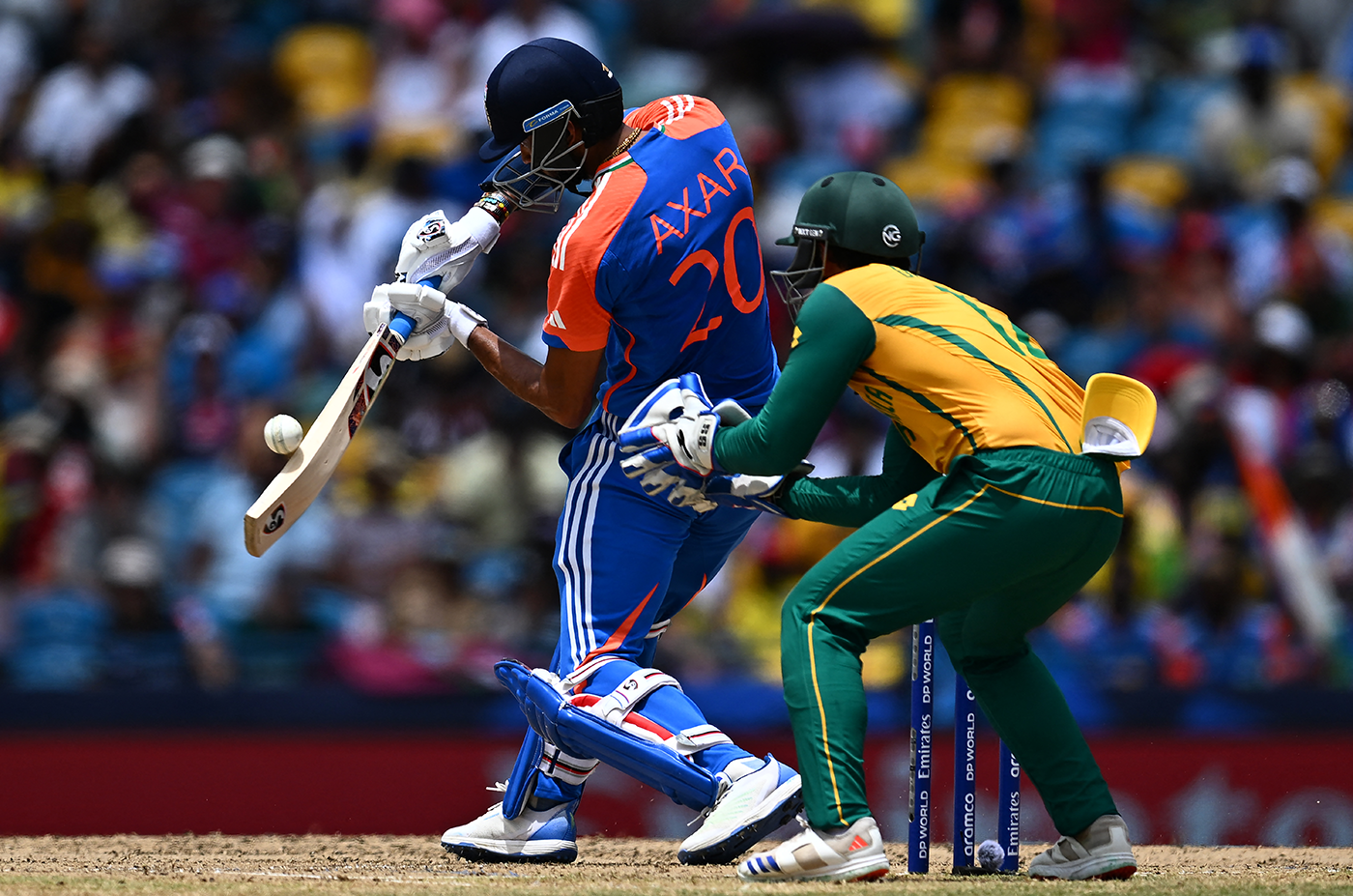
"The equation was very close. Santner was bowling his ninth [eighth] over, I think. Shreyas had just got out. I knew, as a bowler, Santner would take a chance to go for another wicket. Before that he was delivering a flatter trajectory, sometimes on my legs, sometimes outside the off stump, to give me only a single. He had not flighted to me, other than in the first two overs of his spell. But now after a wicket, he would have thought the batsman would not hit the next ball, so he took a chance on the last ball of the over. I sensed that."
When our chat in Chennai goes past the hour mark, Axar asks if we can break off and continue some other time. He has to play the next day and also wants to spend some time with his family, who are travelling with him, including his months-old daughter Haksh. Is he a better dad than he is a captain? After a pause, he says, "I think I am a good human being", laughing.
The big smile is intact when we chat again, this time virtually, early in January. Axar is getting ready to leave and join the India squad for the home T20I series against New Zealand. Before we start our call, a minder from JSW, the owners of Axar's IPL team, Delhi Capitals, requests that he change his display name on screen which reads "Kya challaaa??", translating roughly to "Where are you off to?" and which everyone who knows Axar, including overseas players in the IPL, invariably uses to start a conversation with him.
Axar insists on keeping it. "Why should I? That is me." It speaks of an unpretentious personality and of a man comfortable in his skin. Though he is among the highest-paid athletes India, and managed by JSW Sports, which previously managed the likes of Rishabh Pant, Axar's predecessor as Capitals captain, he is very much the individual he used to be. When in Nadiad, he still goes to the street-corner tea shop where he and his friends would hang out.
Does he think people sometimes tend to take him for granted, or not seriously, because of his easy-going nature?
He does. "Sometimes it might be due to my personality, I feel," he says. "But I want to keep my personality the same, where I can give my best. I cannot be that serious or I cannot to be that strict, where I say, 'I have to do this, this, this.' I like to be in a frame of mind where I can give my best, where I keep smiling, laughing and cracking jokes. That is my nature.
Axar, Mohammed Siraj, Kuldeep Yadav and Arshdeep Singh enjoy the T20 World Cup win
Darrian Traynor / © ICC/Getty Images
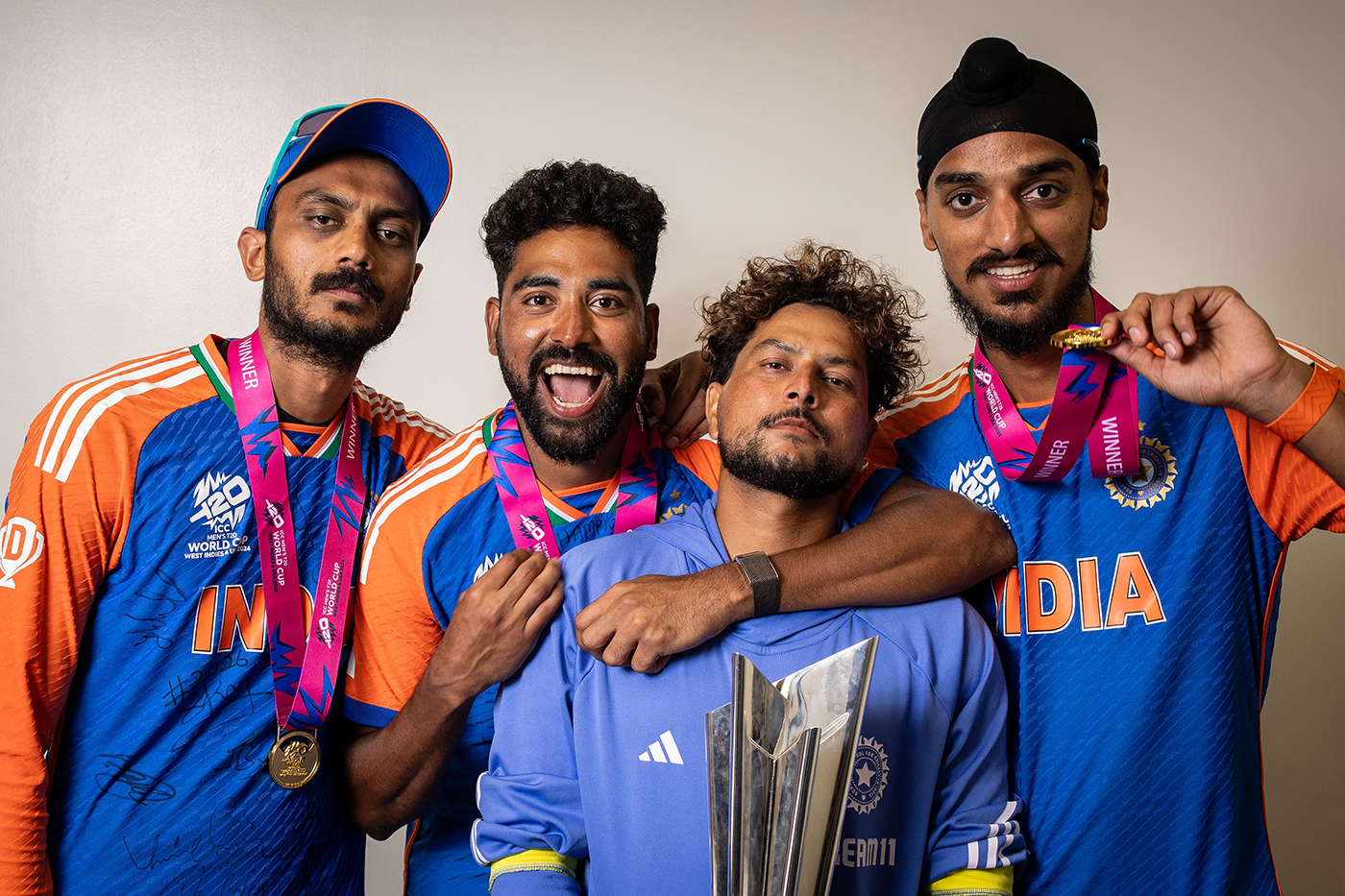
"But at the same time I know what I need to do in different situations, what works on certain wickets and not. So I am always very clear and very calm in situations. Obviously the pressure can be high, but if I am clear and calm, I can execute. It is only when you are in two minds that things go against you. So I keep reminding myself I need to be clear, during my preparation, during training, [that] I have worked on my skills, and then I am ready."
This perhaps speaks to why Capitals appointed Axar captain ahead of the 2025 IPL, once the incumbent, Pant, decided to put himself in the mega auction after the 2024 season. Axar had been Pant's deputy for several years and part of Capitals' leadership group.
When Capitals co-owner Parth Jindal called after the 2024 mega auction to tell Axar that JSW had decided to offer him the captaincy, he asked for time to think it over. Meha, his wife, was due to give birth to their first child soon, and that was on his mind. Two days after India won the Champions Trophy, Axar had a Zoom call with the franchise's management, where they told him they had seen his growth both as a player and leader.
"Our thoughts met in one place," he says. "They told me I am now in my prime. That they have seen me for seven years and for the past three years I've been part of the leadership group. They told me how they had seen me grow in the Indian team and they wanted me to work with the same mindset at Capitals. In pressure situations, they felt, I could take care of the team."
He might be still learning the tactical side of captaincy, but like Dhoni, Axar possesses empathy and knows its value.
"If I am part of a team and I am leading a team, I need to ensure people around me are happy," he says. "When you take everyone along with you and stay with them, only then can you create a good environment. That has always been my strength. There are some people who don't talk, are quiet, and [keep to themselves]. In such a scenario I think even if I don't know the person, I will walk up and say, 'Bhai kaisa hai, kya hal chaal?' [How are you, what's happening?]. He will be thinking about me for the next one hour. He might think: he is such a big player, he has come and talked to me, without any ego. That is what I like. I enjoy doing that. Let it be fans or someone else. These little, little things, I feel are big."
Capital C: Axar took charge of Delhi Capitals in his seventh season at the franchise
Deepak Malik / © BCCI
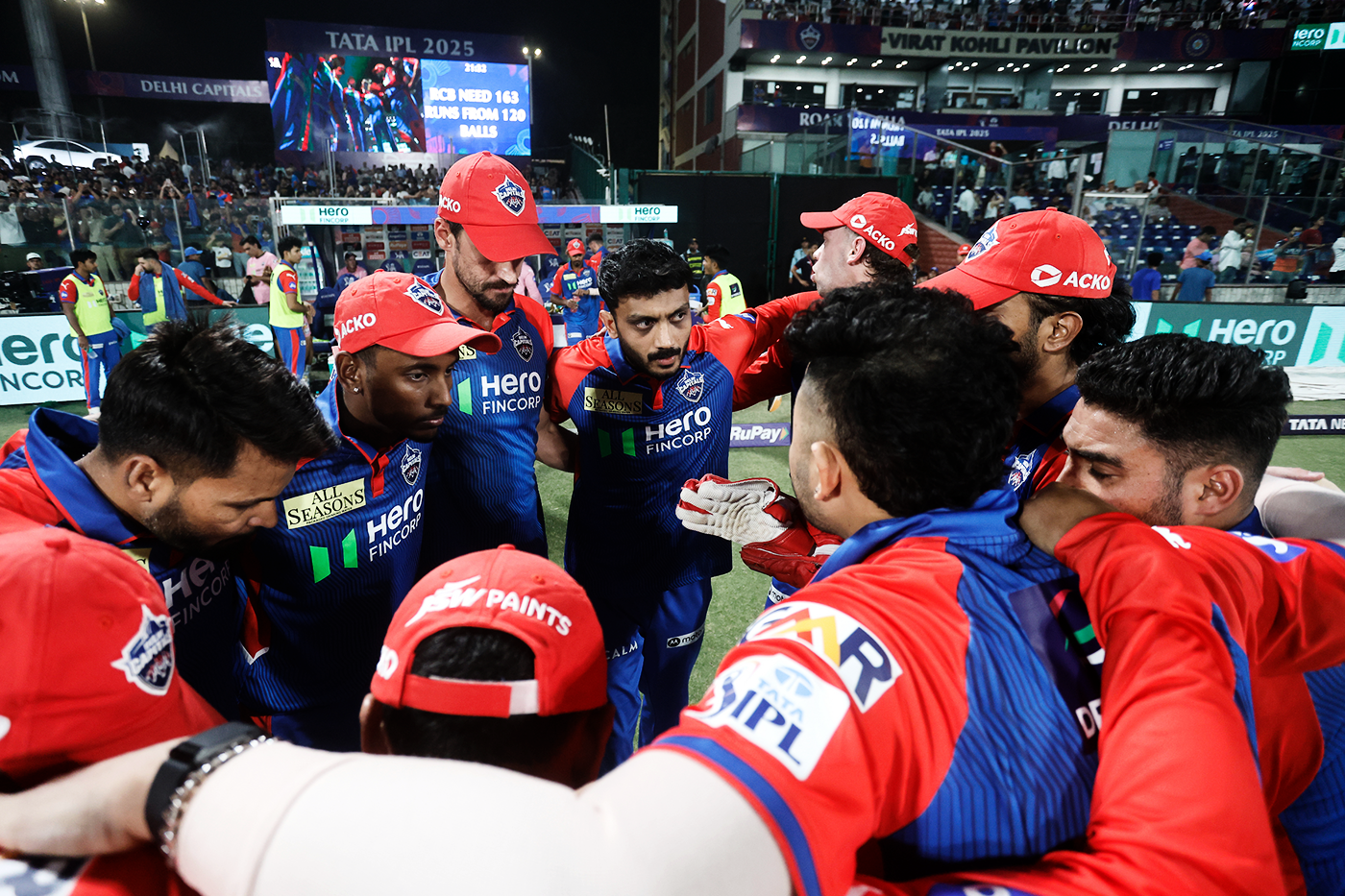
Axar turned 32 last week. Now an all-format allrounder for India, he will be vice-captain to Suryakumar Yadav at the T20 World Cup. He says he will follow the simple rule of taking it one match at a time and not looking too far ahead. "I don't need to do anything new or take pressure just because it is a World Cup."
What are his long-term goals?
He doesn't have those, Axar says. "When you plan and when you have expectations and when they don't happen, then it is a lot more disappointment. As an example, if I say I want to become India captain. When you have such an expectation, you start thinking in a certain way - that I will need to do things this way, that way.
"I don't want to live my life this way. I like to live my life where I do what I like in that particular moment [and] I will do that. Whether others like that or not, I don't care. If what I am doing is affecting the team [positively], then I will definitely do it.
"Even becoming captain of Delhi Capitals, I never had thought about that. The opportunity came. What do I feel? Do I have the heart? Do I want to do it? Yes, I have the heart. I will do it."
Nagraj Gollapudi is news editor at ESPNcricinfo
© ESPN Sports Media Ltd.