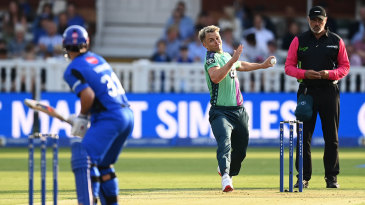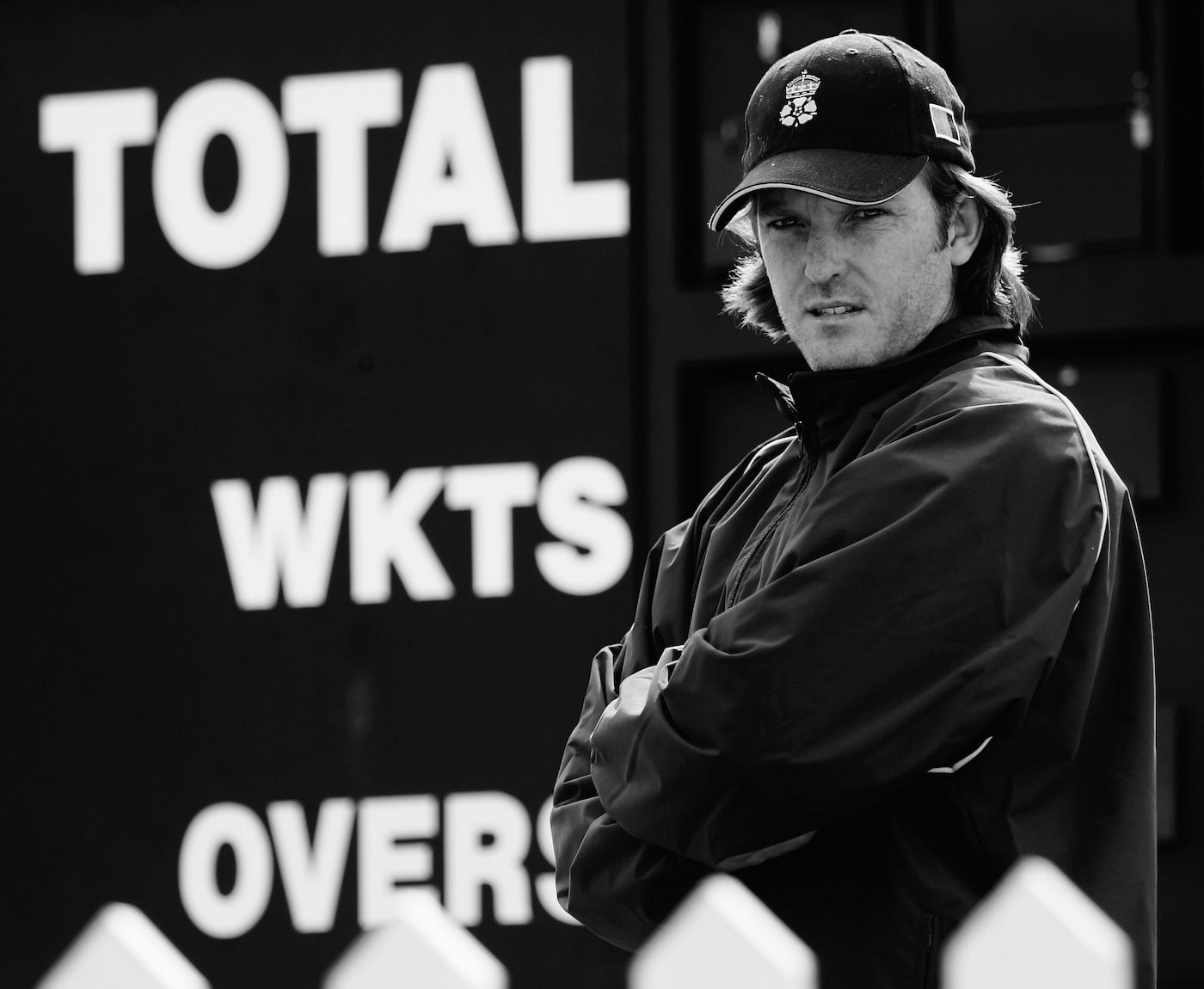





The one-time T20 pioneer and maker of the first hundred in the format looks back
Ian Harvey was a pioneer in T20 cricket, scoring the format's first-ever hundred, bowling bewitching slower balls, and winning several titles. Long before T20 globe-trotting became a thing, the Australia allrounder played the shortest format in England, South Africa, Zimbabwe and India. Harvey, who is now with Nepal as their bowling coach, spoke in Chennai about his bag of variations, Australia's famous winning culture, his friend Andrew Symonds, and Nepal's wide talent pool among other things in the lead-up to the 2026 World Cup.
What made you take up this coaching job with Nepal? Surely can't be due to Stuart Law [Nepal head coach] who smashed you all around the MCG in your first one-day game for Victoria?
Not a good way to start! (laughs) No, we have been good friends since that day actually. I'm the assistant coach at Glamorgan, so I was just getting ready for the start of our pre-season in England. Stuey texted me and asked me if I was available and if I'd like to come over and help out with Nepal for the World Cup. So I spoke to Glamorgan and they were more than happy for me to come over and help out, and it'd be a good experience.
I've worked with Stuey a lot, and we get along well. Yeah, so I'm here, which is a little bit warmer than the UK at the moment, which is quite nice!
Do you think you need to be more open-minded as a coach than you were as a player?
As a player, when you're coming through and then you go into coaching, you take little snippets from coaches that have come through. And there's some good, there's some bad. You've got to try and do your best to try and take the good stuff that you remember and try and put away the bad.
But times have changed as well from when we played many, many years ago. But it's good, because we're still learning as coaches, and can learn from the players. So it's not about just telling people, it's also asking questions. You've got to be open-minded and just enjoy the challenge, which is a challenge for these [Nepal] boys. We've got England [in our] first game.
Nepal have a decent talent pool and they recently beat West Indies too. What are your impressions of that talent pool?
I'm still getting to know all the boys but the talent I've seen in Nepal is exceptional. They're a really good bunch of blokes to work with and they're always willing to learn and listen. That's always a positive for a coach. The more they get the opportunity to play in these types of tournaments, and in different conditions, the more they'll learn. They can only get better, which is quite scary.
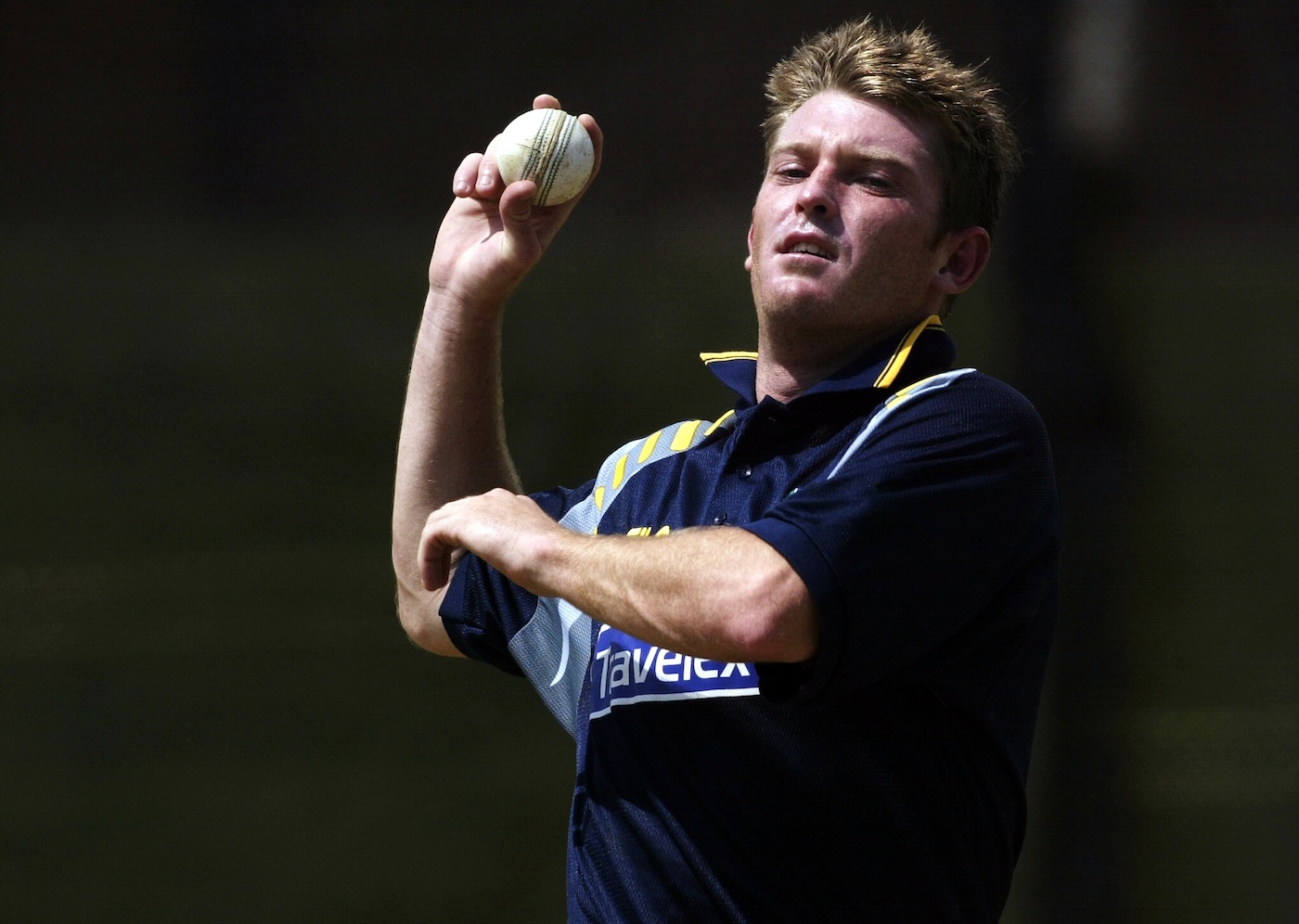
"Everyone thought I had a couple of slow balls. I didn't, I had one"
Hamish Blair / © Getty Images
Som [Sompal Kami] has played a lot of cricket and is very experienced. Having guys like that around the group is really good for the rest of the group, not just for the bowlers. There's a mix of experienced players and some talented youngsters coming through. I've been told there's more talent left back home in Nepal. The future looks good for Nepal cricket, and hopefully on their day, they can mix it with the best.
What's it like working for the enemy?
A lot of people say that. I'm still always Australia, always going to be Australia. But I do like working with a lot of young English players. My job now in England is to try and get these guys ready to play for England. So it's a bit of a turnaround, but again, it's very enjoyable. If any of the boys go up into England, I want them to do well… and England to lose to Australia (laughs).
Can't have an interview with Ian Harvey and not talk about slower balls. How did you develop the back-of-the-hand one?
At the end of the game, especially in one-day cricket, if you lose, you go into the opposition's change rooms. And that's how it was. I'd just been smacked all over the place by Stuey. Dean Jones was our captain and he said: "Come on, Harvs, we're going into the opposition's room."
I didn't want to go next door, but I get in next door and there's two seats available. One next to Allan Border and one next to Stuart Law. Dean Jones just dived straight for the seat next to Border, and I'm thinking: "Oh no, I've got to sit next to Stuart Law, and he's going to be in my ear about just making [107 not out]." So I just sat there and I was having a beer, and I'm thinking, "I just want to go home." And then Deano started bringing me into the conversation with AB and AB said, "Well, yeah, [Harvey] bowls with half-decent pace, but on these wickets, you need a slower ball." And that's where it all sort of started.
At the end of that season, I went to the academy and I spent six months trying to work on different slower balls. I looked at a lot of guys who were bowling slower balls. And I've got small hands, so a lot of them, I couldn't really [execute]. The knuckleball wasn't really in fashion at that time, but I just couldn't do certain things. Steve Waugh had one sort of similar slower ball, and I just spent six months trying to master that.
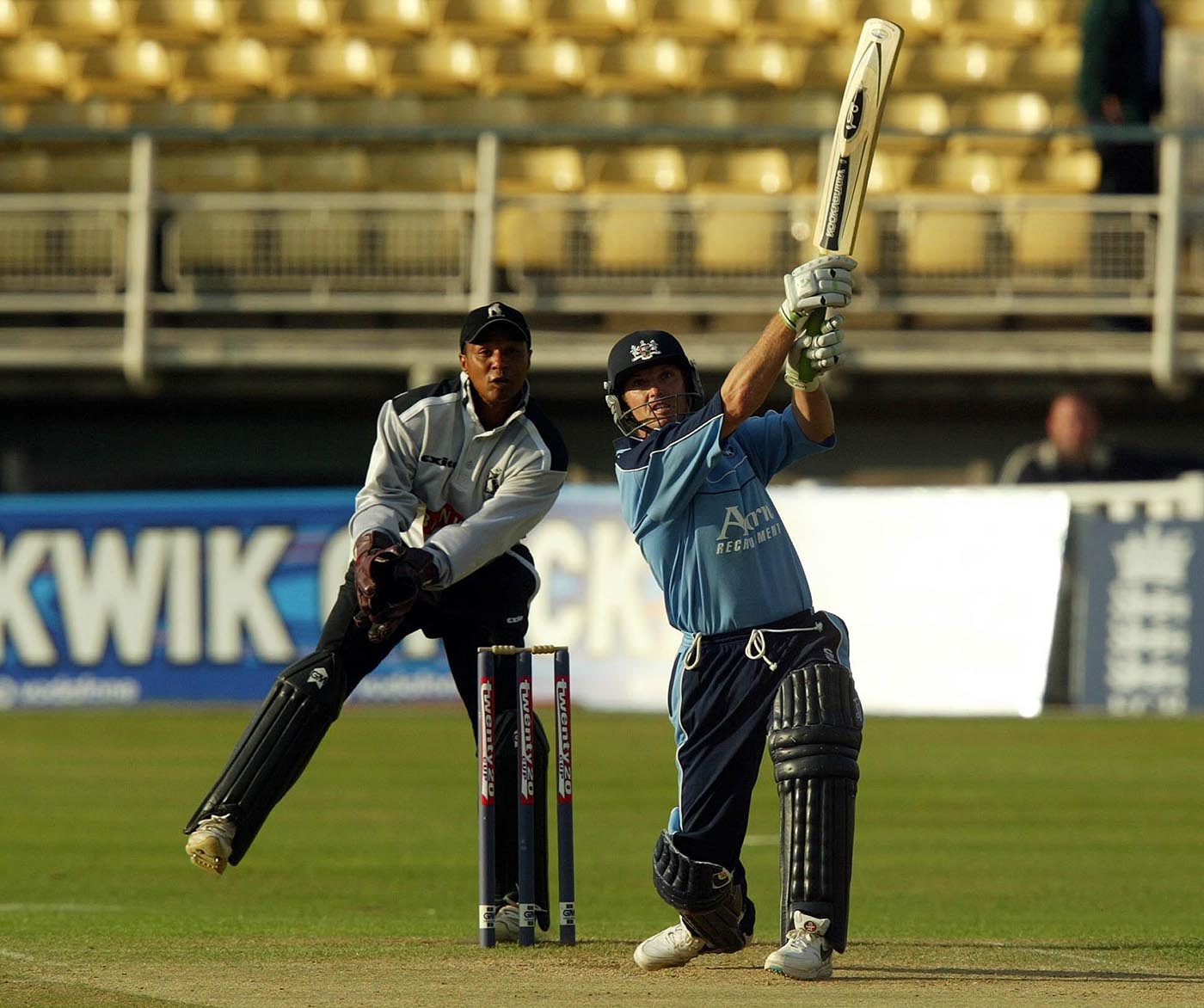
Early achiever: Harvey made the first ever T20 hundred, a round unbeaten 100 off 50 balls, for Gloucestershire in the T20 Cup in 2003
David Davies / © PA Photos/Getty Images
So my first one-day game [for] Victoria was an eye-opener - playing against Allan Border was a massive thing. And then to sit down at the end of the game and have someone like that tell you that to move forward, these are things you need to do. If I didn't go into that change room, I may never have got a slower ball. I would have just gone home and cried into my pillow. But I went into the change room and it all stemmed from there.
You must have bowled thousands of them before they came out right?
I honestly couldn't tell you! They'd hit the top net, they'd hit the side net. The weird thing is, what took me six months to learn, I can probably teach someone new, who has never bowled it before, to bowl in five minutes, which is so frustrating. But hitting the roof and side net, it was all worth it in the end.
Developing the skill to bowl the slower one is one thing. But there's another thing about knowing when to use it in a game, right?
I think a lot of players have slow balls and they feel they have to bowl them. Towards the back end of my career, I hardly ever bowled the slower ball because everyone was waiting for it. I think the biggest thing for bowlers is knowing when to bowl them. And sometimes it's actually difficult to know when to bowl them. But sometimes you just get a bit of an inkling when you're out there that it might be a good time to bowl it, and it depends on the situation of the game as well.
So for me, if my yorkers were coming out really well, I didn't feel I needed to bowl it [the slower ball]. But then when the tail came in, I felt that I could bowl it more to the tail because they didn't pick it as easily as some batsmen picked it. Everyone thought I had a couple of slow balls. I didn't, I had one, and depending on how tight I held the ball... I'm probably giving too much away, but if I held it really tight, then it would come out flatter.
If I held it a bit looser, it would come out a bit loopier. So they were just little things that I worked on and it took me six months to learn all these different little things. But yes, knowing when to bowl it is sometimes tough. Sometimes you're sitting there watching the TV, saying, "Don't bowl a slow ball." But then they bowl a slow ball and get hit into the stands, and they just stand there scratching their heads, wondering what's going on.
While Harvey may have played a significant number of his games for English sides, he was very much an Aussie in his time. "That [Australia] Test team believed they were either going to take ten wickets or score 400 [in an innings]. It was a culture and it was something that when you got into that environment, they made you very quickly commit to that"
© Getty Images

Do you remember the slower ball with which you got Brian Lara out in Kingston in 2003?
When you're bowling to those types of players, like Lara and Sachin [Tendulkar], you feel like you can bowl the same ball and they can hit it in six different areas. Sometimes it's tough and you've just got to try and mix it up and hopefully they make a mistake. Or you just bowl a really crap ball and they can hit it anywhere and then they just chip it in the air. But no, as I said, the investment for six months was brilliant for me. Absolutely worth every ball that I bowled.
What was it like walking into the Australia dressing room as a 25-year-old in 1997? There was Steve Waugh, Shane Warne, Glenn McGrath…
To be honest, I was very lucky because I had Warnie. I'd played with him a lot for Victoria. Paul Reiffel as well, from Victoria. I was very lucky going into that dressing room. At the time Ricky [Ponting] was quite young, Gilly [Adam Gilchrist] was quite young, but to come into a team and you just look around the dressing room and you just go, "Wow!" As I said, having Warnie in there was massive for me.
Did he protect you from the new-guy wringer?
Warnie did look after me a lot. Yeah, no, they were all very good, that Australian dressing room. They actually made you feel that you'd been there for a long time. That was Steve as captain, and that was the way they were. It didn't matter whether you were Steve Waugh or Ian Harvey coming into the change room as the new guy. They made you feel really welcome.
You've experienced Australia's winning culture. What kind of impact did it have on you?
It works the other way as well. You've seen sides that should win but don't get over the line. With Australia, people just expected us to win. When you look around that changing room, you've got nine guys who are absolute match-winners. Any of them could win you the match off their own bat. We just believed that when we walked out into the middle, and it was the Test team at the time... that Test team believed they were either going to take ten wickets or score 400 [in an innings]. It was a culture and it was something that when you got into that environment, they made you very quickly commit to that. It was pretty much a team that [believed] if we go out and do what we do, we're going to be very hard to beat.
Is it the same at lower levels as well in Australia?
Yeah, there's a massive confidence with Australian players. If you're not performing, you knew as an Australian player that there's 20 other guys behind you. And I remember Australia could have had three teams - Australia, Australia A and Australia B. The first team would obviously be very hard to beat and the second team as well. The third team would be very, very competitive. There were many players who had that instilled in them throughout their careers from club cricket to state cricket and then into playing for Australia. It was just an Aussie thing. It's hard to explain - it's just the environment you get into.
Harvey with pal Andrew Symonds, celebrating a wicket in an ODI against India early in 2004
Hamish Blair / © Getty Images
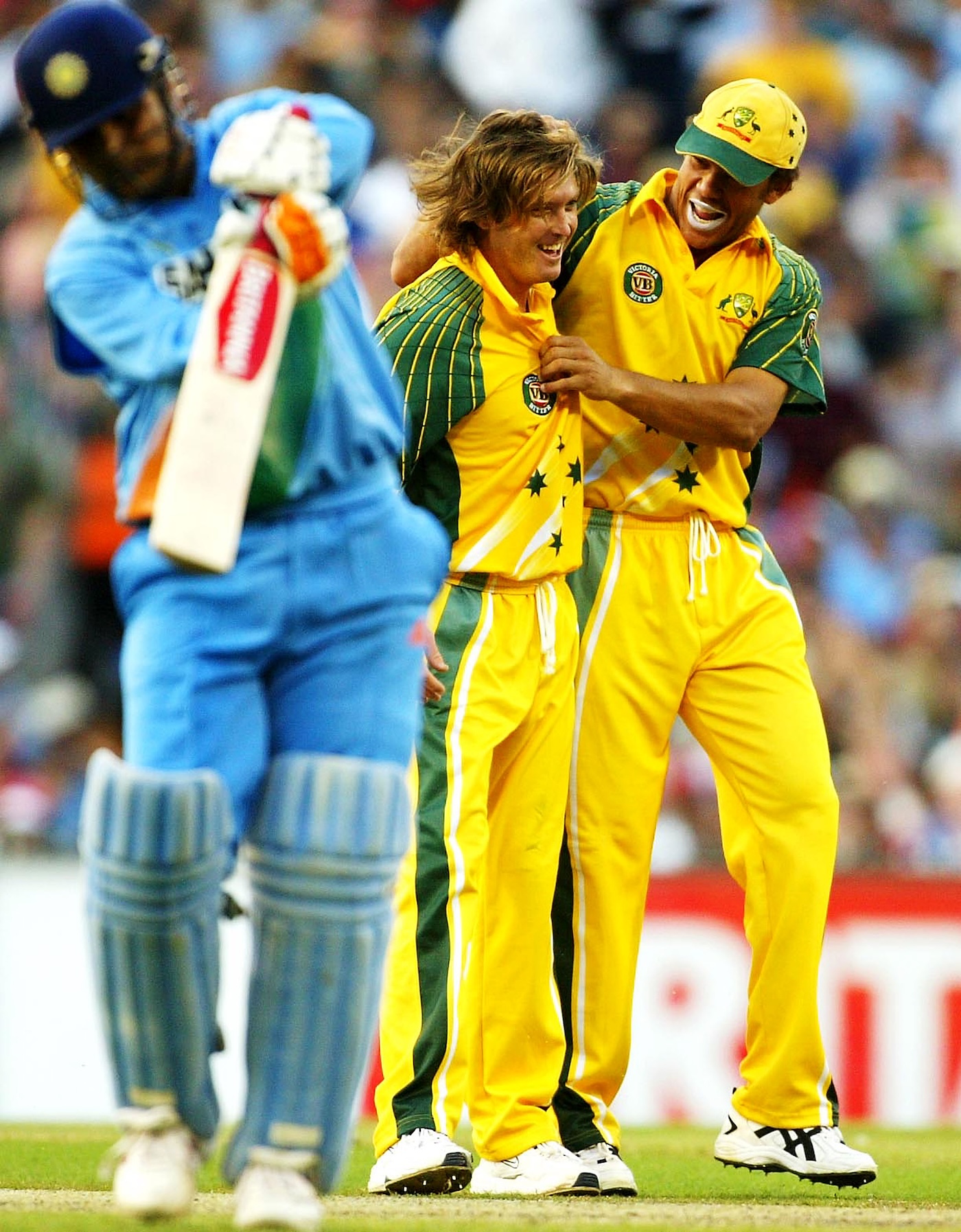
Who were your best mates in the Australia team?
I think everyone was pretty close. But me and Stuey [are] very close. There's Darren Lehmann. I was very, very close with Andrew Symonds - we went to the academy together. The 2003 World Cup - that's where we all saw the real Andrew Symonds. That first game against Pakistan, Symo going out and playing that innings [143 not out after Australia were 86 for 4]… gives you goosebumps when you think about it. Everyone in Australia had been waiting for that and everyone knew how good he was, but he hadn't showed it at that level until then. That innings against Pakistan was the making of Symo.
What was Symonds like off the field? Did pressure affect him?
All he wanted to do was go fishing and stuff. That's all he wanted to do. Mate, if you are ever deserted on an island, you want him next to you. Pressure never affected him. He trained his backside off, played his cricket, enjoyed his fishing and enjoyed his life.
You took four wickets against Pakistan in that World Cup game. He stole your thunder, didn't he?
He can steal my thunder any time he wants! I was happier for Symo. I remember when he was getting close to his hundred, the scoreboard went down. He was just into the nineties. Every time he hit a shot, we were looking up into the dressing room to see what was going on. And then he hit one more shot and the dressing room just exploded.
I've got a photo on my phone of me just hugging him. He's a massive bloke as well. My face was like - my helmet was squashed into my face. It was an absolute blast.
Speaking about hundreds, you were the first to make a T20 hundred. What was that like?
I didn't really have to change my game too much because I was quite aggressive. But when I got close to getting a hundred, it wasn't like, oh, I have to get a hundred in. It wasn't until I did an interview after the game. It was like, 'You're the first person to ever get a T20 hundred." And then when you put it in that context, it's like, wow.
I know T20 hadn't been around that long at the time, but to be the first person to do it, I didn't actually think of it until after I got asked about it. That's pretty cool. That's the best you're getting out of me. (laughs)
You can't take Gloucestershire out of the man: Harvey spent over half a decade in coaching roles at the county he played for earlier in his career
Harry Trump / © Getty Images
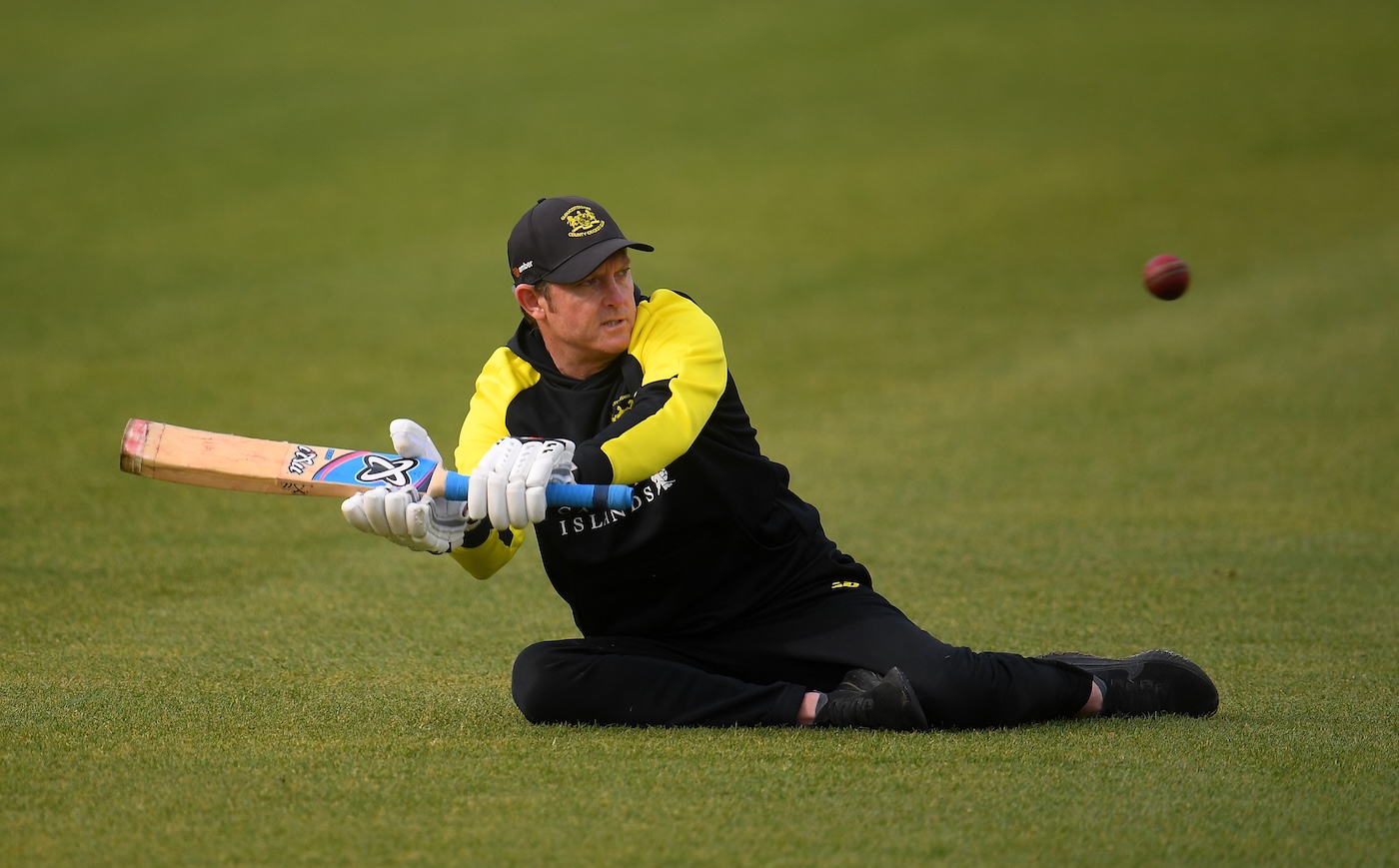
When did it actually sink in?
It probably wasn't until I did that interview. No one can take that away from you. The one thing for me was that it hopefully inspires others to do this. [When] other people see someone doing that and they go, "Well, I want to do that as well."
You ambled in but bowled serious yorkers. How did you nail them?
I remember we did a lot of work with that in the Aussie team. Myself, Jason Gillespie, Glenn McGrath - they're all taller than me. You have Glenn and Dizzy coming from high [release] and you've got me coming from down. So their focus was different from mine. [Brett] Lee as well - Binga had more pace than everyone. You just bounce ideas off each other and find out what works for you.
You said bowling the slower ball took you six months. Is the yorker a hard delivery to train for as well?
It didn't probably take that long for the yorker but it changes. It's weird because if you're running uphill, it may change, and it changes again if you run downhill. I felt that it would take me one ball to get my bearings on where I wanted the yorker to go. But we don't see as many yorkers these days as we used to. Credit to the batters, they are better now. But I also think that bowlers are too quick to go away from the yorker.
Maybe. I don't know how much they practise it these days. Another thing, I would always bowl at a batter as well [in training]. Stupidly, I used to always pick Symo because he'd be normally batting at the death (laughs). You actually know that if you don't get it right, it's going to come back at you at a million miles an hour. That was good practice as well.
You look at batsmen now. You can bowl a very good length ball and they'll hit you out of the ground. You can bowl a very good yorker and sometimes they can hit you out of the ground. That's just the way the game goes. I think you've just got to be very clear on what you want to do - whether that's a length ball or a yorker. If you execute where you want it and it gets hit, that's a game. So I would never ever run in bowling any type of ball thinking, "Oh, what if it goes wrong?" Because then you know it's going to go wrong.
Your career took you to several places - you featured in the first indoor ODI and you played for Cape Cobras in South Africa and Rocks in Zimbabwe. What were those experiences like?
The indoor one-dayer in Australia was very cold and I don't think anyone realises how cold it was. It was freezing!
Proto globe-trotter: Harvey announces early in 2010 that he will play for Southern Rocks in Zimbabwe
© Zimbabwe Cricket
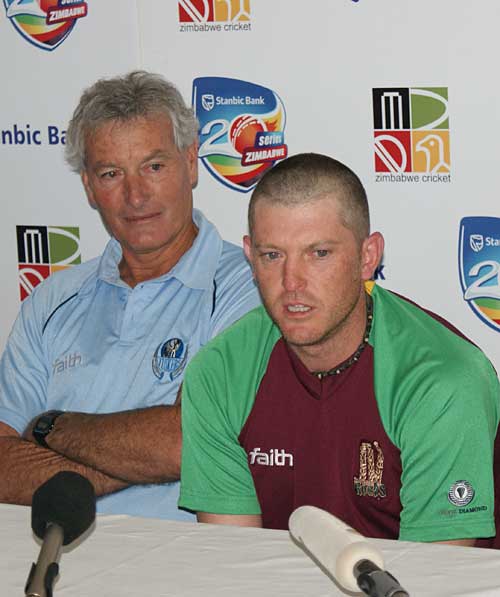
I was originally going to do some coaching there in Zimbabwe. The captain was coming from Kenya, but he didn't get there. That wasn't part of the plan. I was just sort of coming to an end, and why would you not want to spend six months in Cape Town? It was really fantastic. The cricket side of things didn't go as well as I wanted to, but that happens.
You also won a World Cup in South Africa.
A week or two before the team left, Watto [Shane Watson] got the bad news that he had another stress fracture in his back. I got the opportunity to go, which was brilliant for me. Not great for Watto but sorry Watto, you got your chance later, mate. (laughs)
What was the night of the final like?
It was pretty relaxed actually. We didn't finish late but it was getting really dark. I don't remember exactly but it was mentioned that if it got rained off, we would have to come back, and we wanted to finish it as soon as possible. There was so much energy drained that day and so much happened.
In your travels, you also represented Chennai, in the first franchise T20 league - the Indian Cricket League. What are your memories of that stint?
It was disappointing the way it ended, but I made some amazing friends. When you travel with Australia, you don't get the opportunity to go out. Indian people know more about you than you know yourself. I caught up with Kenny Kumaran [T Kumaran] and we will catch up over dinner again in Chennai. [Hemang] Badani - these guys chuck you on a tuk-tuk and you go out for food. You go down these streets and then you go to a restaurant where the food is amazing. That is an experience you will never forget.
Your nephew Mackenzie Harvey is working his way up the ranks, playing for Adelaide Strikers in the BBL. Do the two of you chat often about cricket?
Every now and then. Not very often. He's got his own life to live and I'm glad every time they mention him, they don't involve my name, but he is doing well. It was probably quite tough for him at the start but at the moment, he's a strong-willed young man and doing well. He's moved from Victoria to South Australia for a bit of a fresh start, and I'm very proud of him.
Whose slower ball do you enjoy watching these days in modern T20 cricket?
I actually love all the slower ones. Not one that I could pick but enjoy the back-of-the-hand ones more. They're always thinking of new things and something else will be up soon.
Alagappa Muthu and Deivarayan Muthu are sub-editors at ESPNcricinfo
© ESPN Sports Media Ltd.