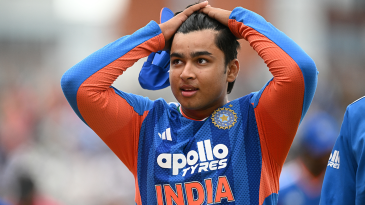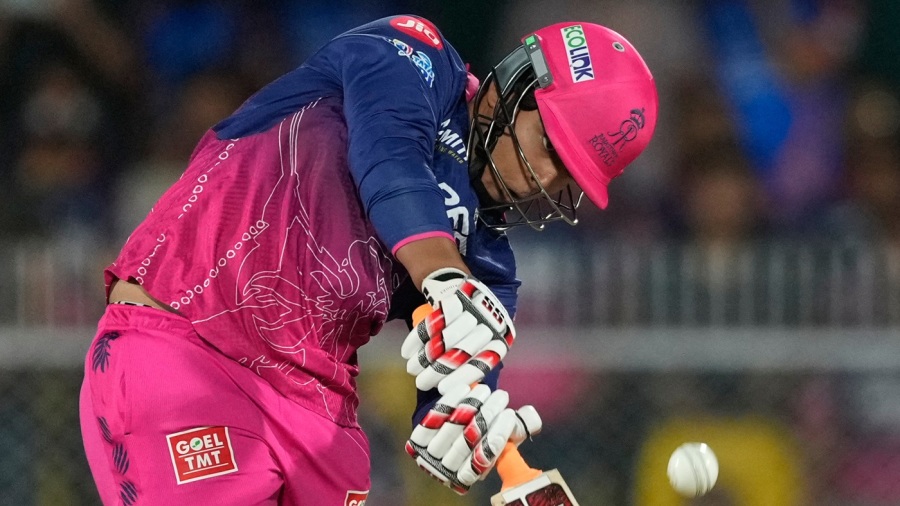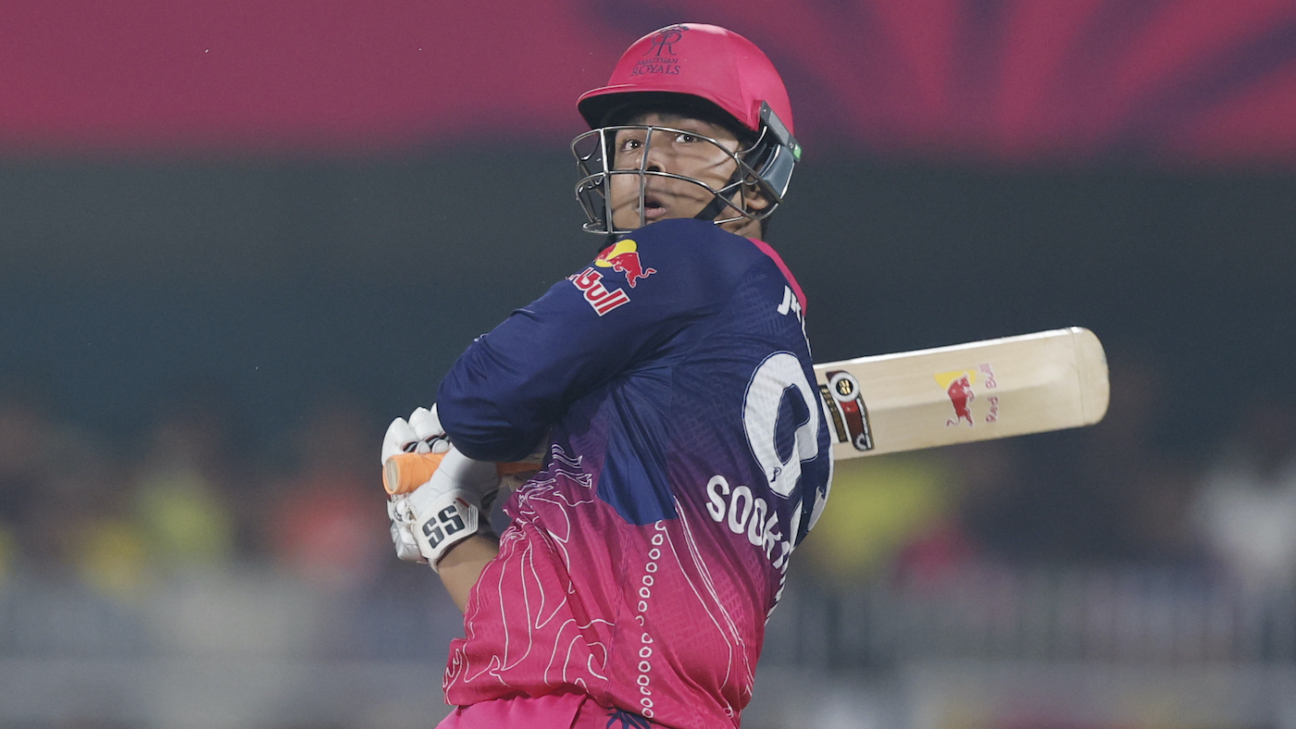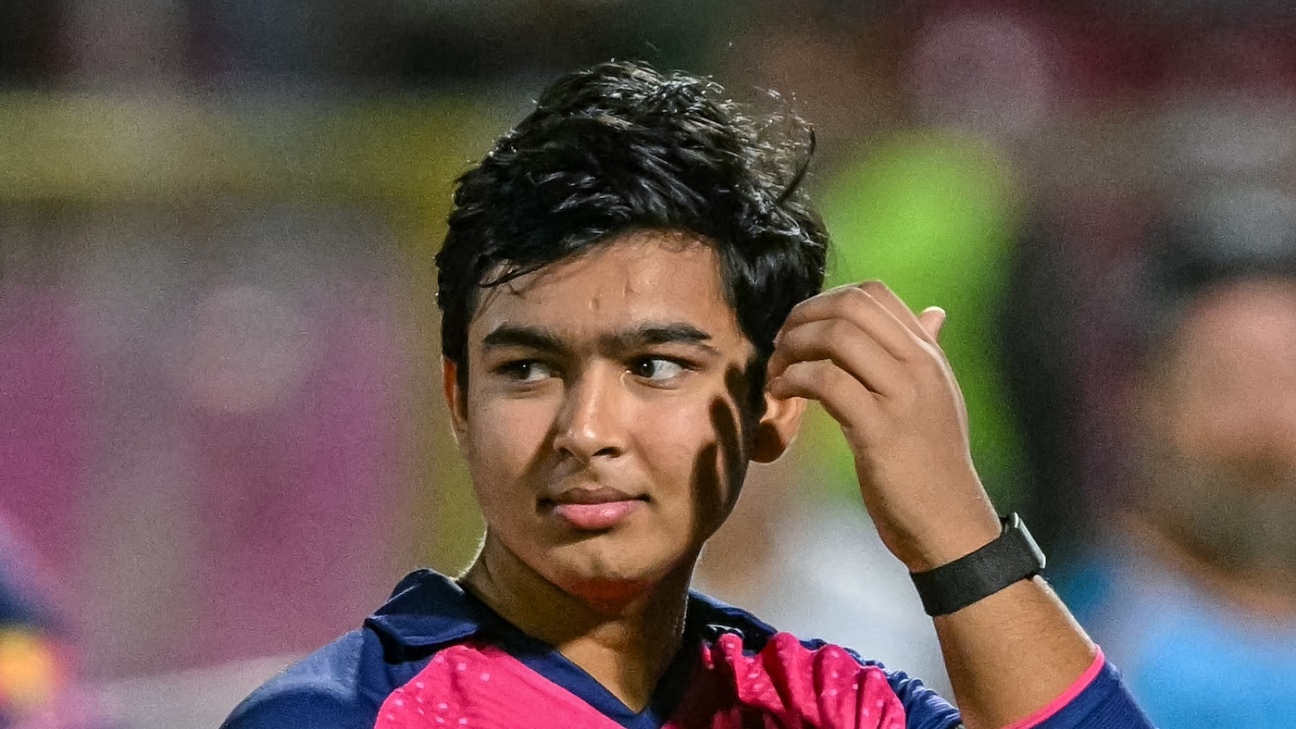





Behind the scenes of the bonkers rise of a super-young superstar
"Put Rs 10 crore aside."
Zubin Bharucha didn't hesitate to repeat to the Rajasthan Royals management in November 2024 the advice he'd given them four years before about Yashasvi Jaiswal, to keep about US$1.1 million in hand to bid for him. It was time for the IPL mega auction in Saudi Arabia, and the franchise was going over its shortlists.
He wasn't recommending an established star or a proven domestic performer, but a 13-year-old from a nondescript village in Bihar with no real cricket facilities.
Their collective response, naturally, was disbelief. "You crazy or what?"
Bharucha wasn't. Not after what he had just seen.
Royals were conducting trials at their academy in Talegaon, Maharashtra, when Vaibhav Sooryavanshi came in to bat against a left-arm quick from Karnataka. Bharucha remembers mapping the contest in his head: the angle, the late swing, and the likely outcome.
"The first ball to a right-hander had jagged back in," he says. "So I'm thinking, when this guy comes on strike, the ball will probably move away and beat him outside off."
Vaibhav Sooryavanshi: from Tajpur to the top of the world

Instead, Sooryavanshi hit it over extra cover for six.
"I was like, 'What am I seeing?' I couldn't even process it," Bharucha says.
"It reminded me of the first ball I saw Jaiswal face at a trial at DY Patil Stadium - he walked across and flicked it over short fine leg for four. Sanju Samson, the same thing - first ball in Jaipur at the practice ground. Amit Singh banged in a bouncer and he hit it onto the roof of the indoor stadium. First ball, kuch alag hi kiya." [did something different]
If Sooryavanshi's first act elicited a rush, what he did next was more extraordinary still.
"After the trials finished, I sent everyone away. I didn't want to embarrass the others, so I called Vaibhav back alone. We had these sidearm guys who could crank it up to 157-158kph. One of them is about 6'4", so you can imagine the release point.
"I gave them a new ball and said, 'Attack him, boss.' I told Vaibhav they'd be quick. He just said, 'Haan sir, no problem.'
"The first few balls, he left. But even that stood out. The way he was leaving, it felt like there was no pace on the ball. The keeper was standing 30 yards back and he's just… so comfortably leaving them."
What followed next sealed Bharucha's faith in the kid.
"One of the sidearmers hit the deck hard, and Vaibhav hit it straight over the sightscreen for six. I asked for the ball speed, and it measured 157 kph!
"That's not normal. Not even for the best. To do that off your fourth or fifth ball facing that pace - that's when you know this is something incredibly special."
Smash and grab: Sooryavanshi got to his hundred in 55 balls in the U-19 World Cup final against England (and then made another 75 runs in the next 25 balls)
© ICC/Getty Images

It didn't need a lot of convincing from Bharucha, once he narrated these details, for the Royals owners to put in a bid for Sooryavanshi. What surprised them, though, was the ceiling.
"I told them, he's Jaiswal multiplied by two already. You're looking at something incredible… Can't believe he has come to our doorstep. Don't miss this chance."
Royals ended up getting Sooryavanshi, after briefly staving off a bidding war, for Rs 1.1 crore (about $131,000) - a tenth of how much Bharucha had asked them to earmark.
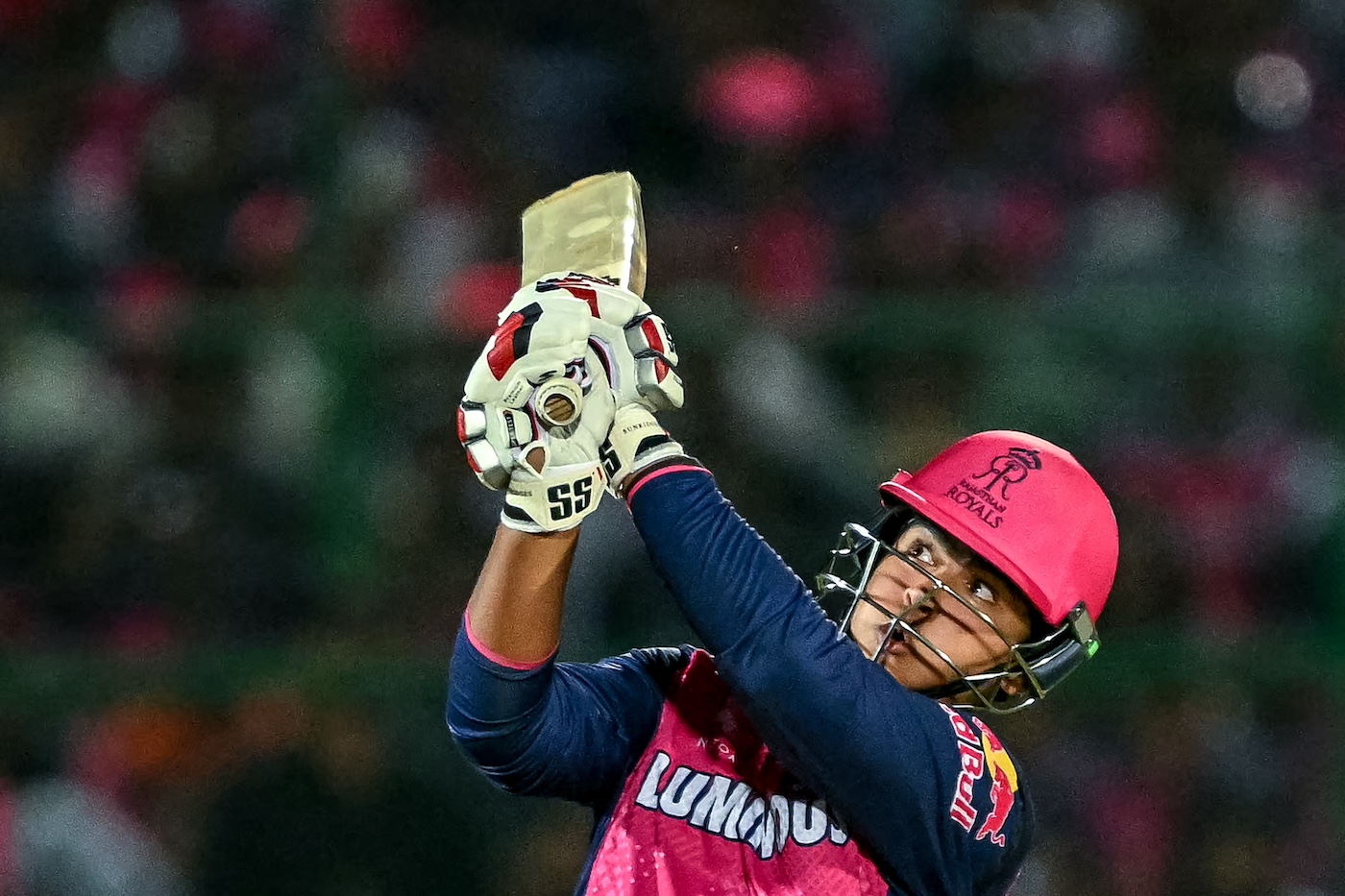
Come the IPL, in 2025, Sooryavanshi would make everyone sit up and take note: smacking the first ball he faced for six, and hitting a century at 14 years and 32 days in another game, against Gujarat Titans, making him the youngest century-maker in men's T20s. That hundred, off 35 balls, was also the second-quickest in the IPL, only behind Chris Gayle's 30-ball century for Royal Challengers Bengaluru against Pune Warriors in 2013.
Sooryavanshi had arrived, and how.
To understand why someone would instruct a franchise to put Rs 10 crore aside for a 13-year-old, you have to start in Tajpur.
Before the village appeared on India's cricket map because of Sooryavanshi, it was another quiet small town in Bihar where agriculture is still the primary occupation.
Tajpur has tree-lined roads and barren fields. Anyone driving up north-east from Patna towards Samastipur and beyond passes through here, which can make the route particularly busy during peak traffic hours. Here, people measure productivity in cups of chai. A third cup is indication of a busy day, a fourth means a day of hard labour.
He put us on the map: a signboard tells visitors they are entering Tajpur
Shashank Kishore / © Jiostar India Pvt Ltd
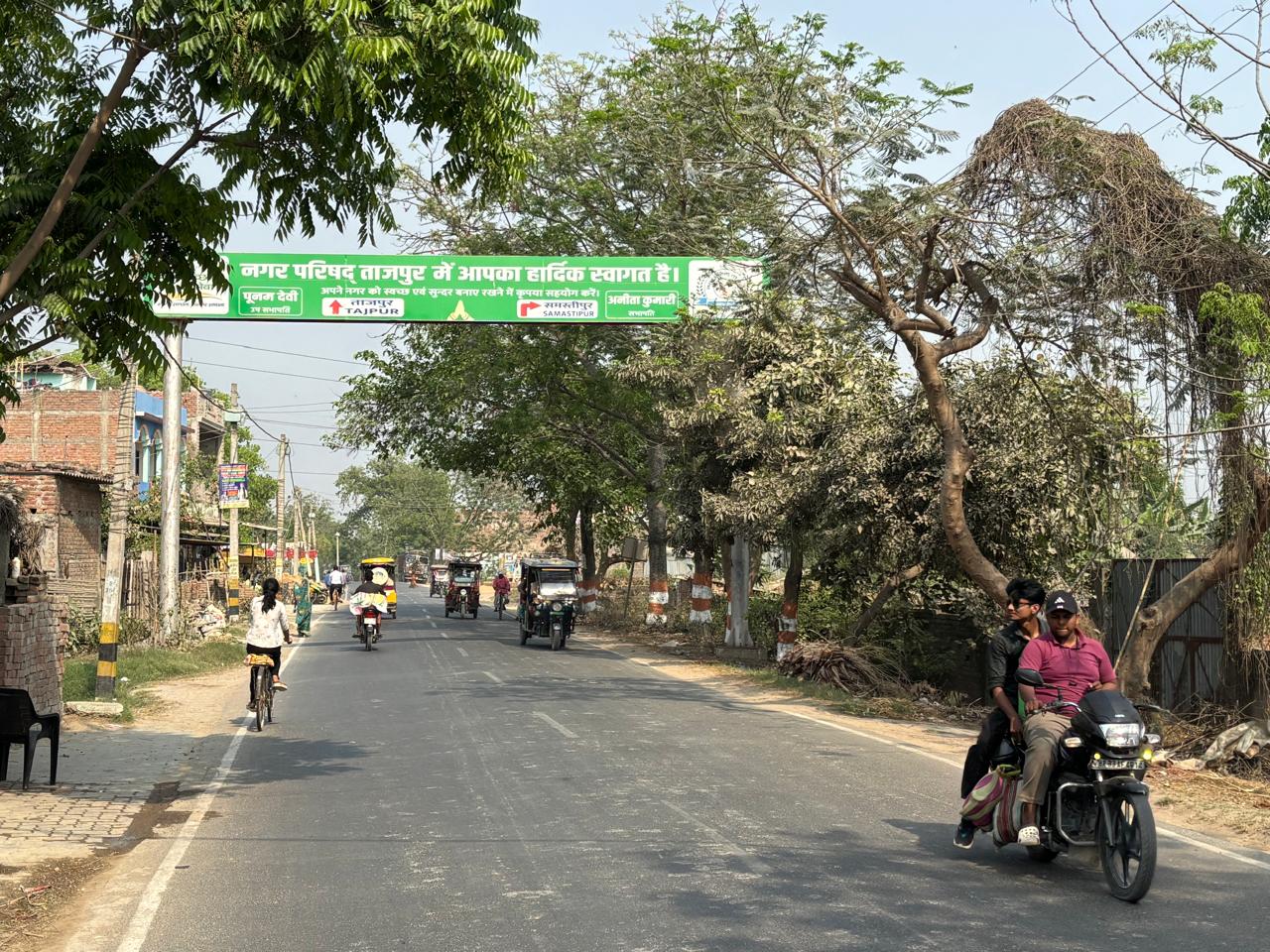
The vast stretches of land - a lot of it under cultivation - outside give way to a colony of single-storey houses along the narrow lanes of the town. The Sooryavanshis' joint family lives in one such home.
They have been here a few decades, running a jewellery business and cultivating their farmland. Sanjeev Sooryavanshi, Vaibhav's father, had cricket dreams of his own, which came to naught in part because Bihar did not have BCCI affiliation in his day.
In the early 2000s, Sanjeev moved to Mumbai to pursue the game and also try to make something of his love for theatre. "He was fond of acting," says a close acquaintance, Rajesh Jha, currently the secretary of Samastipur District Cricket Association (SDCA), of which Sanjeev is an active part. Sanjeev worked in shipping yards, ports, and in nightclubs as a bouncer. Sometimes he worked two shifts to be able to fuel his passion for cricket and acting.
After a decade of mere survival in an expensive metropolis he returned to Tajpur and got back into the family business, though it wasn't the life he had once imagined.
All through his youth, Sanjeev's relationship with cricket had bordered on obsession. In his teens he cycled nearly 100 kilometres each way from Tajpur to Patna in the searing summer heat once a year, just to collect entry forms for the then-famous Sukhdeo Narain inter-school cricket tournament. Circa 2018, when his precociously talented middle son - one of three siblings - who was first handed a Kashmir willow bat on his fourth birthday, began to show real spark, Sanjeev once more took on rituals of that sort.
This time he wasn't on a bicycle but in a second-hand Mahindra Scorpio SUV, making the 200-kilometre round trip every other day to take the boy to the Gen Next Academy, run by Manish Kumar Ojha, a former Bihar and Jharkhand player, in Patna's Sampatchak area
On a routine day, covering the distance from Tajpur to the capital can take upwards of three hours each way. It was arduous, but it had to be done; it was a matter of his son's future.
Sanjeev was up for it, though, as Ojha says, "It wasn't practical for him to wake up every morning at 4am, prepare and leave at 6am to travel 100km, train here, and again return at night."
Sooryavanshi, his father, and four or five net bowlers, would make these trips. Their breakfast, lunch and snacks would be packed by his mother, whose days too began in the wee hours.
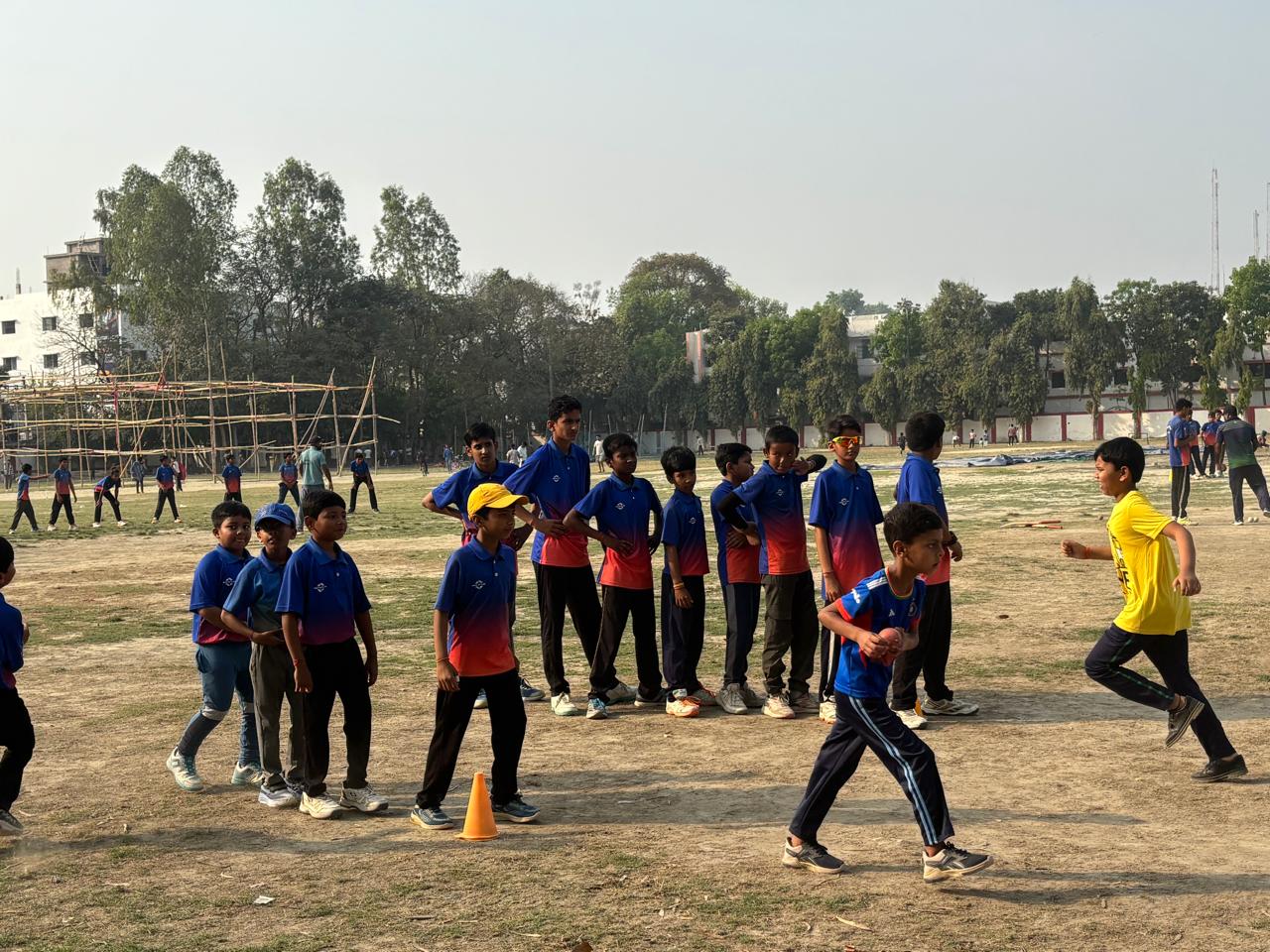
The next wave: kids, inspired by Sooryavanshi's success, are put through their paces at the municipal ground in Samastipur
Shashank Kishore / © Jiostar India Pvt Ltd
"When I train kids, I throw at least 200-250 balls in personal sessions," Ojha says. "But I didn't apply this count in Vaibhav's case. Because he was the first kid who used to come from that far to train under me. You could see that level of commitment and passion, and the respect I was getting from him was massive.
"If I got tired, then I used to tell my support staff to throw balls. If they got tired, we used the net bowlers who came with him. There was no count but minimum, he faced 600 balls every day he trained.
"And as long as he trained, I've never seen him train defence. I wanted to add something new or perfect an existing stroke. Try and see how many options he could have for every delivery."
This training regimen may have seemed rigorous and possibly harsh, but Sooryavanshi at that point had already spent about three years honing his craft in Samastipur, just outside his village, under Brajesh Jha, his first coach.
The municipal ground in Samastipur is a massive patch of land in the town centre. On any given day, you are likely to find at least 200 children there, playing everything from volleyball and football to cricket and lagori, the traditional game of knocking down a stack of seven stone tiles with a ball.
When Sooryavanshi first began training there, in 2015, the ground was largely a shared space. Kids played football, volleyball, throw-ball and cricket. But ever since local boy Anukul Roy's rise to the India Under-19 team, who won the world title in 2018, it has mostly been cricket. Roy, from Samastipur, learnt his cricket under Jha, but represents neighbouring Jharkhand in domestic cricket.
Sooryavanshi's own rise has further accelerated that shift. So much so that when lockdown was lifted during Covid-19, Jha opened a sports-goods store by the ground to cater to the growing demand.
Today, you're likely to find at least 60-odd children in the four-to-seven age group training there at most times. All of them have been drawn in by Vaibhav's exploits in the past year alone, Jha says. The surge has forced Jha to introduce an exclusive batch for young kids, early in the afternoon. "And still, it's not enough to give everyone the same kind of attention that I managed to give Vaibhav. Because there are just so many kids."
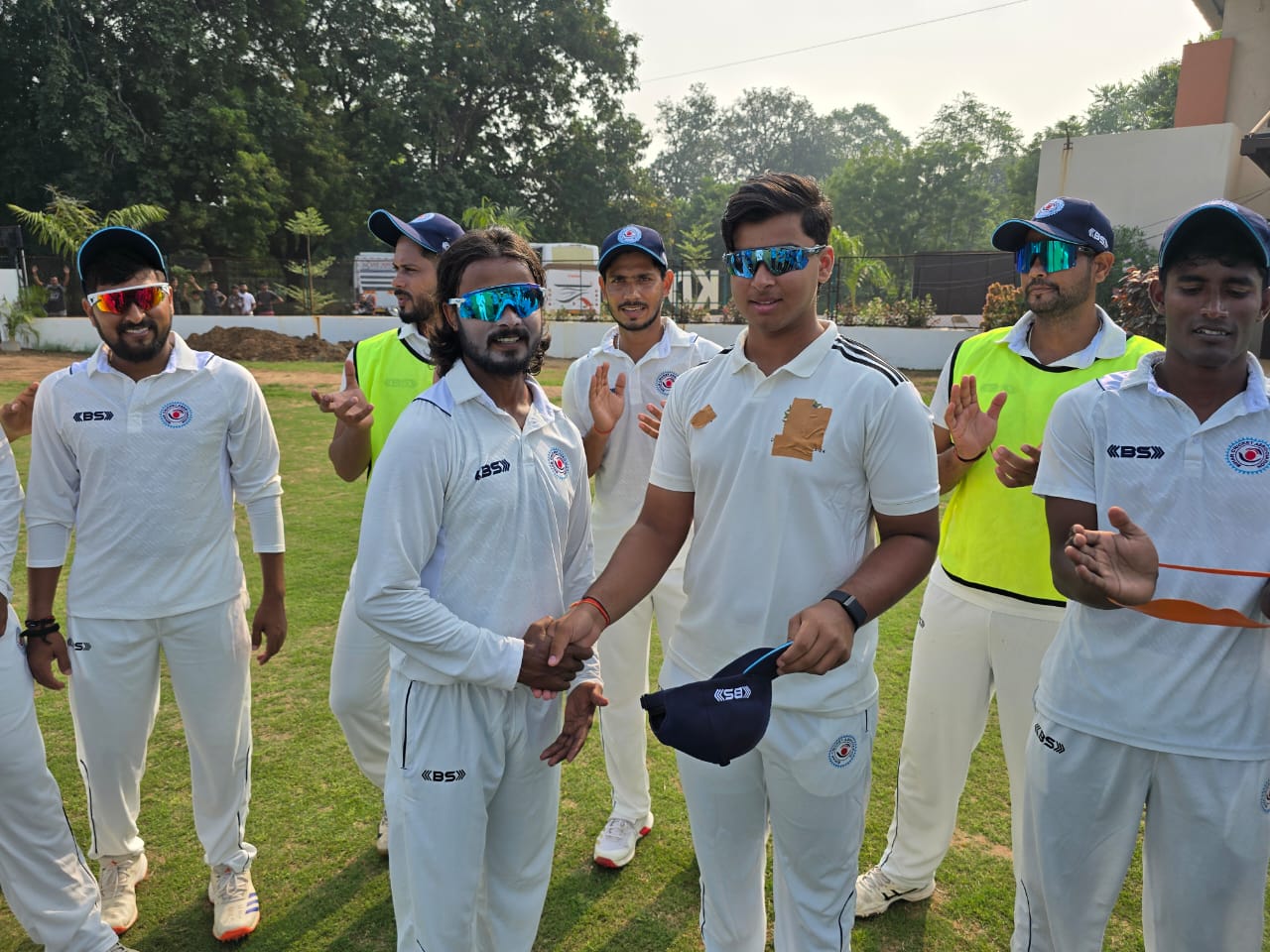
Sooryavanshi presents his debuting team-mate Sachin Kumar with his cap
© Vaibhav Sooryavanshi
Even when he was only nine, during lockdown, those around Sooryavanshi sensed he was unusual.
"His game had the maturity of somebody 14-15," Jha says. "Which is why we went out of our way to facilitate training for him and a few other kids even during lockdown." Taking the required permissions would sometimes take as much time as one session did.
Jha couldn't have imagined then that the sleepy town of Tajpur, and Samastipur by extension, would soon firmly be on India's cricket map.
As you drive along the state highway north of Patna, a large green sign erected by the local panchayat greets visitors, announcing you are entering Tajpur. Otherwise, you could easily pass through without a second glance. Since IPL 2025, the sight of TV cameras in the town has meant only one thing. They are headed to "Vaibhav Sooryavanshi ke ghar."
The first thing Bharucha noticed about Sooryavanshi on his first day at the Rajasthan Royals trials in October 2024 was his physique and bearing, which strongly resembled that of Rishabh Pant. Sooryavanshi had been recommended for trials by former Bihar spinner Samar Qadri, previously a net bowler with the franchise. Qadri, based in Patna, had seen Sooryavanshi blaze away in inter-district games he had been to.
Bharucha asked the boy who his role model was. "Kya, Rishabh?"
"Nahi, sir, Brian Lara," came the answer.
"Bloody hell," Bharucha remembers thinking. "What was the connection?" The boy wasn't even born when Lara was an active cricketer. And yet, here he was - a kid from rural Bihar, shaped by the batting of a legend whom he had only seen on YouTube.
Indeed, one of the reasons for Sooryavanshi's abilities, according to Bharucha, is an almost Lara-esque aspect of his game.
"He has got this beautiful backlift that goes over his head and comes through," he says. "It's very rare. The bat actually crosses the vertical, almost goes in front of his hands and wrists. It's incredible."
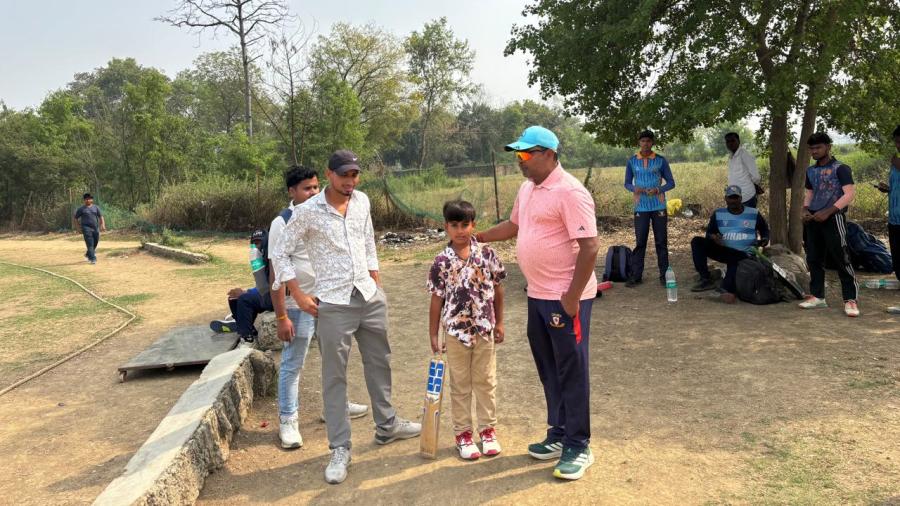
He makes heroes: Manish Ojha of the Gen Next academy, where Sooryavanshi trained, with a young aspiring cricketer
Shashank Kishore / © Jiostar India Pvt Ltd
"Sanju [Samson] has something similar - his backlift goes up to about head height, which is what gives him that power and timing," he explains. "This guy [Sooryavanshi] is similar, but even more exaggerated. The bat goes further around, which is just astounding. You shouldn't physically be able to get into that position. But it is unique."
This can be a double-edged sword. The benefit is that the extravagant backlift creates time and timing, especially against short balls, because the bat is already high up and ready to counter the bounce. It makes getting on top of the bounce easier than for players with shorter backlifts. The problem, in Bharucha's words, is "because there's a wind-up, a coil, wrist movement, elbow movement - the synchronisation can go wrong sometimes".
Sooryavanshi has experienced this downside from time to time.
"When he goes to the nets, someday he'll call and say, 'Sir, pata nahi, aisa lag raha hai ki ball hi nahi lag raha hai bat pe.' [Sir, I don't know, it feels like the ball isn't coming on to the bat.] That's a sign of that rhythm being a little off. The moment that rhythm comes, it's just sublime.
"He actually needs to hit a lot of balls so that he starts to feel comfortable, but he often talks about that. 'Lag hi nahi raha', 'ho hi nahi raha hai', 'pata nahi kya ho raha hai'. [Doesn't feel right, it's not happening, I don't know what's going on.] When that happens, generally it's a function of the sequencing being off, and he has to go out and hit 100-200 balls and the rhythm and flow comes back.
"That's one part of it, but when you get it right, the upside is spectacular and going towards greatness, into Lara and Tendulkar territory."
Bharucha remembers a conversation just before the Under-19 World Cup final against England last February, when Sooryavanshi called. He felt his timing was off, though he had racked up scores of 68, 30, 52, 40 and 72.
"He said, 'Bahut pressure hain, [that] every tournament, I hit at least one century.' We had a 'back to basics' kind of conversation. When you understand his backlift, people will say things to him like, 'Neeche se maaro.' [Hit from a little lower.]
Kneel and deliver: Sooryavanshi smacks one in a game for Bihar in the Mushtaq Ali Trophy
© PTI
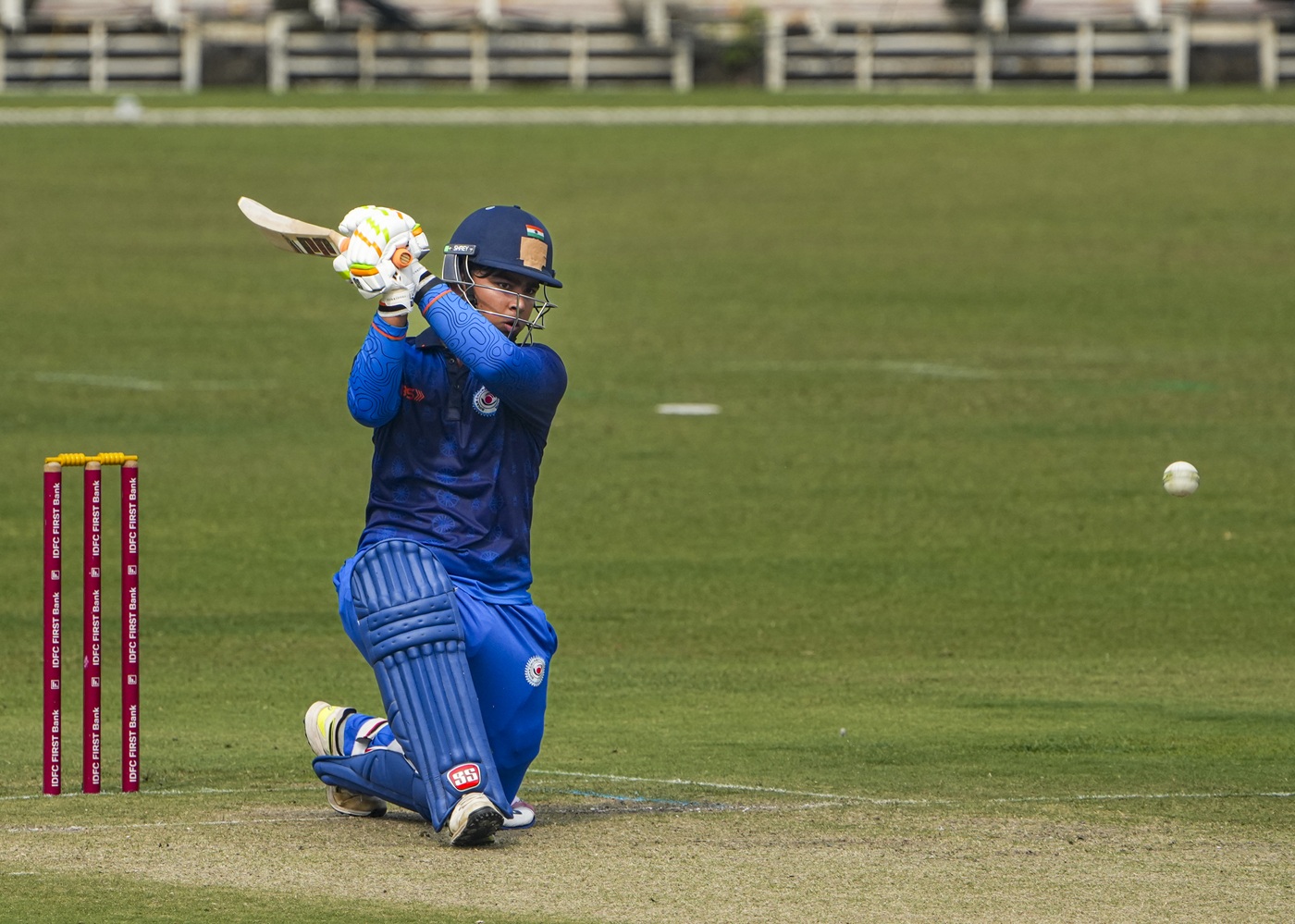
"Wherever he was playing [in Zimbabwe at the World Cup], the pitches were slow. If you tell a boy with that kind of backswing to play along the ground on a slow pitch, it's almost impossible. When he asked me, I knew he was struggling exactly because of that. I said, 'Neeche kuch maaro mat, bhai, upar se hi maaro.' [Don't hit from lower, keep hitting from higher up.] It's counterintuitive to tell somebody to do that, but you have to understand his game well enough to see what to do."
Sooryavanshi tore the England attack apart, smashing an 80-ball 175 in the final. He ended the tournament as the second-highest run-scorer, his 444 runs in seven innings coming at a strike rate of 162.49 - by far the highest. The 15 sixes he hit in that final are the most by a batter in a youth one-dayer; he surpassed his own record of 14 sixes against UAE in December.
Numbers like that tend to define young cricketers. But with Sooryavanshi, those who have spent time around him say the more striking part lies elsewhere: in his attitude, maturity and confidence.
And yet, they're quick to add, he hasn't quite left childhood behind. There is still a mischievous streak. And a sweet tooth that, for the longest time, needed policing.
Coaches recall how he would sneak in the occasional indulgence, like any other kid his age, before gradually learning to rein it in as the demands of the game grew.
"When Vaibhav went for the India Under-19s Challengers, his appetite increased," remembers Ashok Kumar, Sooryavanshi's age-group and first Ranji Trophy coach in Bihar. "He began eating a lot more than [before]. We had politely told him sweets were completely off his plate, but he used to call and say, 'Sir, can I have one piece?' And we used to give in and tell him, 'Okay, you can have one.'
"A few months later when we were in Mumbai for the Under-23s, Musheer Khan [the young Mumbai allrounder, who was Sooryavanshi's room-mate for the tournament], came to me and said, 'You're Ashok sir, right? Are you the one Vaibhav takes permission from when he wants to eat sweets?' I said yes. Then he's like, 'Sir, I'll tell you one thing. Before he took your permission, he'd already eaten seven or eight pieces.' And he was taking permission for one."
Insatiable: Sooryavanshi hit 11 sixes in his record-breaking IPL hundred last year
© AFP/Getty Images
But once the realisation kicked in that he had to cut down on carbs and sweets to improve his fitness, Sooryavanshi did what he needed to. It is a pattern those around him have seen: the ability to course-correct, quickly and without fuss. The awareness he has showed about his diet has been in evidence elsewhere, too.
Ashok remembers a conversation from after the Under-19 Asia Cup last December. Sooryavanshi had reacted to a fiery send-off from Pakistan's Ali Raza by pointing to his shoe. There was little doubt he had crossed a line.
"I'd seen that incident, and it blew up on social media. That was the only thing being spoken about. But even before I said anything, he came up and said, 'Sir, humse galti ho gayi.' [Sir, I made a mistake.]
"He wasn't upset because of the lack of runs. He said, 'Hum uss nature ke nahi hain.' [That's not my nature.] He understood immediately."
These incidents of self-realisation have helped boost his confidence in his abilities. Ashok remembers another occasion, in the lead-up to Sooryavanshi's first Under-19 season in 2023-24. They were in Chandigarh, and the Bihar Under-19 team had a couple of training sessions before the match.
"The day before the game, we usually get all those in the XI batting in the nets. I called Vaibhav and gave him a very specific task. I told him, today, you're not batting in the nets, your task is to face 150 balls. Focus on the basics: back-foot defence and drives, front-foot defence and drives. I also asked him to take at least 25 catches. He just said, 'Okay, sir,' and got on with it."
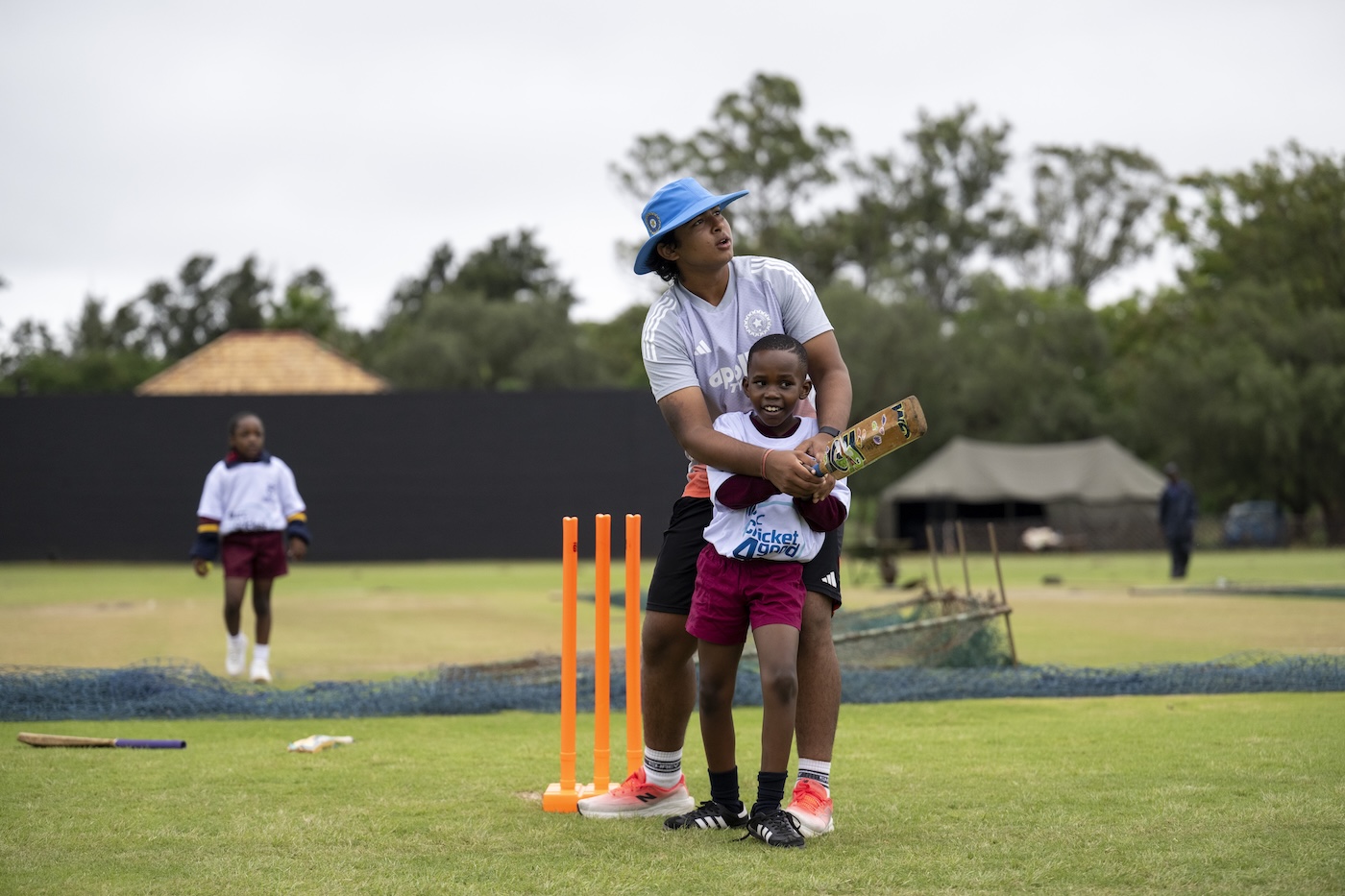
Here's the manual, now tear it up: Sooryavanshi coaches a local child at the India Cricket4Good clinic in Bulawayo during this year's U19 World Cup
Johan Rynners / © ICC/Getty Images
Later that evening, after dinner, the coach called Sooryavanshi again. "I asked him if he had eaten, if he had spoken to his parents. Then I took his phone and switched it off. I didn't want any distractions or outside pressure.
"I asked him, if you get a chance [to play] tomorrow, what will you do? And his immediate response was, "Sir, khilayiye na, hum akele match jitayenge.' [Sir, let me play, I will win the match myself.]
"When a young kid says something like that, it gives you confidence as a coach."
Sooryavashi played, and delivered.
"He scored around 89-90 [86] and won us the game single-handedly. That innings told us we were looking at something special."
By then, word had spread about the young kid who could perform wonders. "One of the match referees, Vishnuvardhan, couldn't believe he was from Bihar," Ashok says. "He said, 'He looks like a Delhi boy.' I told him, 'No, he's from Tajpur, Samastipur.'
"Vishnu called and spoke to S Sharath, who was part of the senior selection committee. He also sent him the match footage. After watching it, Sharath called back and said that Thilak Naidu [then chairman of the junior selection committee] would come and watch the next game."
The real test, though, came against Haryana.
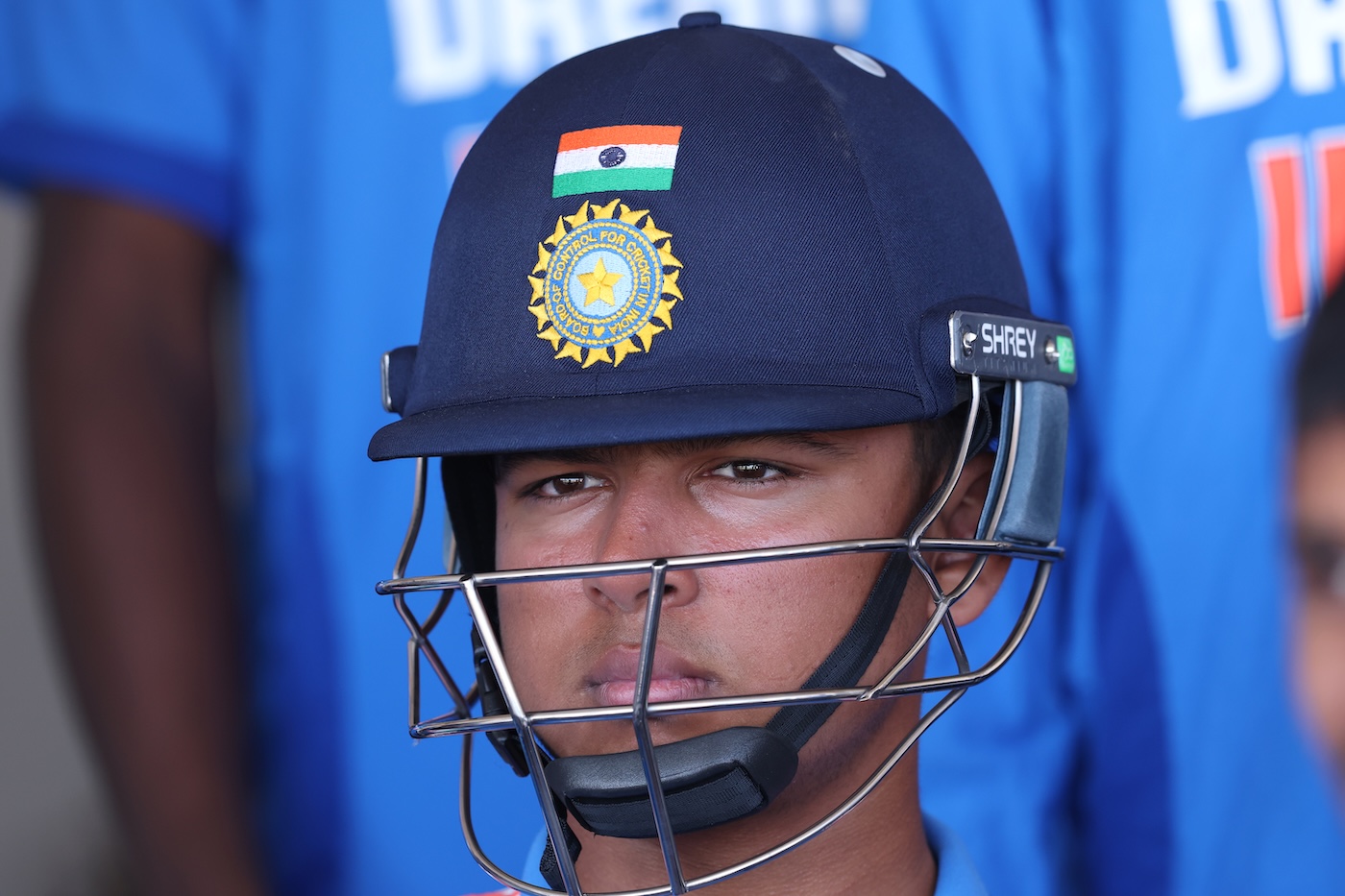
Sooryavanshi during the youth tour of England last year
Michael Steele / © Getty Images
"They had a strong side - big boys, physically imposing. They put up around 270. We were 45 for 5 in the chase. When he came to me during the drinks break, he said just one thing: 'Sir, ask someone to stay with me till the end. We'll win this. I'll win it for you.'"
He nearly did. "He scored [139]," Ashok says. "We fell short by about [32] runs, but that innings, that was something else. From that moment, I was convinced. I told him, 'You will play for India at this level. You'll go on to bigger things.'"
Sooryavanshi would make his Ranji Trophy debut later that season, at 12 years and 284 days, becoming the youngest Indian first-class cricketer since 1986. Since then, he has been elevated to the vice-captaincy of the Bihar side, become a household name in the IPL, and won an Under-19 World Cup.
Inevitably, the road ahead will be tricky, but Bharucha thinks Sooryavanshi has a bit of a headstart when it comes to understanding the game.
"The thing with him is, he speaks like a 24-year-old when it comes to batting. He already knows where they're going to attack him. He's already [prepared] for what lies ahead. They'll all be working him out, but he's learning to counter them too. My only feeling is, because of his unique maturity, he will find some way out of that."
For now, Bharucha only has one wish for Sooryavanshi: that he stays the course, for the upside is potentially immense.
"I see leadership in him," he says. "He's super-aware of what is going on around him. If somebody hits a good shot, he'll be the first guy screaming. He's very complimentary about his mates. I definitely see massive leadership opportunities for him down the road. I can already see that emerge in him as a person, how he carries himself. Just a matter of him staying the course now."
Back in November 2024, asking a franchise to set aside Rs 10 crores for a 13-year-old from Tajpur sounded absurd. Today, it feels like they got away cheap.
Shashank Kishore is a senior correspondent at ESPNcricinfo
© ESPN Sports Media Ltd.