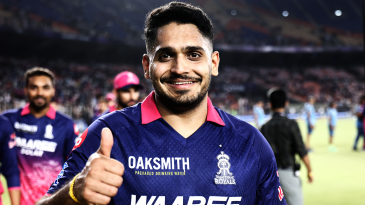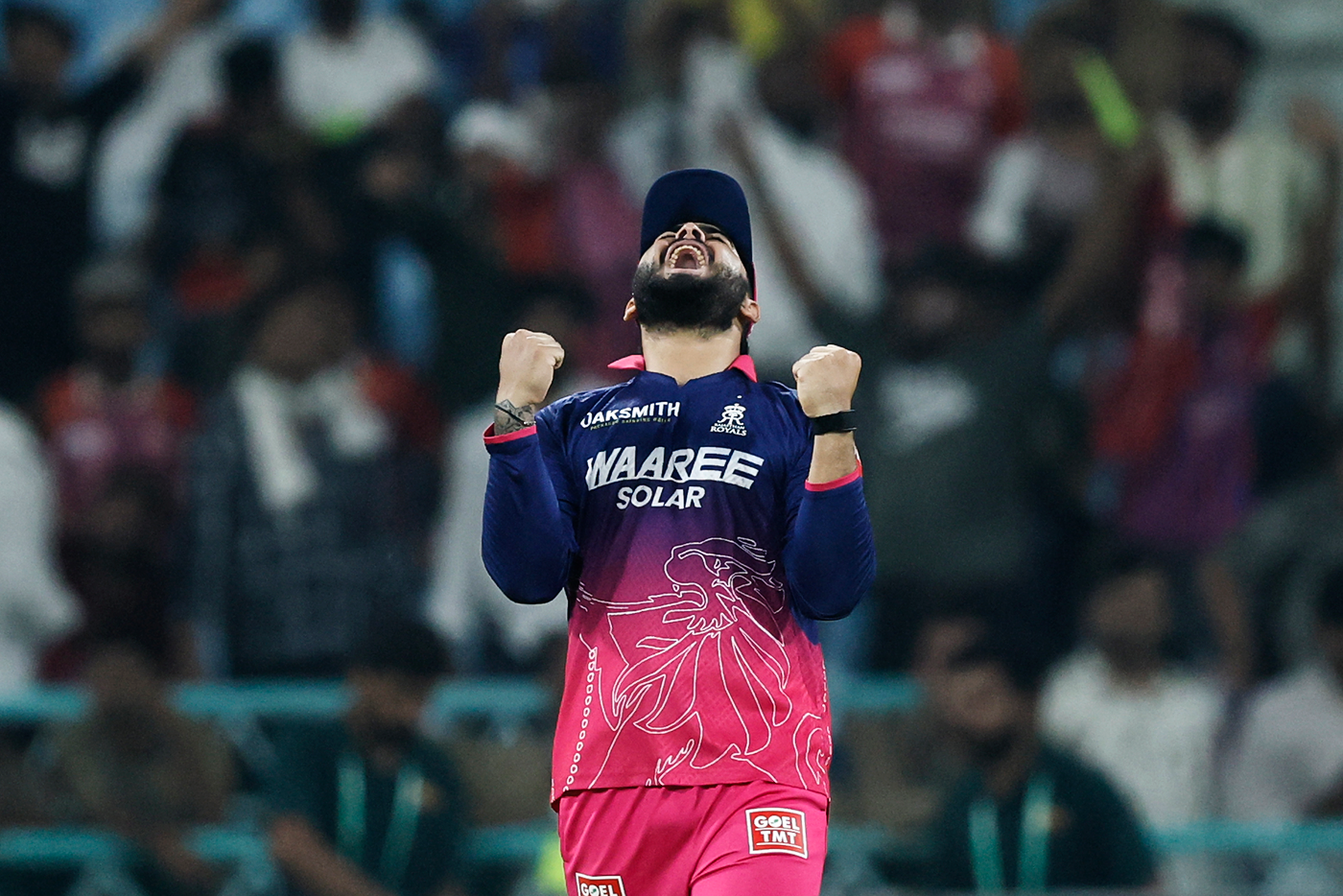





The RR captain talks about his leadership style, becoming a punching bag for his bowlers, and his conversations with Jadeja and Sangakkara
Riyan Parag, who joined Rajasthan Royals in 2019 as a 17-year-old, became the franchise's new captain in 2026 after leading as an interim in eight games last season. In an interview last month in Kolkata, he talked extensively about his vision for RR, data vs instinct, talking tactics with Dhruv Jurel and Yashasvi Jaiswal, his batting, and more.
You joined Rajasthan Royals in 2019 when you were only 17, and you debuted for Assam as a 15-year-old.
I debuted at 13 in the Under-16s, so I was always two years ahead. I already had that knowledge of playing with older guys, or with people who look way bigger than me. I came into the Assam set-up for my first Syed Mushtaq Ali Trophy when I was 15. Insane years. I feel batting against world-class bowlers when you're a teenager feels unreal.
How have things changed in these nine years? Does a 15-year-old, like Vaibhav Sooryavanshi today, get the freedom to play the way he wants to? Did you have the freedom to play the way you wanted to?
Actually, no. My dad had a restriction about me hitting sixes till I was like 16-17, when I just got into the U-19 World Cup squad. Till then I was pretty much like: defend, leave, defend, leave, because he wanted my foundation to be really strong. But when I did get selected for the senior [Assam] team for the Syed Mushtaq Ali T20 tournament, that's when he first taught me how to hit a six, because he himself was a big six-hitter.
But today, as captain, you will encourage a batter to play his way, right?
Absolutely.
You will not have told Sooryavanshi to play according to the situation then?
(Laughs) I have not. My thought before the 2026 [IPL] season was that I didn't want to be an SRH [a team like Sunrisers Hyderabad]. I didn't want to be a team that goes only for 250-300 runs. I want a batting line-up that is very smart, that assesses and adapts really well. If it's a 170 par score, I want us to be able to get 180. If it's a 200-run wicket and we have to chase that down, we should be able to chase it in 18 overs. And if we need to get 250 or 270, we should be able to do that as well.
Can you explain what you mean by "don't want to be an SRH"?
If I have to break it down [what SRH normally do]: it's going at like 180 or 200 strike rate from the get-go. Everyone in your line-up sort of plays the similar way and goes on upping the ante.

What we try to do is: Vaibhav and [Yashasvi] Jaiswal go really hard at the top. Then [Dhruv] Jurel comes in and steadies the ship a little bit but keeps maintaining that 150-160 strike rate. I come in at four and really assess and anchor the whole innings. If someone's going really well at 200-220, I make sure I'm at 140-130, making sure we don't lose a lot of wickets as long as we get 10-12 runs an over. And as soon as that partnership breaks, Heti [Shimron Hetmyer] decides if he wants to go at 200 or wants to take five balls, bat at 120, and then wait for those last five overs where, if someone from the top continues or Don [Donovan Ferreira] comes in, they both go at 250 or 300 as much as possible.
Looking at you, you seem like you would be into stuff like Ultimate Fighting Champion. Varun Aaron, your former team-mate at Royals, told me that you're very impressive at the snatch. Can you tell us more about your fitness routine?
I'm a big fan of CrossFit. I feel it incorporates cricket [needs] in ways a lot of people have not really thought about. It's very explosive, it is a lot of endurance, but then it's very, like, short bursts of speed. Nishanta Bordoloi, my trainer, introduced me to it when I was 12 or 13 years old. He used to be a really good colleague of dad's and he had just opened a gym back in Assam. He had done a certified course for CrossFit in Australia. What Varun bhaiyya is talking about is the one-handed snatch. I was pretty strong in that.
Right now, I don't really go really heavy when I'm training. It's just small reps, good strength and just keeping everything in my body rock-solid for the game, because all you want during the game is a lot of explosiveness and no fatigue. I feel longer sessions in the gym fatigue your muscles and tire them out. Right now what I'm trying to do is be as fresh as possible yet keep the reps coming in.
Can you give us an example of how focusing on fitness has made a difference to your energy levels on the field?
[With regards to a healthy lifestyle], I've been brought up really well [thanks to] my mom and dad [helping] with sleep schedules and routines, what a cricketer should be, and stuff like that.
When I first came into the IPL, it was a different life altogether. You practise till 11pm, you sleep at 2-3am. And I used to do a lot of [video] gaming back then. There was no one to tell me to go sleep. The first few years were a little like that - a few late nights more than what I would have liked. When I would wake up, I'd be really tired. I'd sleep eight-ten hours, but I would be going to sleep at 4am. That's when I learned about the sleeping schedule you should have. You should sleep before 12, unless there's a game. If you sleep after 12, you may sleep as much as you want, but your body is not going to recover [because of the disruption of its circadian rhythms]. It took me a couple of years to understand that your body works in a certain way and you can't just push it around like that.
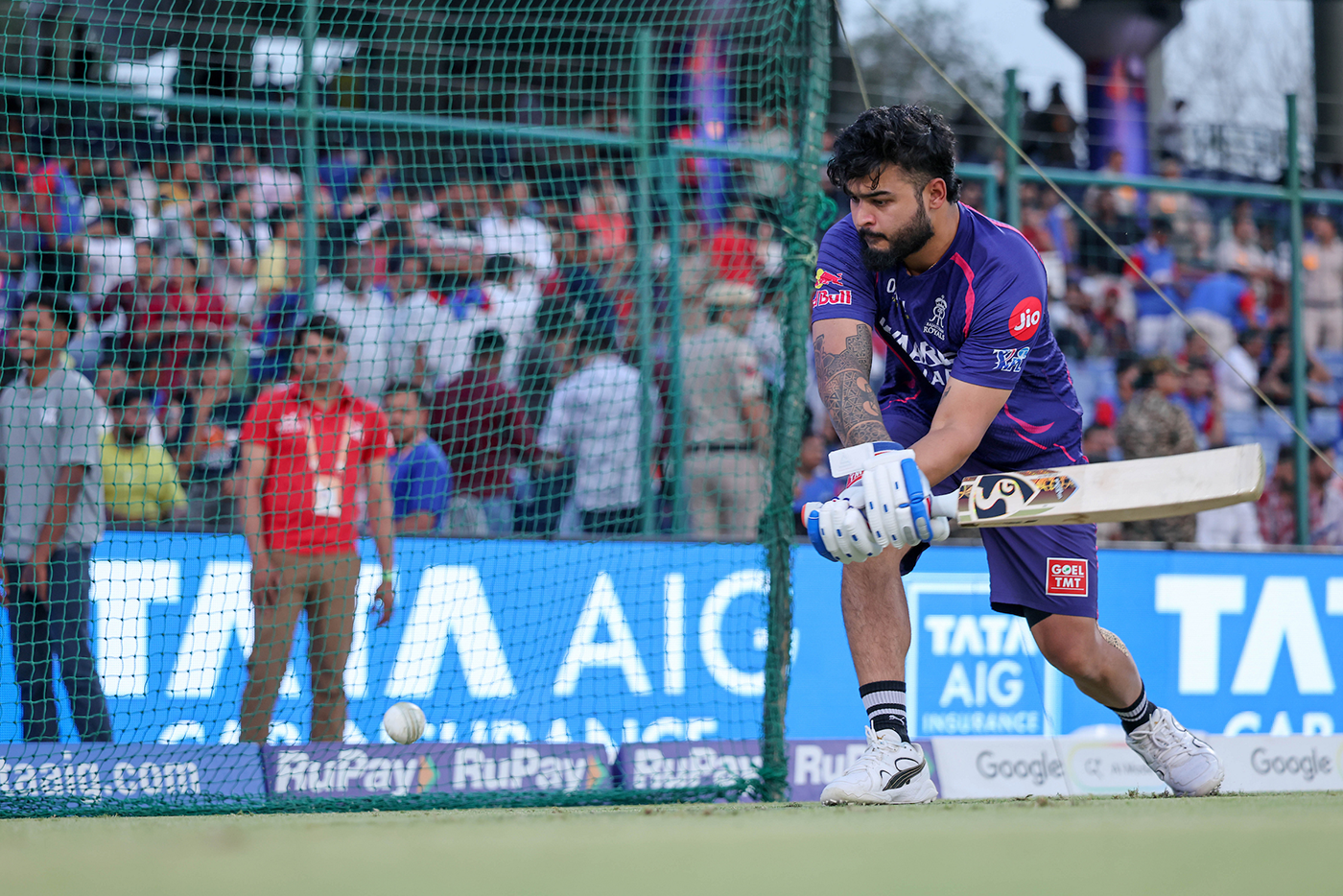
"If my instinct tells me that this is what I need to do, you can bring me a thousand pages of stats and data that says I'm wrong, but I will end up doing it. That is how I want to lead"
Vipin Pawar / © BCCI
Your growth in the game around this time - with the 2024 and 2025 seasons being among your best - coincided with Sanju Samson asking you to join the leadership group on the field. Can you tell us how that came about?
They are like two different spectrums altogether, being a player and being in the leadership circle. The year 2024 was the first time Sanju bhaiyya asked me to do that because Jos [Buttler] sometimes would not be there and he [Samson] would be fielding at deep long-on or deep midwicket and I would be at mid-off. He would ask me to speak to the bowlers, ask what the plan was, and then I would narrate it all to Sanju bhaiyya. That's how I first got into it.
Then Jos bhai left [for England] towards the end of the league phase and Sanju bhaiyya said, "You're the guy now. You are going to stand at mid-off and whatever the plan is, you are going to remind the guy who's bowling that these are the plans for this particular batsman and then tell me that, okay, this is what we're going to do." Before, I would just attend batters meetings. Now I had to attend batters', spinners' and seamers' [meetings] as well.
Then I understood the whole thing. Like, okay, there's a lot that goes on for each delivery being bowled. A whole new world for me, that was. Then when we would go to matches, our analysts would give us small [pieces of paper] on every batsman and the weak spots or shutdown spots or where they are good at. I would have to look at those and tell the bowlers that, this guy [does this]... That was a crazy experience for me when I was first doing it.
When did you stop carrying those chits? Or do you still carry them?
I feel [I stopped only] this year. Even in 2025, I had the chits. You need a year to understand what goes on. You get a little more understanding about the strategy the team wants, you know more about your bowlers, you know more about the batsmen because when you look at cricket as a player, it's a different view altogether. When you look at it as a captain, it's a whole universe, right? So you need a year to settle down.
Last year you also spent a lot of time as the interim captain because of Samson's injury. What was that like?
I got to know about it two weeks prior to the first game, which is a very small amount of time to plan and strategise everything. I'm a deep thinker when I'm captaining the side. I need to know everything: all the ins and outs if a bowler is not doing well, what does he want to do or what does he want from me, and stuff like that. I didn't have that information.
And SRH was our first opponent. The way they started, I was like, "Oh s**t, this is something I was not expecting."
Right after the powerplay, one of our bowlers [spinner Maheesh Theekshana] went for 40 [3-0-40-1]. I went to long-on to ask Sanju bhaiyya [who was playing as a batter] and said, I think I should bowl two overs." He said, no, stick with the plan. Then another bowler ended up going for runs as well. So now I was like: should I have listened to myself or should I have done something else? But when that match was going on, it felt so slow. It felt like we were not getting hit, but every over was going for 12-15 runs and I just couldn't process it. I was pretty calm. I was pretty clear with the plans and the communication to the bowlers, but then nothing fell into place and just bang, bang, bang, and [SRH] went to [286].

It was crazy. I got out for four runs as well, so that didn't really help, but our boys really showed up. We ended up getting [242 for 6]. In the debrief, Rahul sir [Rahul Dravid, Royals head coach in 2025] and our analyst always make a chart of decisions that we were supposed to do. There were a lot of good pointers. And I think, if I give it a rating out of ten, I made nine correct choices in the whole game. Yet we went for [286]. So I'm like: Okay, if I made the right choices, why didn't it work?
And that's just the beauty of the game. You can make right decisions, you can ask the bowlers to bowl a certain amount of balls or type of balls to a batsman that has [certain] weaknesses, but if it's not your day, it's not going to work. So that gave me a bit of relief that I made the right decisions under pressure.
Can you talk about a decision from last season that you were satisfied with and where the team management also agreed with you?
I bowled myself a lot [Parag took 3 for 170 in 20 overs at an economy of 8.5 per over]. I felt I need to stand up for myself, bowl those overs and lead by example. I felt I bowled really well in 2025, like an economy of eight or whatever. That is what I wanted to tell the bowlers: This is what we need to do. If we get a wicket, we get a wicket, but our main thing is containing. When you stand up for yourself, bowl a couple of overs and it pays off, then your coach or your analyst will come up and say, "Good decision."
When did Royals call to tell you that they had picked you as the new captain this season?
Actually, we went through a very rigorous [interview] process. I didn't prepare [for the interview]. I felt like I have some knowledge of captaining Assam and it was always against the bigger teams, and to win games, you have to think a lot. When they told us that we would be having three hour-long meetings of questions and different scenarios, I felt whatever I did for Assam, how I led Assam, is all I'm going to [talk about] to Manoj and Sanga [Kumar Sangakkara, Royals current head coach]. And I felt that just aligned with them.
A lot of different questions, difficult, but all my answers were keeping Assam in mind and how I dealt with different situations when I was a young captain. We had seniors in our side, and how I would negate different situations, like a senior is batting [in the nets] and a junior is not getting to bat. How do you manage that? So all of those situations came as questions, and I felt I did really well.
Is there anything from that interview process you can tell us about?
There was a question of mine, I do remember. In an IPL team, if you are winning or if you are title contenders, there's going to be 15 players that play out of a squad of 25. How do you get everyone involved from the start? That was a discussion between us. And my point was, in a lot of teams, it's always said that everyone's opinion matters, but it never really does because the 25th guy or the guy who's been picked for his base price for the first time, if he comes up to you and tells you that I think this guy should bowl the first over, you're not going to listen to him, correct?
What I said was: Let's give them game situations. When an IPL game is going on, the head coach goes to him, or me as a captain goes to him and says, "What do you think I should do here?" This year when I'm on the boundary and someone brings water to me, I freely ask, "I'm thinking of doing this. Do you think this is right?" I feel once you do that and if he says something and it aligns with you and you end up doing it and that becomes successful, he feels motivated. Everyone feels actually included, not just for the sake of it. I think that is how you get everyone involved in team decisions on and off the field.
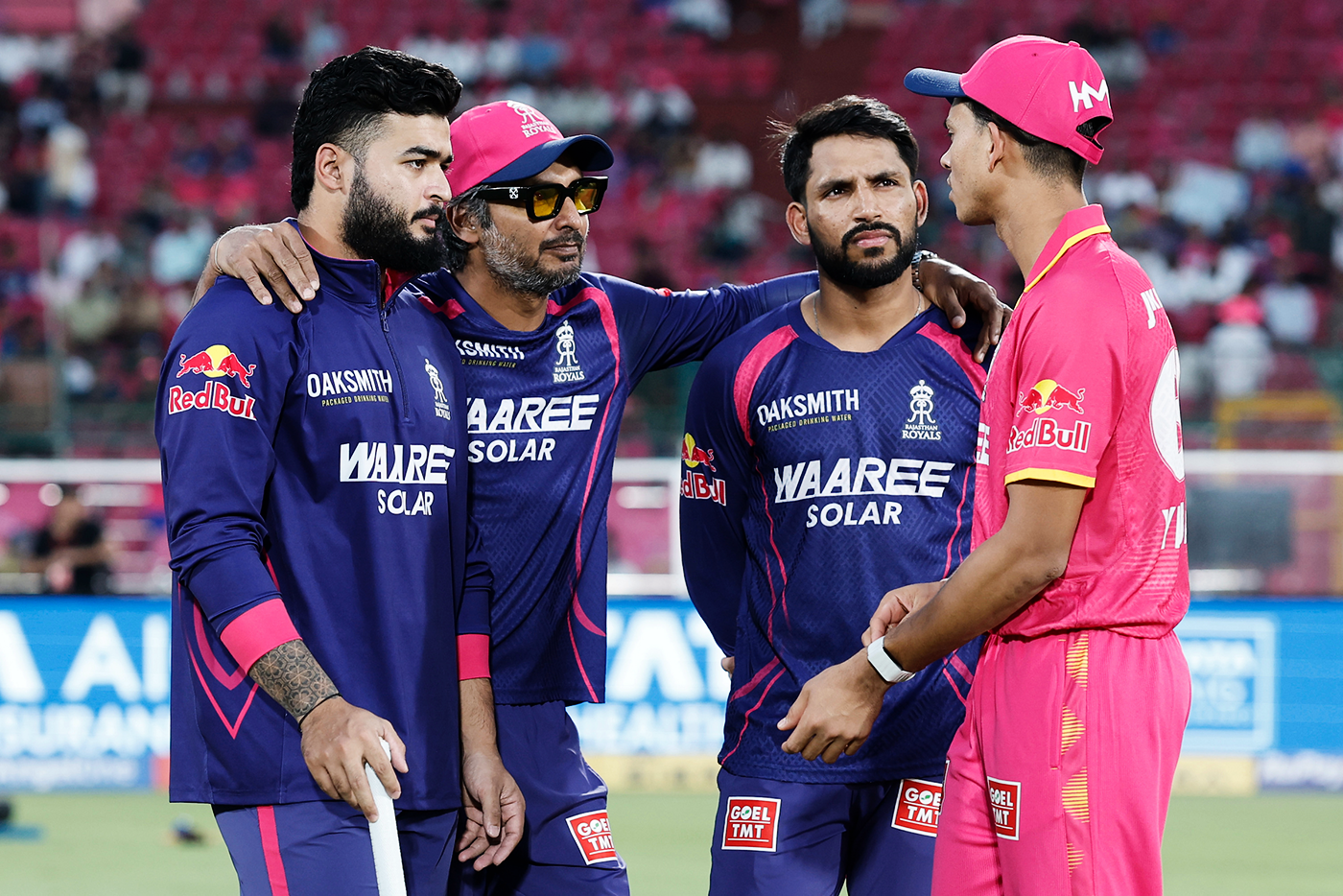
The brains trust: Parag, coach Kumar Sangakkara, Dhruv Jurel and Yashasvi Jasiwal are part of the decision-making group at Rajasthan Royals
Deepak Malik / © BCCI
Do you agree that man management, being tactically sharp, being calm under pressure, and being a good judge of character are some of the key attributes in the making of a good leader?
I do agree, and there's actually going to be more to that list, but then you have to be good at all of them. If you don't do a single one of that, like man management or being strategic, or or being a person that is reachable yet not reachable, you are doing the wrong job, you are doing it wrong.
One of my biggest challenges is narrating a message in 25 different ways because there are 25 players. You add the staff and there are 30 different human beings and 30 different ways of thinking. If I want to say "I have an orange in my hand" to a couple of players, they will understand, okay, I have an orange in my hand. A couple of players would say I have a fruit in my hand. A couple of players would say I have a thing that I plucked out of a tree.
I think I'm doing it pretty well, because let's say you have got to communicate [to a player] that they're missing out: you've got to find the right time to tell that person. If you don't, it's not going to work. If you know he's had a bad net session and he's being dropped next game, you can't go ahead and tell him as soon as he's finished the net session. He's going to be even more mad, right? (chuckles) You've got to find him at a place where he's more comfortable. Someone likes to play table-tennis, so play a round with him and then break the news in a really soft and empathetic way. That is what I've learned - man-managing and getting through to people.
In that case, let's talk about Tushar Deshpande. He won Royals the match against Gujarat Titans in Ahmedabad after delivering a tight final over. Two matches later, in a tactical move, he was dropped. Did you speak to him about it?
I felt Tushar was going to be really useful in Ahmedabad, which he was. Brijesh [Sharma, who replaced Deshpande against Royal Challengers Bengaluru two games later] was going to be very useful for us in Guwahati , which he was. I can soften the blow, but it has to be the player who's going to understand that anything you do in RR, the team comes first. If you sit back and you are like, "Oh no, I did well, I should have played", it's negative to yourself and it spreads negativity to the team as well. I feel I have done my part in breaking the news and whether it's at practice - I think with Tushar it was at practice in Guwahati - I can do that, but it's up to the player, how he takes it.
Did you call Samson or he call you after you became the Royals captain this season?
I don't think there was any call. I texted him right after the [T20] World Cup when he got the Man-of-the-Series: "Well done, Chetta, no one deserves it more, happy for you." I think that was it.
Who is part of your leadership group on the field?
Dhruv Jurel, Yashasvi Jaiswal, Ravindra Jadeja, Heti. Jofra [Archer] speaks with the bowlers, Sandy bhaiyya [Sandeep Sharma].

Who is your go-to person?
Right now it's Dhruv and me.
In that thrilling win against Titans, you got legspinner Ravi Bishnoi to bowl the 17th over of the chase when Titans needed 40. It felt like a bold move, considering the fast bowlers still had enough overs in the bag. Then you had a long discussion with Jurel before the final overs about whom to bowl.
You have to be very courageous as a captain. What I said to Sanga right before we landed in Jaipur [for the pre-season camp] was, I might be captain for the next ten years or I might be captain for just this year. How I want to captain is how I think cricket should be played, how I think a captain is supposed to make decisions, which is [being] very smart and aggressive and courageous.
If my instinct tells me that this is what I need to do, you can bring me a thousand pages of stats and data that says I'm wrong, but I will end up doing it [going with my instinct]. That is how I want to lead. That is how I've been leading. If it comes off, wow, insane, right? But there's always another side to it. If Ahmedabad didn't work out, it would have been another story. But even if those situations come and even if I take those decisions and it doesn't work out, I'm happy with it.
Bishi - I just felt tactically like I needed to take a wicket. He was spinning it and luckily we [had] got Rahul Tewatia's wicket [in the 15th over]. Then he got hit for a four by [Kagiso] Rabada [and by Rashid Khan]. I was thinking of giving Tushar 19th because it was the shorter boundary on the leg side and he would bowl wide yorkers and I would ask Jof to bowl the 20th with the longer boundary [on the leg side] and just bowl hard length.
DJ [Jurel] comes up to me [before the 19th] and he's like "Game chota karte hain abhi, baad mein phir dekh lenge jo hona hai." [Let's squeeze the run flow now and afterwards deal with what happens.] So I asked Tushar to wait. I'm like: "Jof, I need you." [He asks me], "What's the plan?" I say, "Just go fast." And he did. He bowled an insane over for four runs. Now I'm like, okay, one job done.
Now I've got Tushar coming in from deep midwicket [to bowl the final over], Dhruv in front of me, Jaiswal right next to me. And I've already said no to Tushar once. I could see the hunger in his eyes. And Dhruv goes, "Nandre, Nandre" [to give the over to fast bowler Nandre Burger]. So I was like, "Nandre, warm up." And then Yash [Jaiswal] says, "Tujhe kya lag raha hai?" [What are you feeling?] I said, "Mujhe Tushar lag raha hai." [I think it should be Tushar.] He says "Toh, kar na, phir. Bol, jaldi bol." [Do that then. Hurry up and decide.] So we had two guys warming up. I told Dhruv: "Bhai, aaj chal raha hai mera, toh chalne de, ho jaayega." [Bro, it's clicking for me today, so let's go with my choice, it will work.] I told Nandre: "You aren't bowling", and told Tushar, "Aaja." [Come.]
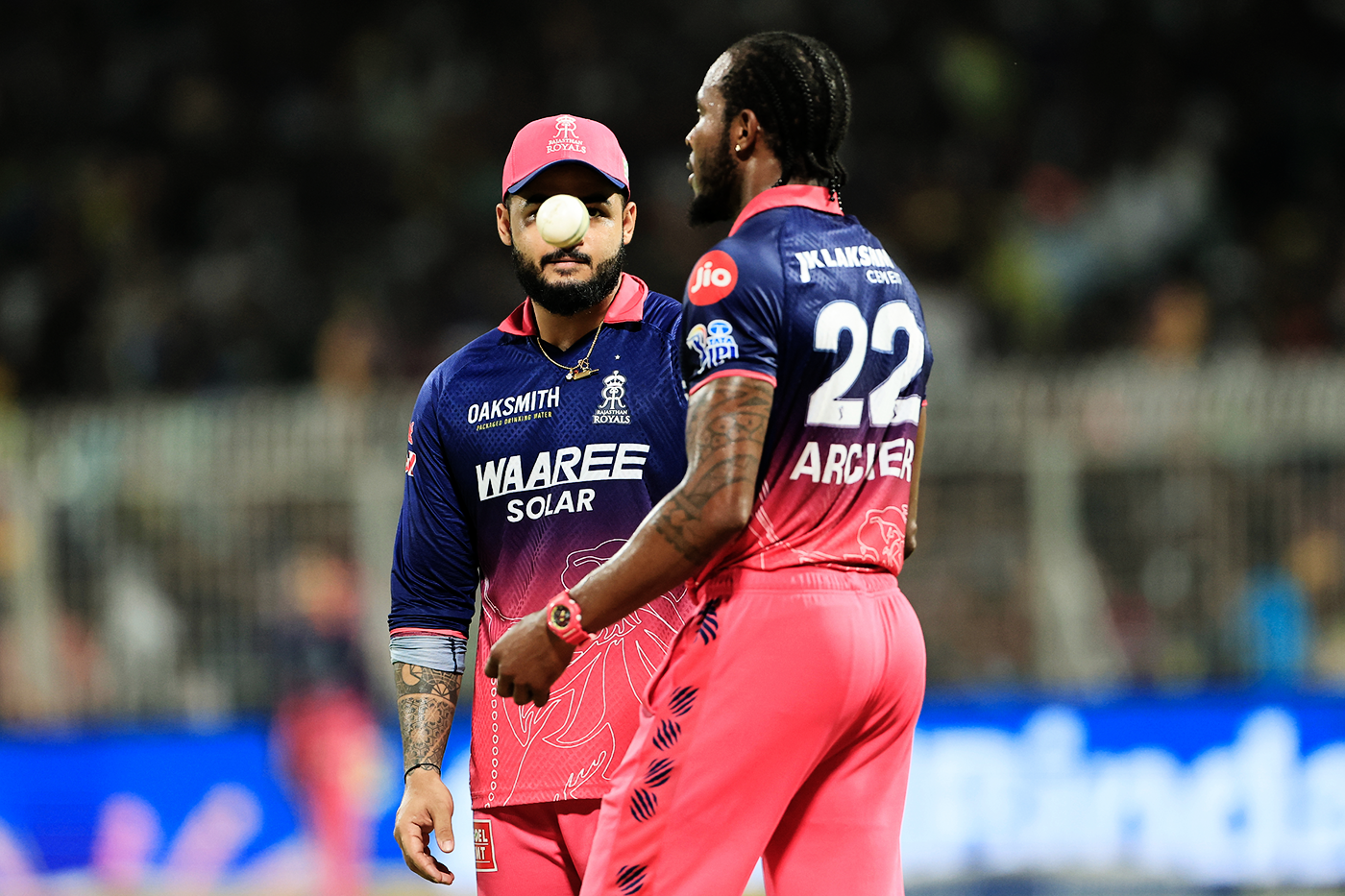
Parag on captaining bowlers during challenging spells: "I can just be very comforting, understanding and telling him what he needs to do next. So he's understood that things are not going his way, but I'm supportive"
Surjeet Yadav / © BCCI
When you told Sangakkara that sometimes instinct will lead your decision-making, what did he say?
Sanga said: If we align, I will back you at 100%. If you tell me this is what I want to do before we come together for a meeting and after all the meetings are done and we come to a conclusion that we want to do this, I will back you 100%. I was like, "That's all I need from you, Sanga. You trust me. I will make decisions that we've already agreed upon and we go ahead and play it. We lose, we take the blame, we win, the team gets the victory."
What's your relationship with data?
Data, for me, is a whiteboard. On game day minus one, I will call the analyst to my room once all the meetings are done, including on data, and he and I will take out pointers. For SRH, we planned that delivery to Abhishek [Sharma]: him stepping out, us bowling short. For [Heinrich] Klaasen, we planned on going wide when the data showed that he was good when he opened his hands. Those are the things I'm telling you that worked out. [On the whiteboard], I draw a circle, draw a field, put down all the batters and what we need to bowl, when they're going really well, and when we can actually squeeze them.
I feel it's good to know about a lot of things that data gives you, but it's not really specific because there are so many variables in the game we play.
Let's say I want to plan for Ajinkya Rahane as we are playing against Kolkata [Knight Riders] next. There's going to be very less data that's going to tell me what he does in Kolkata when he's playing the first few balls in a day game when the wicket is a black-soil wicket with less grass compared to a black-soil wicket with a lot of grass.
So when you go on a game day and see, okay, there's less grass, I don't have data for what the batsmen do when the wicket is playing a certain way. If you go really specific, data does not give you a lot of things. But if you want to know what are his shots or angles against different bowlers, legspinners, offspinners, you'll of course get that. But for me cricket is way deeper than that and I feel that I can only rely on my experience and my vision and how I look at the game.
But if the head coach comes and tells you, this data is telling you that on this pitch, this is what happens in the first ten balls, are you willing to listen?
I am open to that. In Ahmedabad [against Gujarat Titans in April], I went with that - we batted first because stats showed on that given wicket and the wicket right next to it - where South Africa beat India [in the 2026 T20 World Cup in February], they batted first.
Now [against] SRH, I had this gut feeling when I went to the wicket on game day [in Hyderabad]. I looked at the soil and I went to the batting crease and I just went like that with my spikes (taps his right foot) and I saw a few crumbs. I was like: I know we are planning to bat second, but I think we should bat first. And the data said we should bat second.
I know we lost a lot of wickets, but then even when Don [Ferreira] and Jaddu [Ravindra Jadeja] were batting, there was a significant amount of turn from the slow balls that the fast bowlers were bowling compared to the first innings, and I was like: I was right, we had to bat first. Not saying that would have changed the outcome, but when the [post-match] review came on, the decision was, yeah, we should have batted first. So now you tell me: should I believe in data? (chuckles)
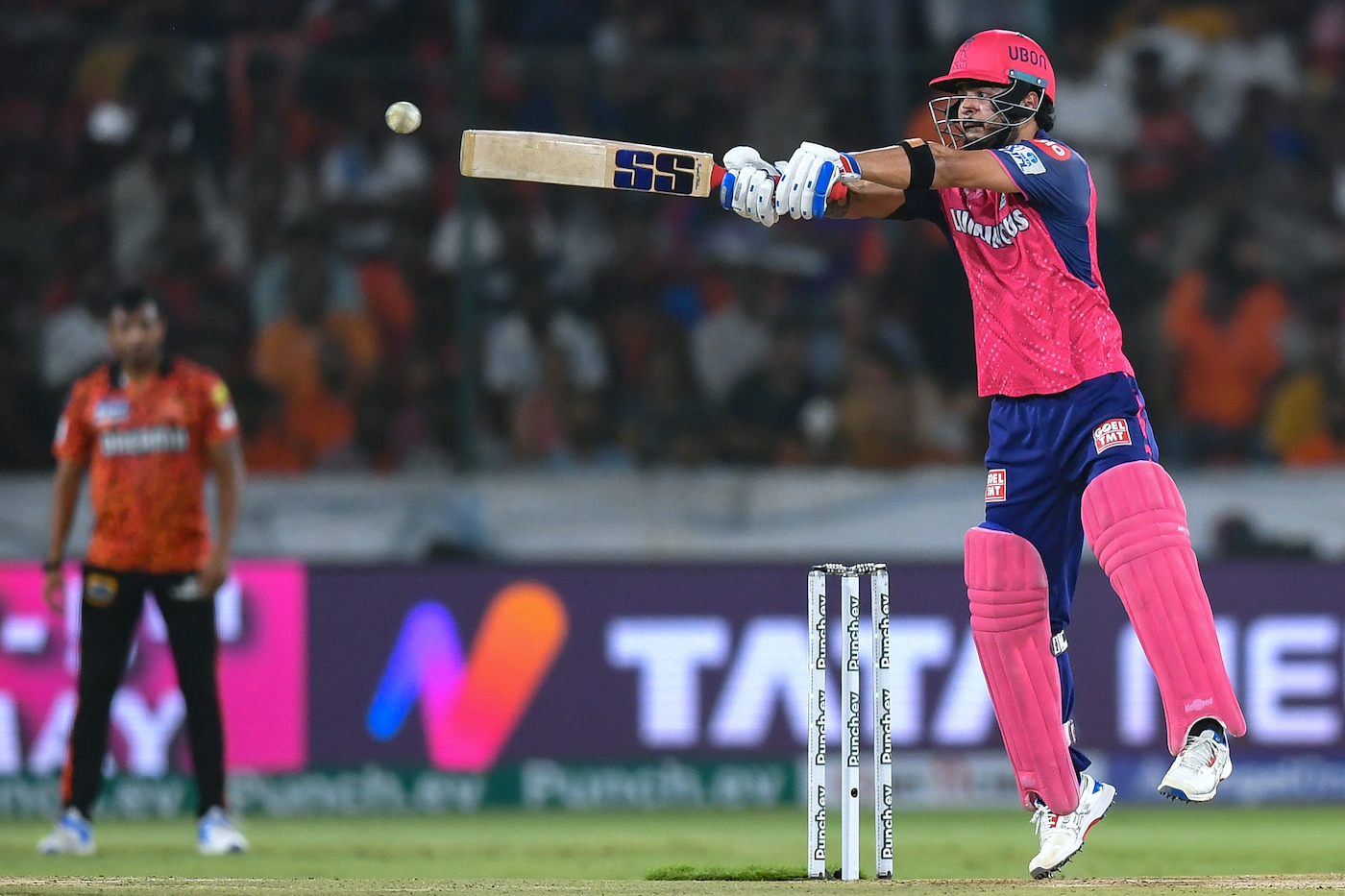
The 2024 IPL season was Parag's best with the bat. He scored 573 runs at a strike rate of 149.2, and Royals finished third on the points table. This season he has only managed 258 runs so far, but at a strike of nearly 152
© AFP/Getty Images
As captain you have to deal with a range of individuals. Let's take Jofra Archer against RCB. He was bowling at full tilt, getting edges, and you can clearly see his emotions. As a captain what do you do?
What I do is, I become a punching bag.
We planned for Virat [Kohli]: that he throws his hands [at the ball]. When you throw your hands, the ball often goes to a wider slip. So we kept a third slip. We didn't keep a first slip. First ball, first slip [is where the ball goes through]. I forgot to account that Jofra is bowling at 150kph. I was so stuck on data, third slip or second slip, that I forgot that my guy bowls 150. Regardless of where he [the batter] throws his bat, it's going to first slip.
Then we dropped a catch. Then he had [another] a couple of edges [go past] and he's like, "No one in the field's helping me, man." I'm like, "Jof, I understand. You are bowling great. I want you coming back in your third over and keep going as fast as you can. You are going to get me another wicket." That's all I say. If that helps him, that's the best I can do. If that doesn't help him, there's nothing else I can do. I can just be very comforting, understanding and tell him what he needs to do next. So he's understood that things are not going his way, but I'm supportive. Yet I've also told him that there's another task at hand. There's no time to feel sorry for myself and the captain needs me to take wickets when I come back for a second spell.
So you keep your emotions in check?
100%.
In that GT match you did display some emotion, throwing your head back in frustration or punching the air after a couple of wickets.
There are a few stadiums that you like to win in and Ahmedabad is one because it's such a big home ground support and not a lot for us. Plus, games that go really close, like that one, it [emotion] just comes out.
I am an emotional guy. I like to play the game with a lot of emotion and if there's another situation like GT, it's going to be the same for me. I shouted when Rashid [Khan] got out [off the penultimate ball of the match]. And as soon as [last batter] Ashok Sharma came in to bat, I went to Tushar. [When] some of the other guys were coming to us, I was like, "Please stay away." We took a minute or a minute and a half for that ball. The umpire was [pointing to his watch saying]: "Time." Once that was done, some emotion again.
A lot of people talk, write, comment on cricketers when they don't perform. All a cricketer can do is shut up. He can only play and not reply to those. Once you go through that for a lot of years, that tension builds up. I'm not saying that those emotions only come out because of those particular things [criticism], but then because there's nothing that you can reply on, nothing that you can comment back or say on social media, I feel that's where [on the field] the emotion comes. I have to factor in that all the bold choices that I make, if those don't go right or if those don't get success, I will be in a situation [where fingers are pointed]. So once those situations come in right, there's bound to be a lot of emotion.
Have you cut down on what you read or listen to about the game?
It is impossible to completely shut it down. Last year I got off the social media apps. But I heard right after the last game, a fellow Indian cricketer just said something that was straight up out of line.
About you?
About me. That was on my first page of Google, under the search bar, so you can't really avoid it. Those are some of the things you keep watching. If you need to post something on Instagram and you scroll for a bit, or you scroll YouTube, you are going to find a lot of stuff. You don't have to go searching. That's what I've understood.
What I've come to peace with is that regardless of me avoiding [the news], I'm going to see stuff about myself and it's up to me if I want to take it [seriously] or not.
Do you read?
No.
But you are studying?
Yeah, to pass exams (chuckles). Getting the Bachelors [degree] was for me, the MBA is for my mom. I write pretty well, so that helped with the Bachelors. MBA is multiple-choice questions, which makes it a bit easier. Because the courses are flexible, you get a lot of tutors and know what's coming next. You just got to figure out everything, remember it.
There were quite a few close defeats last season. Which one hurt the most?
To start off with, the [two-run defeat in Jaipur] against LSG [Lucknow Super Giants hurt the most]. Me and Yash getting out in the same over. RCB, DC, KKR. What else? There's got to be a few more.
We lost so many while chasing and I got starts in most of them. I got 20s-30s and I didn't finish it. So my learning was: just do it yourself, stretch it out a bit longer and then take the onus and be there at the end. As a team, I'm not going to say we were unlucky. We were just not there at those crucial moments. If we would have been, it would have been a different story. I don't know how else to put it, but even what we've spoken amongst our core group - me, Yash, Dhruv - about last year is the same thing: "Ki yaar, pichle saal tha hi nahi. Kuch bhi kar lo, ho nahi raha tha." [Last year was just not clicking whatever we did.]
This season you are still looking to find your rhythm and touch with the bat. Runs with the bat could boost your captaincy. Do you see it that way?
The basic chats I've had with Sanga have been about how I can maximise what I really have going on for me right now. I feel I've been hitting the middle of the bat pretty well. I've been getting those first few boundaries, just not being able to convert it. I feel, out of the five games, I've batted poorly in three games: first game, pretty decent, even second game, pretty decent, because Jurel was going at a certain rate and I wanted to up the ante. I batted the way I would have wanted to bat, getting eight off four.
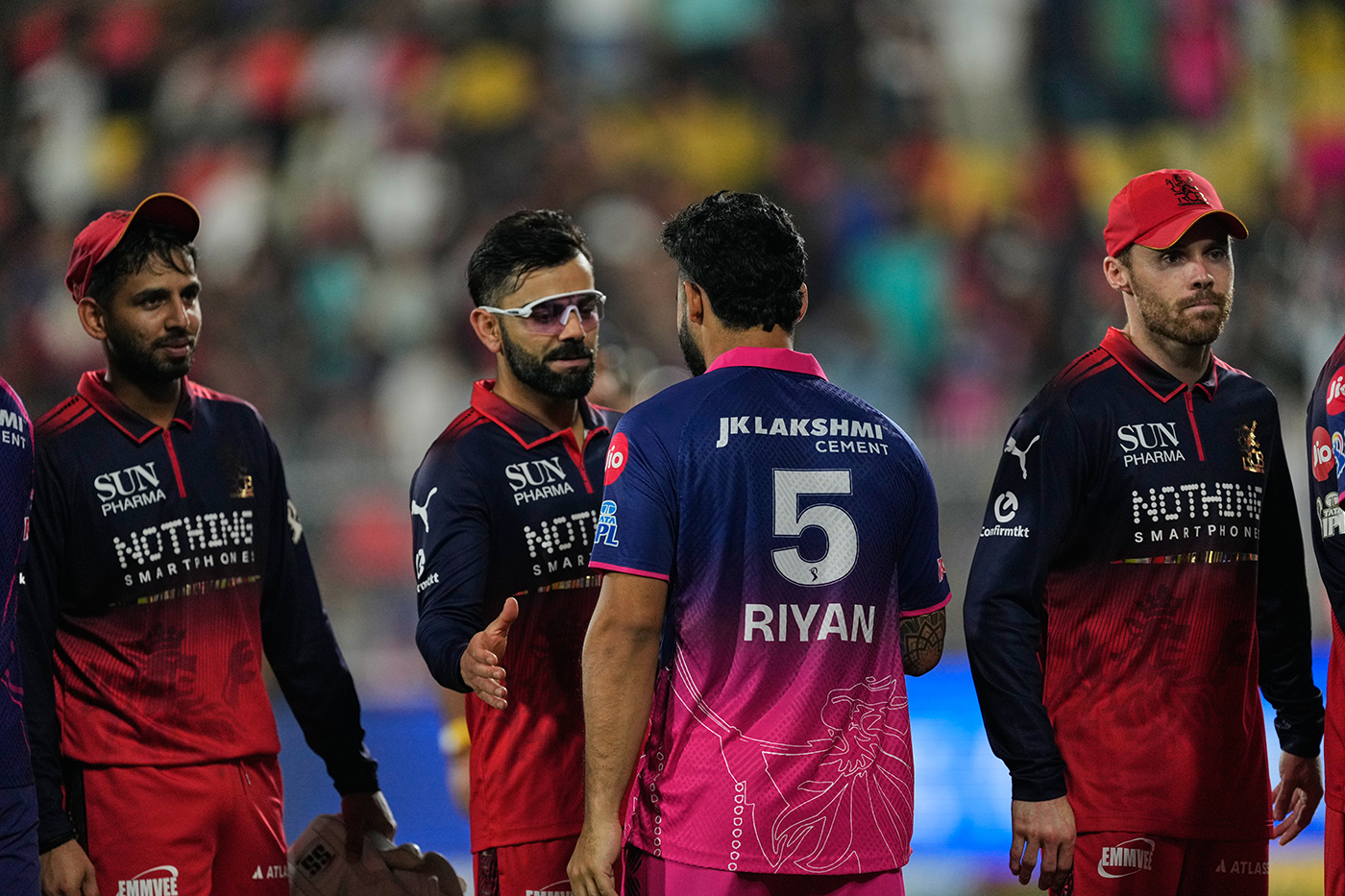
Virat Kohli is a captain Parag looks up to: "He is just there. The presence he had as a captain, as a leader, I feel that is what I admire"
Anupam Nath / © Associated Press
I know that sounds horrible, because of the narrative that only 40s, 50s and 60s shift the momentum up, but that's not how Sanga thinks and that's not how I think as well. If there is a situation where you have a batter who's going well, your job is to go out there from ball one. Doesn't matter what your personal milestones are.
Not scoring runs - I don't think a single person has brought that up to me, because all we talk about is intent. If there's good intent, you think well about the team. Of course, I would like to get a score under my belt with the same intent. I don't want to score a 40-ball 50 to just get back into form.
I'm going to bat the way I have been batting, which sets a tone for our team, and assess conditions better. Maybe the RCB game, again, that's finding a positive route in a pretty winnable position. We had a ten-ball difference and I wanted to get Dhruv to play longer and me to just go out there and get a few boundaries, so it eases up the pressure on him and us as a team [Parag was out for 3 off five balls].
In what ways does Sangakkara support your game?
It's more on the mental side. Even today he was telling me about how when someone doesn't get runs or thinks he has not gotten runs, we start thinking very tactically, very technically, that something must be wrong. What he told me today when I was batting was: "You are batting beautifully in the nets. When you go into the game, you are getting a boundary every four to five balls. What's the problem? You are just not converting it. So start thinking about how you want to convert it, instead of thinking that something is actually wrong because nothing is wrong."
When a coach of that stature says something like that, it just gets rid of the negativity. Now, all I could think about after that conversation was, "I need to think about how I want to convert my next few deliveries by assessing conditions a little bit better and think positively. Think runs, think another six."
Have you had conversations with Ravindra Jadeja, who has returned to the franchise after 16 years?
I have the utmost respect for Jaddu bhai. Before our first game, when we were in Jaipur, I asked to speak to him. He actually came to my room to speak. We sat down and spoke about my vision and what I wanted from him and what he wanted from me and what we wanted to achieve as a franchise. He was pretty clear. He told me that whatever it is that I think about you or whatever it is that I think about the whole team or what we should be doing, it's going to be right to your face. If I think something's wrong, if I think something's right, I'm going to tell you. You're not going to hear me say something behind your back or you're not going to see it in my body language that I'm upset or not happy about something.
Parag on Ravindra Jadeja: "He is the most flexible guy that I've met. Being one of the greatest, if not the greatest, allrounder in Test cricket and white-ball as well, he's just been very open"
Deepak Malik / © BCCI
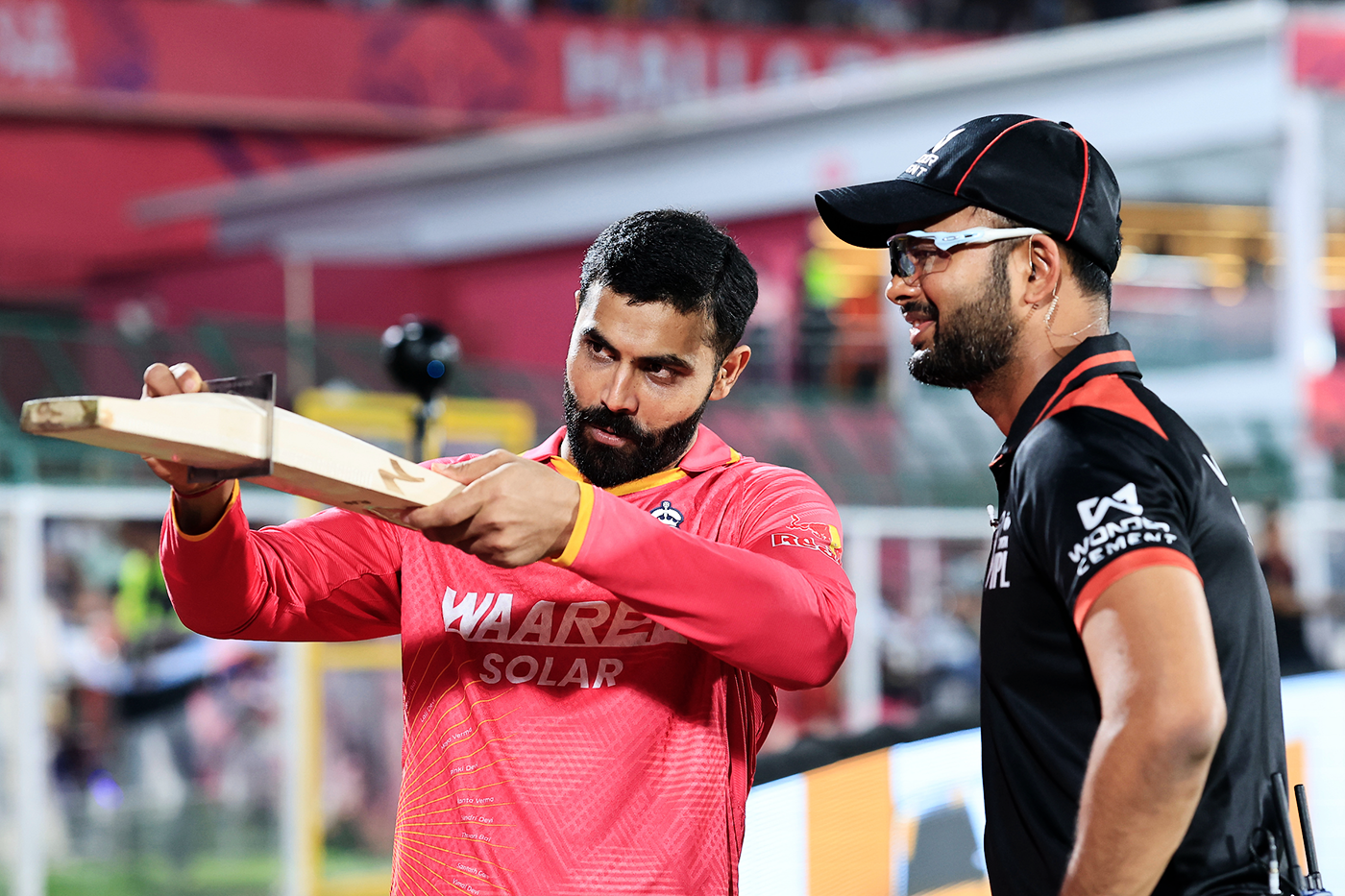
I explained to him what situations I was expecting him to bat at: crunch situations. What we were lacking last year was the finishing touches. I spoke to him about bowling as well. I wanted to go with six bowlers right from the get-go, and sometimes he may not have to bowl. He's fine with it. He is the most flexible guy that I've met. Being one of the greatest, if not the greatest, allrounder in Test cricket and white-ball as well, he's just been very open. Even in Hyderabad, he didn't bowl. But I didn't feel that [disappointment] in him. His body language was the same when he went out to bat. He did his job and I feel he's just been great.
Two other guys who have been your match-winners are your openers. Have you spent time talking to Sooryavanshi and Jaiswal since becoming captain?
I've made everything very clear to Vaibhav about how he doesn't need to worry about anything - he just goes in there and bats.
Jaiswal is mature and we are really good friends. Me, Jaiswal and Dhruv have all sorts of conversations. In the bus, Dhruv and Yash and I are always having chats about changes, tactics, what we want to do in the field, bat first, who to bowl, who to change, who to play. We are in that same age group, plus we've got the same mentality. So yeah, it's been going great.
What was the message you sent to the team at the start of the season?
One was pretty cricket-specific. That's out on Instagram, before our first practice game. And the other was a conversation where I just narrated my vision. I explained to them why I wanted to captain this franchise, because I was tired of us being thought of as a lower-tier team, not one of the big teams. And when we played in 2022, 2023 and 2024, second, fifth, and third, we were recognised as a team that everyone was fearful about, or had to think about, like, this is not a walkover and they can beat us, which slipped in 2025.
And that was my only motive of captaining Rajasthan Royals. We want that back. We want a title. And whatever we do from now on has to represent a team that is up there. I understand other teams have multiple trophies, but that should not demean us, or I would say that should not not motivate us when we are playing against them. We should be there 100% every single time we step onto that field so that whoever's playing against us feels, oh, they can beat us, so we've got to be on our A game.
Is it too early to ask what kind of a captain you want to be?
No, it's not. What kind of captain I want to be is like something I said with Assam as well: being very courageous, being very aggressive, yet being very smart. I want to lead sides by really adapting to situations and not having one brand of captaincy. Like, I've said aggressive, yes, but when I need to be defensive, I'm going to be defensive. When I need to be strategic and make bold calls, let's say bowling a spinner in the 18th or 19th over, if I feel that works, I will be the first one to take that call.
Is there a captain you have followed?
The way Virat captained - he is just there, every single time he's there. When India was playing or when RCB was playing, you'd see him at covers. The presence he had as a captain, as a leader, I feel that is what I admire.
Nagraj Gollapudi is news editor at ESPNcricinfo
© ESPN Sports Media Ltd.