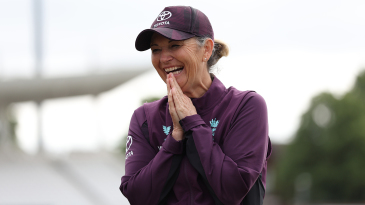
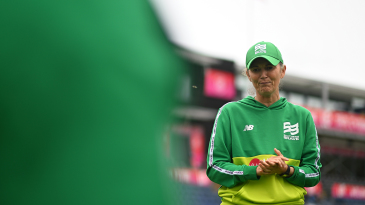
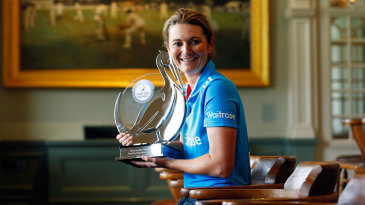
For over 30 years Charlotte Edwards has been at the heart of the women's game in the country. Now she stands on the verge of one of her biggest challenges
Last year MCC unveiled a portrait of Charlotte Edwards, painted by Hero Johnson. Hung in the Long Room at Lord's, it depicts her sitting in the dressing-room balcony at the ground, clad in her 2009 ODI World Cup-winning shirt, deep in thought as she watches play unfold in front of her.
Edwards will be spending an awful lot of time on that balcony this summer. Captaining England to a T20 World Cup win at the ground was just the first chapter: 17 years later, she is attempting to emulate that achievement - this time as head coach. Despite England's recent poor record in global tournaments, this time a common refrain has emerged among the fans: "In Lottie we trust."
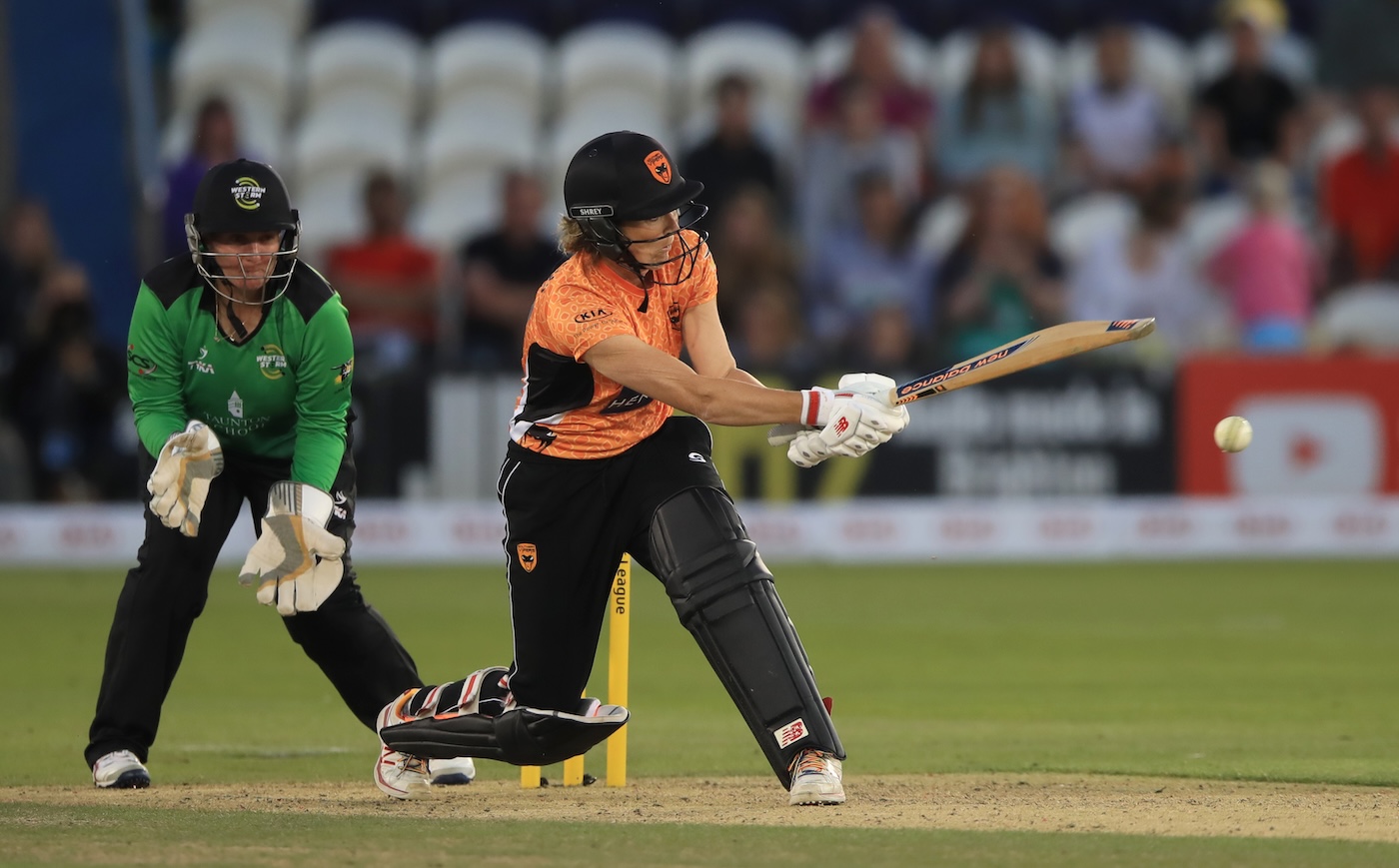
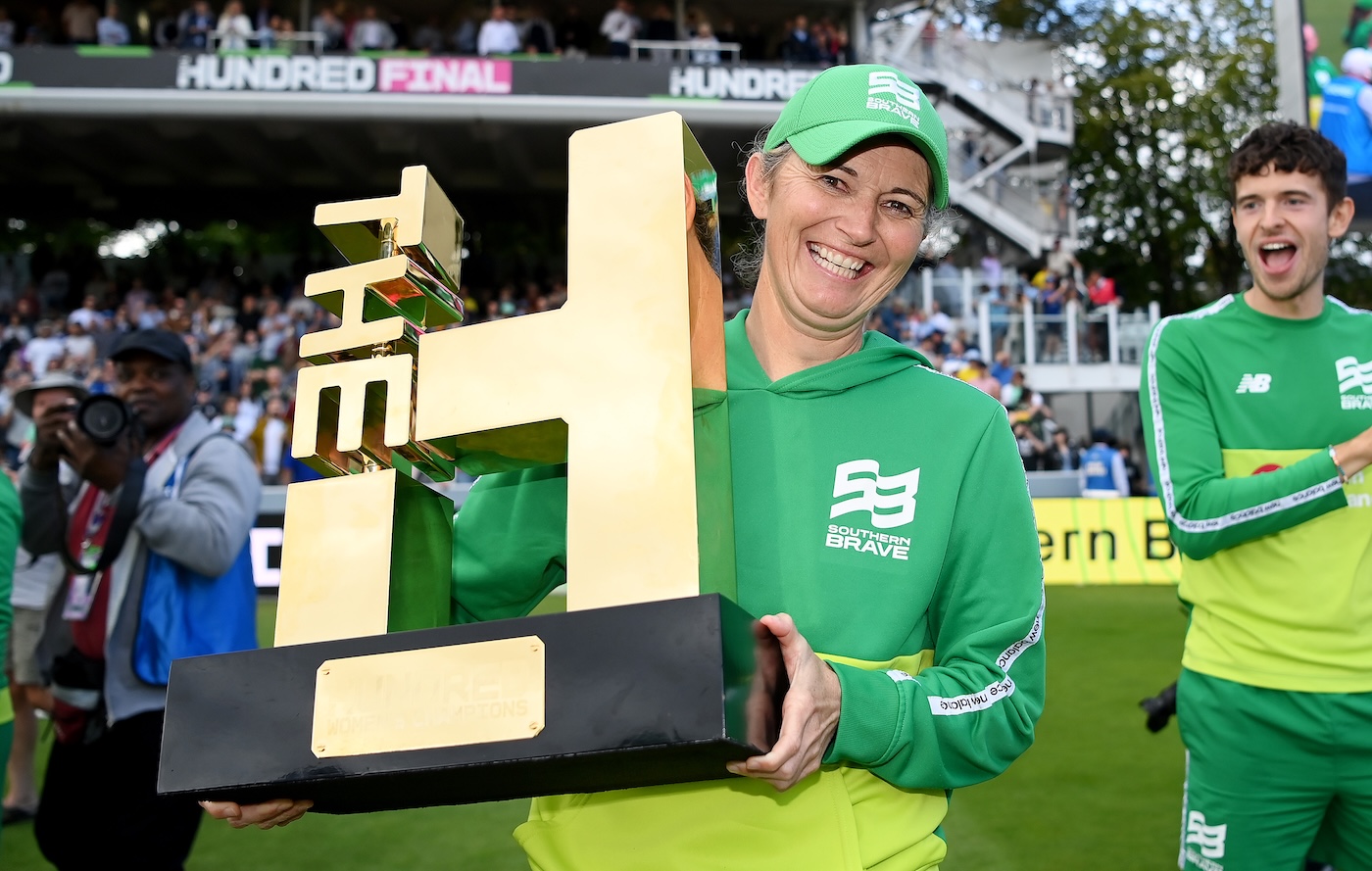
And no wonder. Here we have a woman who was one of England's all-time greats on the pitch - and is already one of the most successful cricket coaches of all time. She has won the WPL twice, the Hundred once, and ensured Southern Vipers took home winners or runners-up trophies in every year of the Kia Super League.
How has she done it? Who exactly is the woman on the balcony, what is going on inside her head, and can she propel this England side to success?
To answer that, we have to go right back to the beginning.
July 1996: Debuting
July 13, 1996, Guildford. A 16-year-old Edwards, fresh from sitting a bunch of GCSEs, which she says she had "no interest in whatsoever", walks out to open the batting for England in a Test for the first time, against New Zealand. There are only a tiny handful of spectators there to witness this moment: among them her dad, Clive, who has driven his daughter to the match; and then-England coach Megan Lear.
Many of the foundations for Edwards' success are already in place. She is a cricket badger who has grown up on a potato farm in a small village called Pidley, about 20 miles north of Cambridge. Week after week she has accompanied her father to nearby Ramsey Cricket Club, either filling in if the 1st XI happened to find themselves a man short, or being scorer.
"I always remember on the way home, my dad saying, 'Why did you do that? Why did you do this?'" she says. "Always wanting to understand why they did certain things or what the tactical elements were in the game."
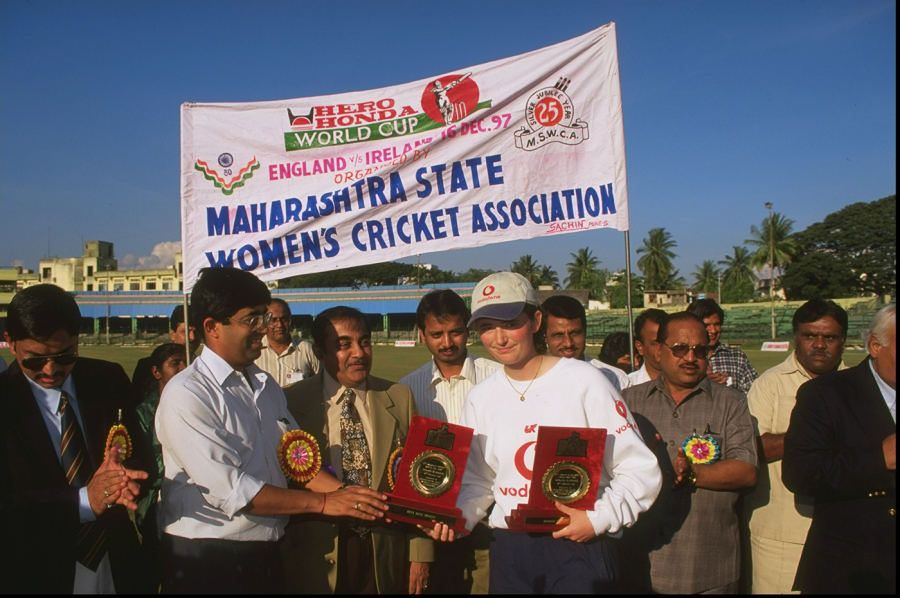
Go big early: Edwards' 173 not out, her career-best score, came in only her sixth innings, in the 1997 World Cup
© Getty Images
She has also spent years playing boys' cricket, captaining both her school team and the Huntingdonshire county boys' team. Facing beamers from opposition bowlers who are determined to get the only girl out tends to toughen you up pretty quickly.
There will be hard graft ahead. This is the amateur era, and Edwards will ultimately spend a decade representing England, while paying out of her own pocket for individual coaching sessions, finishing work as a saleswoman at Huntingdonshire County Bats at 5pm to drive to nets, getting home at 9pm, only to do it all over again the next day.
Eventually she will become a Chance to Shine coaching ambassador - a role her team-mate Lydia Greenway describes as relentless. "We'd be at a school at nine in the morning, we'd finish at 3pm, then we'd go to an after-school club, and then we'd go to a club in the evening to do a session there. And then we were obviously training as well."
At Guildford this is all in the future. But nevertheless Edwards already has an ingrained, compulsive drive to improve. Lear remembers her as quiet. "She was learning, and absorbed everything."
Edwards agrees: "My dad used to say to me, 'You should be seen and not heard sometimes. Listen to all the England team and what they've got to say to you.' And I just lapped it all up, sitting around with all these players I absolutely adored. It was the best week of my life." The group included Karen Smithies, who had captained England to victory in the 1993 World Cup final at Lord's, and legendary batter Jan Brittin, who Edwards describes as her "absolute idol".
At Guildford, Edwards ultimately scores 34 and 31, falling twice to the bowling of seamer Kelly Brown; England stagger to a draw, finishing eight wickets down on the fourth evening. "She was cross with herself, frustrated," says Lear. "It wasn't good enough. She always wanted to be better, and do better, even at 16."
March 2006: Captaincy
In 2002, Edwards becomes captain of Kent, a role she will hold until she leaves the county in 2016.
"I was very much 'lead from the front,'" she says. "I wanted to people to follow me, and tried to set the right example."
Second ODI, first hundred: Edwards bats during her 102 against South Africa. She went on to make another eight centuries, and a phenomenal 46 fifties
Ross Kinnaird / © Getty Images
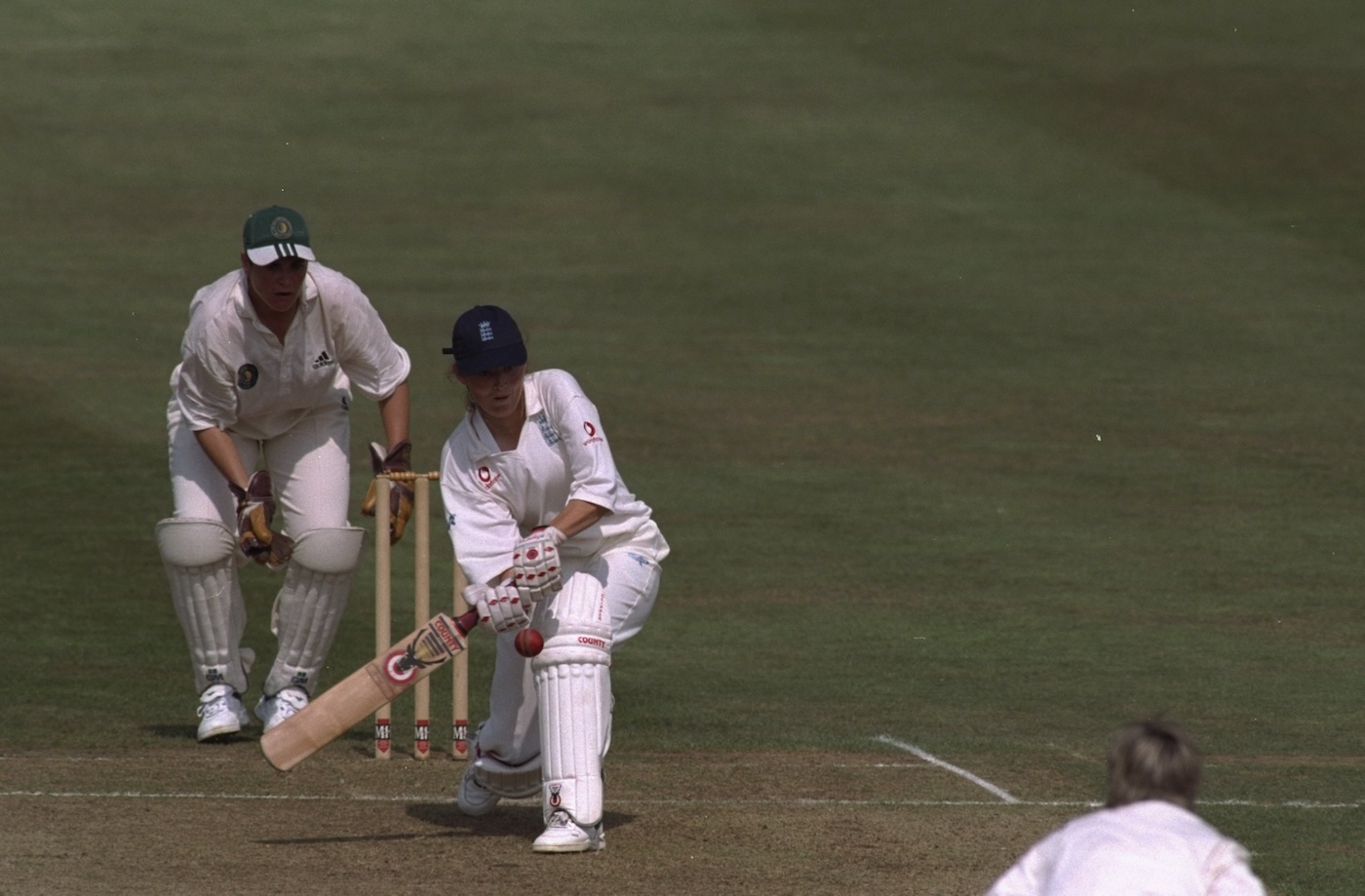
By now she is England's best batter, having hit a record 173 not out against Ireland in the 1997 World Cup in India, captained the England Under-21s on a tour to South Africa, scored an unbeaten century on debut for Kent, and - in July 1999 at Shenley - scored her maiden Test hundred, against India.
England team-mate Claire Taylor says that even by the early 2000s, Edwards had grown from the quiet observer who turned up at Guildford into someone who had incredible dressing-room presence. "It was clear that she was going to be England captain. It was clear to me that she was going to be the England coach at some point as well," Taylor says. "There was a calmness about her."
Kent team-mate Megan Belt - now herself captain of the county - recalls a sense of awe when she first turned up to play for Kent as a 15-year-old. "I remember after the game I got in the car and I was like, 'Oh my God, I've just played cricket with Charlotte Edwards.'"
Lear refers to it as "the Rachael Heyhoe-Flint Effect". "Rachael used to inspire us youngsters," she says. "I remember being 15 and she'd see you and go, 'Oh, hi Megan, how are you?' 'She knows my name!' That's the sort of aura that I think Lottie's got."
Belt remembers Edwards as a hard taskmaster but a fair one. "If you misfielded it, she'd tell you about it. Once we were playing in a T20, waiting to bat, and one of the opposition misfielded it and it went through her legs for four. I'm from Broadstairs in Kent. And she turned round to me at the age of 16 and said, 'Megan, if you ever do that, I will kick your ass back to Broadstairs', and started laughing.
"But you didn't feel worthless if you'd had a bad game. She would get the best out of you and make you feel like a million dollars."
The women's county game is poorly resourced in the 2000s, and Edwards is effectively doubling up as captain and coach. A young Greenway, who debuted for Kent in 2000, remembers having a tough time during one of her early County Championships, which back then were played across five consecutive days at Cambridge to save money and ensure better player availability in an era when everyone worked full time.
The way we were: Edwards bats in a 1997 match, in the era before female cricketers wore trousers
Ross Kinnaird / © Getty Images
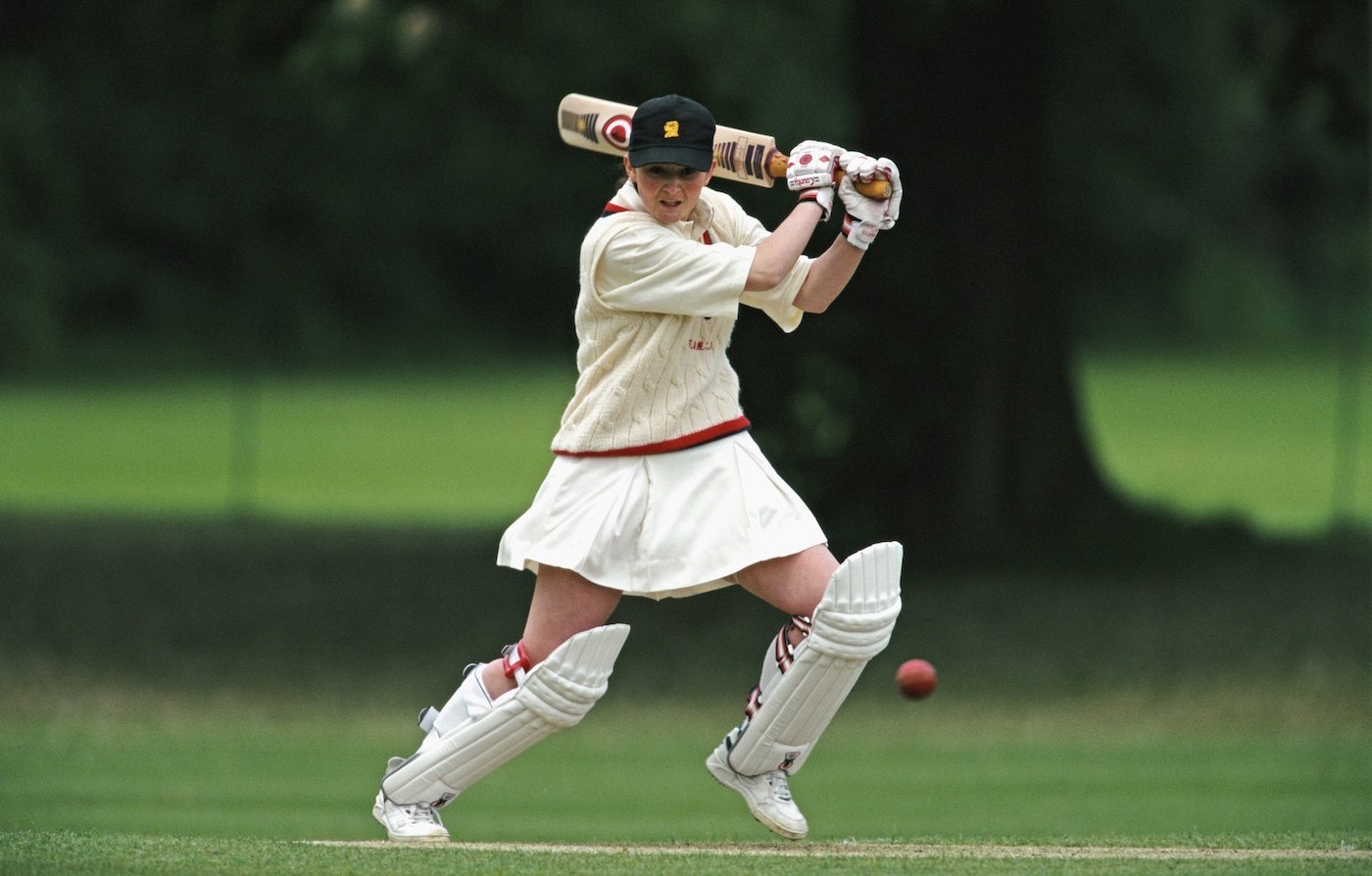
"Lot was like, 'Come on, we're going for a lap.' So we went for a walk around the boundary. She just said, 'You have to start performing. You cannot be playing in the team just based on your talent. You have to find ways to contribute more.'"
Greenway takes the advice to heart: by the mid-2000s, she will become a regular in the England team, gaining a reputation as one of the world's best fielders. And Kent will go on to win seven Women's County Championship titles with Edwards at the helm.
One figure is always there in those early days, looking on with quiet pride. Photographer Don Miles remembers turning up to the Pembroke College ground one county season. "It was one of those days where it was drizzling, and the players were on and off. So me and one other guy sheltered round the corner of this pavilion, just to keep out of the rain.
"And we got talking, and he said, 'Why have you come?' I said, 'I've come to see this Charlotte Edwards I've been hearing about.' I started raving about how good she was, because I'd seen her play at Guildford for England. He didn't say anything, he just smiled.
"Eventually, after I'd been raving on for long enough, he says, 'I'll introduce you. I'm her father.'"
Everyone I interviewed for this piece agreed on one thing: the enduring influence of Clive Edwards on his daughter.
"I don't think I ever saw Lottie properly get angry at getting out," says England team-mate Laura MacLeod. and it was because of that grounding she got from her dad: 'Sometimes it happens, and you've then got to get back into supporting the team.'"
Edwards with Clare Connor, former prime minister John Major, and a Vodafone representative during the 1997 home series against South Africa
© Getty Images
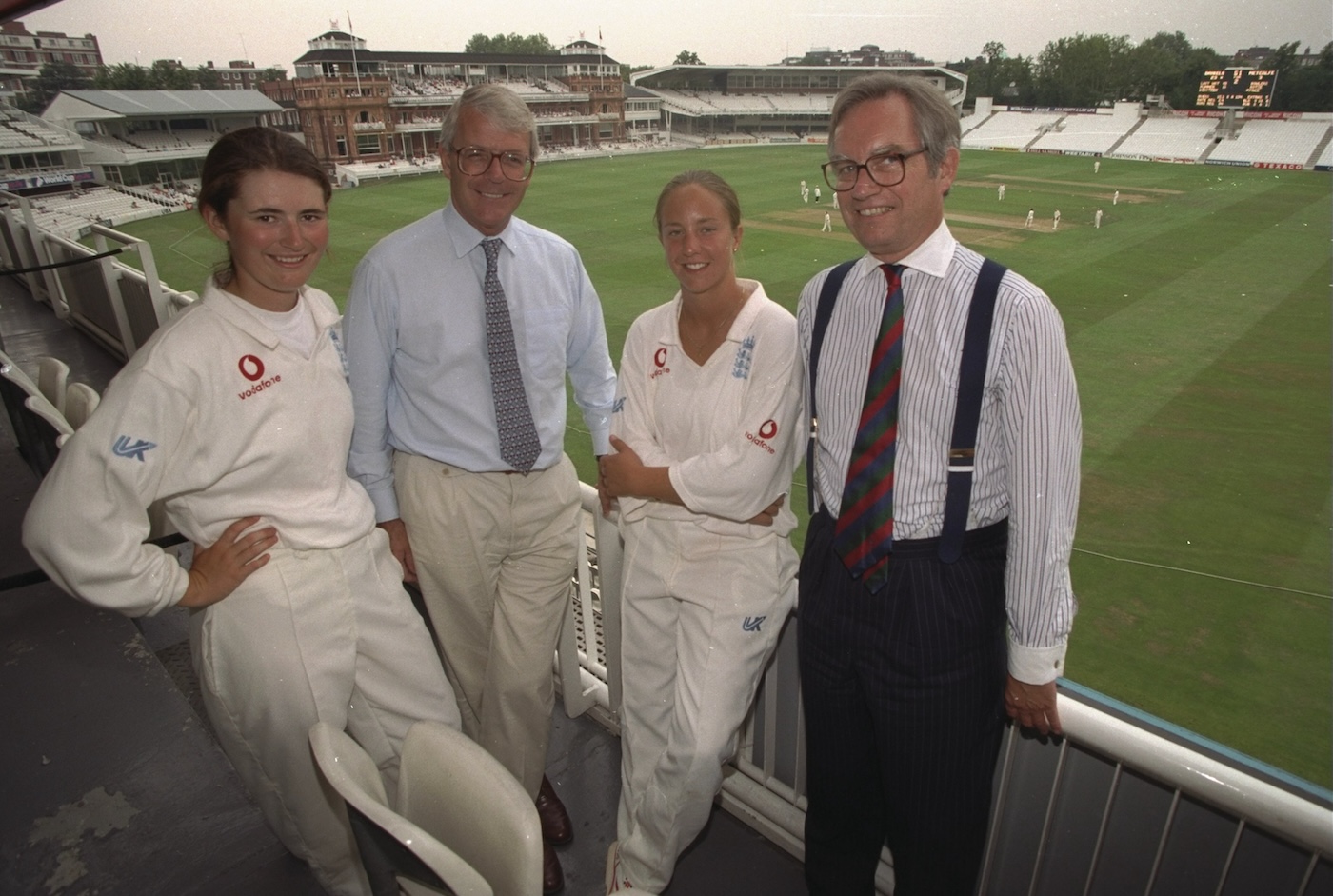
"He taught her about the passion of playing for your country, and what it meant. Clive was a family man, he was hard-working, he did everything for his kids and to put them on the right foot, and Lottie grabbed that with both hands."
It comes as no surprise to anyone when - in March 2006 - Edwards succeeds Clare Connor as England captain. But what should be a time of celebration is tempered by the fact that her dad is by now in the late stages of terminal cancer. Three days after Edwards rushes to tell him her happy news, he dies.
When I mention his name, she chokes up instantly. "If he could have seen half of what I've achieved as a player and a coach, I think he'd be pretty proud," she says, tears freely flowing. "It's down to him that I am who I am and that I've achieved what I've achieved, because when he passed away, it gave me an extra incentive to be successful.
"I think about him every single day. He's part of me."
June 2009: "World domination"
One word cropped up again and again as I asked people to describe Edwards: competitive.
"There was a joy and a cheeky sense of humour off the pitch," says England team-mate Taylor. "But when she was on the pitch, it was just a relentless, calm, find-a-way competitiveness."
A good example is Edwards' advice to young offspinner Belt during their period playing together at Kent. "She went away to England U-15s, and she came back and said, 'The England coaches have told me to bowl quicker,'" Edwards recalls. "I said, 'Belty, don't listen to them. You just keep bowling slower.' She used to get wickets for Kent all the time, and I wanted us to win.
"Winning is in my DNA."
Beach belles: Edwards, armed with her ICC Women's Cricketer of the Year award, in Dubai with Claire Taylor in 2008
John Gichigi / © Getty Images
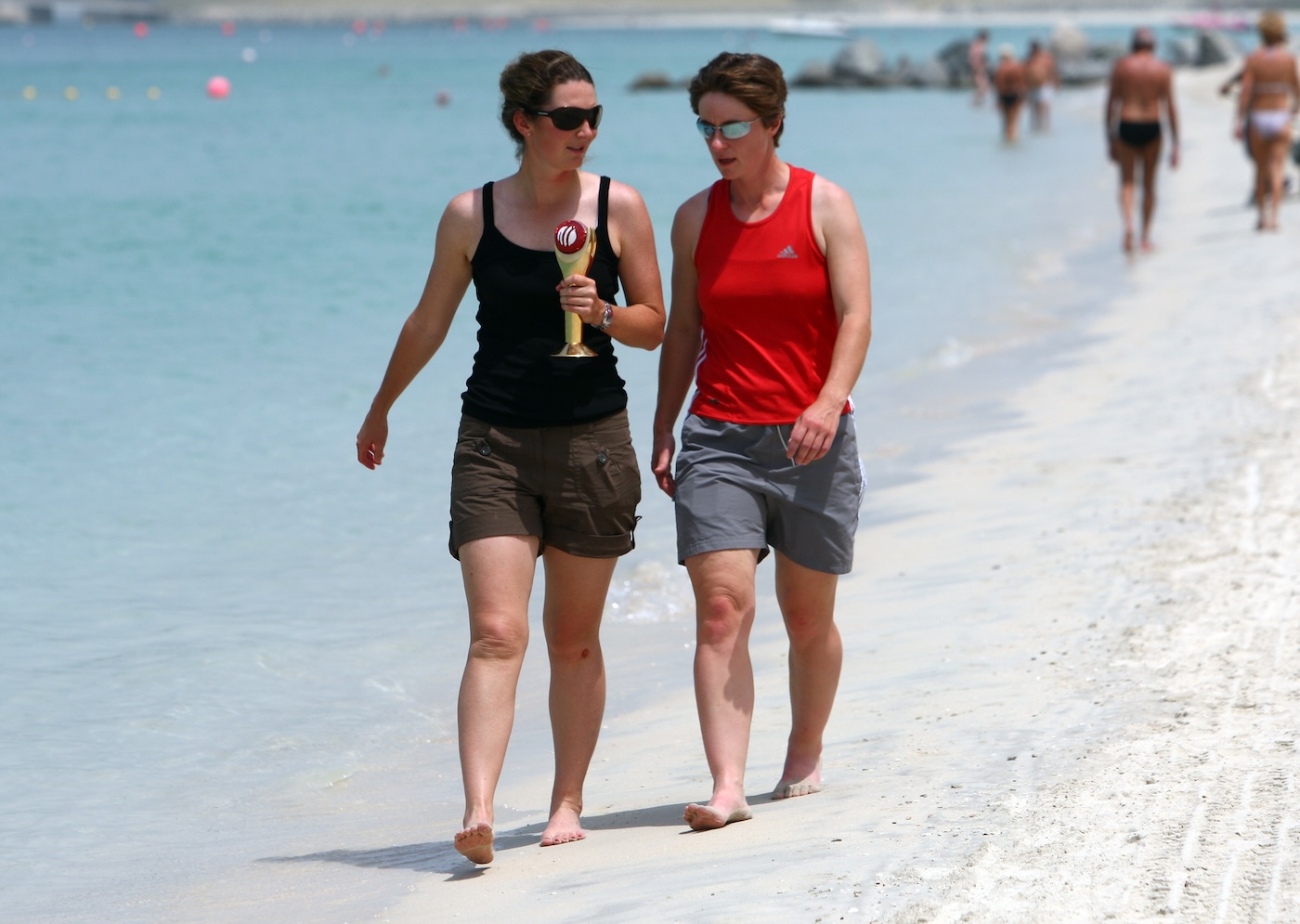
No England team has been as successful - before or since - as the one Edwards captained in 2009. In that year, in the space of five months, they won both the 50-over and 20-over World Cups; whitewashed Australia 4-0 in an ODI series; and won that summer's Ashes.
That success, Taylor explains, was hard-earned. Eighteen months previously, Edwards had been forced to pick up a team in "utter disarray", when coach Mark Dobson unexpectedly left his role midway through the 2008 Ashes tour down under. "We were effectively coach-less," Taylor says. "That was the moment Lottie really stepped up into that role of captain.
"She was heavily involved in the identity of the team and 'how are we going to play?' It had been donkey's years since we'd won anything. She wanted to be playing in and leading a team of winners.
"The team under Lottie had incredible purpose. There was a total lack of ego. Everything you were doing was for this grand purpose we had, which was world domination. That overriding, almost insatiable, desire to be better, both as individuals and as a team."
Taking a side from its lowest ebb and propelling them to the top of the world: if that sounds familiar, it's exactly the challenge that Edwards now faces as England coach.
And she acknowledges that it was her years as captain of England that shaped her current coaching style. "I played under so many different coaches, so I think what I was doing subconsciously the whole time was, I was watching these coaches. I was really curious around how to get the best out of people."
Taylor remembers that Edwards was particularly focused on trying to develop a set of players who were self-reliant. Ahead of the 2009 50-over World Cup in Sydney, she arranged for the England team to be accommodated in apartments instead of hotel rooms, because it empowered the players to take responsibility for their own diet and training regimens. Midway through that year's T20 World Cup, ahead of the semi-final at The Oval, Edwards allowed Taylor to attend a Tori Amos concert; another captain, Taylor believes, would likely have made her stay inside the team bubble.
One last time, with feeling: Edwards bats in her second Kia Super League final in a row for Southern Vipers, in 2017, after winning the title with them the previous year. She retired from all cricket at the end of that season
John Walton / © PA Photos/Getty Images
"She was just - let's get the environment right for people," Taylor says. "Let's give people more autonomy.'"
And it worked. Taylor hit the winning knock in the semi and was named Player of the Tournament; England won the competition; and Edwards banked an important lesson in being an effective leader.
May 2016: "Like someone had died"
Skip ahead seven years. One weekday afternoon in May 2016, Edwards receives an unexpected visit from her old friend Connor - now director of women's cricket at the ECB. She comes bearing bad news. England's new coach, Mark Robinson, has decided it is the end of the road for his captain, ending her 20-year England career overnight.
"It felt like someone had died," Edwards says, reliving her conversation with Connor. "And I'd obviously had that experience personally. You've done this thing for 20 years, and you're not ready to give it up." I still vividly remember attending the press conference at Lord's when the decision was made public, trying and failing to make sense of Robinson's decision to ditch the woman who had been England's leading run-scorer in that year's T20 World Cup.
Edwards spends that winter in Adelaide, playing cricket for South Australia, trying to get her head around it all. "I grieved. It all came as such a shock to me," she says.
In September 2017, having spent two seasons at the helm of Southern Vipers in the KSL, she announces her retirement from all forms of cricket.
In the coming years, many opportunities will present themselves - including the possibility of a glittering media career. But somehow, none of it feels quite right.
Gold standard: Edwards holds aloft the Hundred trophy in 2023 after her team Southern Brave's first title win
Alex Davidson / © ECB/Getty Images
"I'd started to get itchy feet, and realised I wanted to have that challenge back in my life - that thing that you wake up for every day," she says. "And that's when I realised I wanted to get back into a team and be part of a team."
Finally, in August 2019, she is asked to coach at the ECB's School Games - a tournament for the best young female cricketers in England. "I coached a team which had Alice Capsey, Lucia Kendall, who's now playing for the Lionesses, and Kempy [Freya Kemp]. I saw how they were on the first day and I thought, 'This is going to be a tough five days.' And then by day five to see the improvement - I just thought, 'I want to do this.'"
In July 2020, when Southern Vipers come calling, Edwards applies for and secures her first ever head coach role.
A decade on from that painful conversation with Connor, Edwards now concedes that her exit from international cricket was key in shaping her coaching journey. "Up until that point I hadn't really had many kind of low moments. If I went into coaching having not had that experience, I wouldn't have known what it felt like to be dropped," she says.
"As my mum always says to me, 'Things happen for a reason.' I think maybe that did happen for a reason. Leaving the game the way I did helped my coaching."
July 2020: The Lottie Principles
There is a truism in sport that the best players never become the best coaches: they are too intuitively good at their craft to ever be able to explain it to other people. When I put this to Edwards, and ask if she ever feared that her playing success might not translate into coaching success, she laughs. "I did. But maybe I just wanted to prove that wrong!"
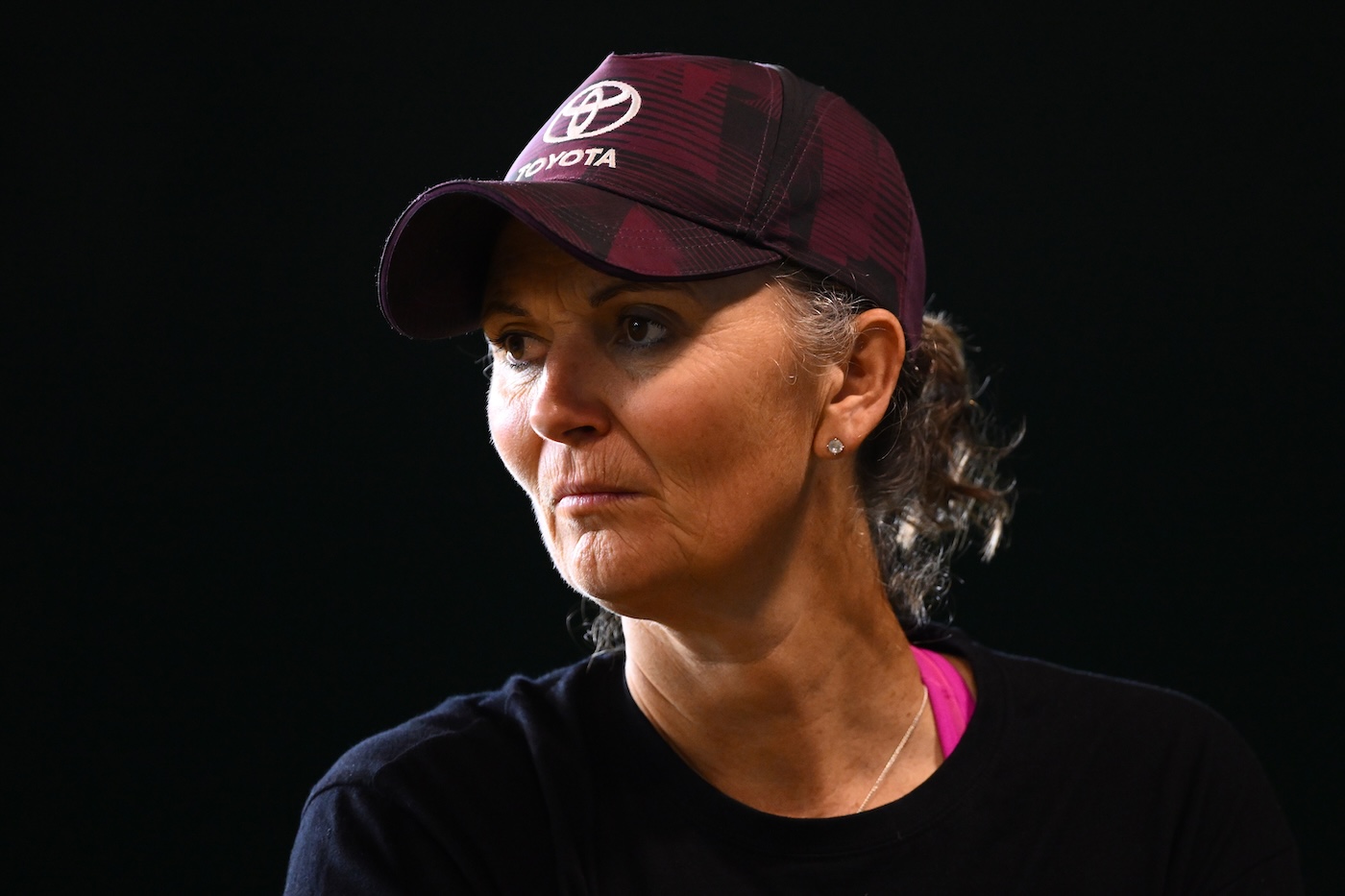
Edwards' playing career came to an abrupt end, but she came to terms with it. "Leaving the game the way I did helped my coaching," she says
Matt Roberts / © ICC/Getty Images
Greenway, a coach educator who founded the successful Cricket for Girls programme, explains how she thinks Edwards avoided falling into this trap. "Sometimes you see those best players go into big jobs quite quickly. But she had assistant roles first, and she had a good understanding of when she was ready to go into those big roles. She's just taken her time.
"It's a good combination of being open-minded but also being willing to learn from others, and I think not falling into the trap of saying, 'Well, this works for me, why don't you do it?' It's having that understanding that just because something worked for you, it won't work for everyone."
For Edwards, the yawning chasm of the Covid lockdown will turn out to be a blessing in disguise: weeks at home, when, with nothing else to do, she picks up pen and notepad, weighs up everything she has observed from her decades in cricket, and crafts what we might refer to as the Lottie Principles of Coaching.
"I thought, who do I want to be as a coach? And I came up with the three Rs and the 3 Cs," she says. "The three Rs are relationships, respect and responsibility. I expect players to take responsibility. We've got to respect each other. And for me, I need to build good relationships with players. And then the three Cs: I've got to communicate really well, I've got to care, and I've got to be consistent.
"And that's all I've done over the years. I benchmark myself on that, day in, day out, and it's served me pretty well."
To anyone who has ever been coached by Edwards, this will all sound very familiar. Indeed, her focus on that first R - relationships - explains her incredible success within franchise cricket, including winning the inaugural WPL back in 2023.
Edwards (fourth from right) is part of the Mumbai Indians brains trust in the WPL, having coached them to two titles
© BCCI
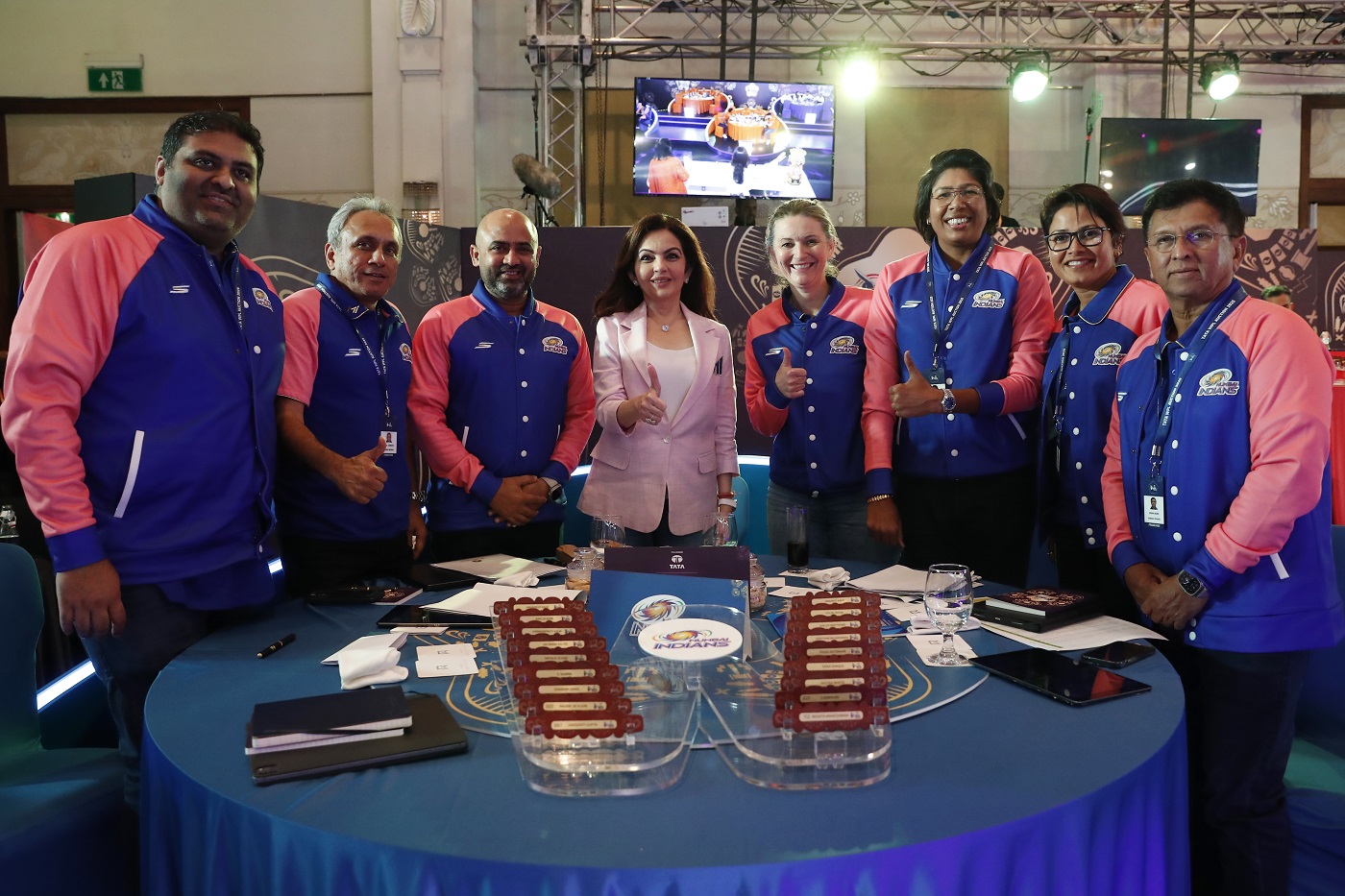
"I had to do it in emojis out there," she says, referring to the language barrier between herself and the domestic Mumbai Indians players. "But they got the gist of it. I didn't go away from the way I do things.
"I think you lay down the expectations and the players will follow. And I've been exactly the same in every single team I've coached."
Georgia Adams, who worked alongside Edwards as captain of Southern Vipers between 2020 and 2025, and of Southern Brave in the Hundred in 2024 and 2025, says that one point of difference between Edwards and other coaches is her ability to show the same level of care to all her players.
"It's quite easy as a coach to get drawn into having favourites and get sidetracked by the big superstars or the big names," Adams says. "But what I love about Lottie is that working with [18-year-old] Pippa Sproul in an Academy session gave her as much joy as throwing balls at Smriti Mandhana. It takes a lot for a coach to be like that."
Adams also echoes what Taylor observed during Edwards' time as England captain: she is always across the details.
"She has an ability to go, 'These were things that frustrated me when I played, that I can nip in the bud as a coach.' We'd say it all the time at Vipers: 'What are the 1 percent-ers?' And she genuinely wouldn't leave a stone unturned in terms of trying to make an environment as good as it could be."
Adams cites the example of rooming lists. In English domestic cricket, players are still routinely allocated twin rooms when travelling. Edwards would spend hours poring over the rooming allocations to ensure nobody had to share with someone they didn't get along with. "She was always thinking about the small practical things that other coaches forget about, or don't pick up on."
Ladies who launch: from left, Sophie Ecclestone, Edwards, Sophia Dunkley and Lauren Bell at Lord's in May last year at a promo event for this year's T20 World Cup
© ECB via Getty Images
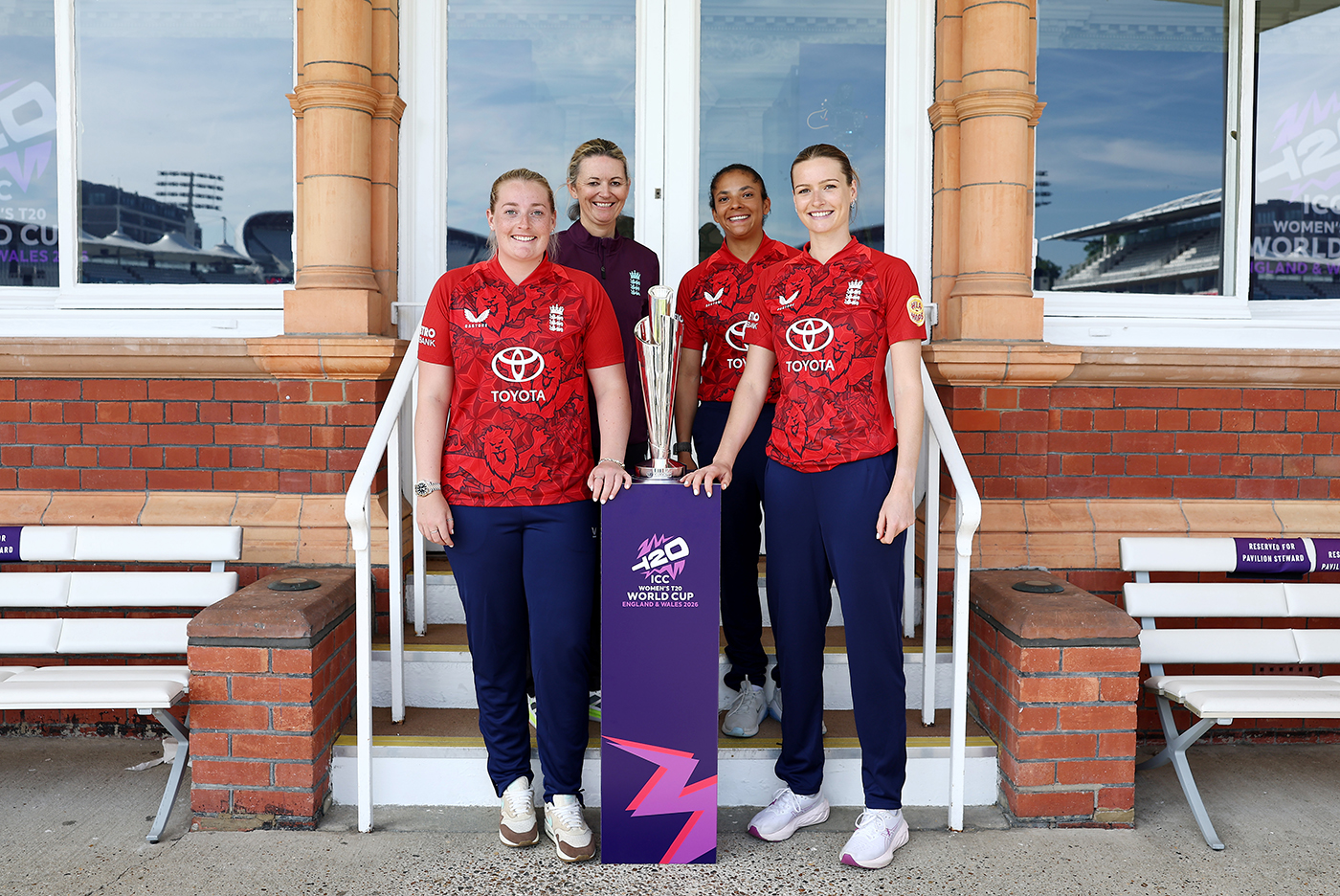
On another occasion Edwards took Adams to task about her negative body language during a difficult game. "She went pretty hard at me. But it's a conversation that I'll never forget, and I really respect her having," Adams says. "She was like, 'No matter how frustrating things are, it's something you can always be mindful of. Even the small things are within our control.'"
Edwards' eye for detail is grounded in her enduring passion for cricket. Taylor remembers finding her in the team hotel during a long-ago England tour to India. The rest of the players were desperate to get out and about, but not Edwards. "She'd got some stash of fizzy drink from somewhere and she was sat there, watching repeats of cricket matches on Star India from 10 or 20 years ago, quite happily, for hours and hours."
At Vipers, Adams says that Edwards would already have filled a notebook with plans before the season even started. "She'd write all these different teams out. She had a plan A and a plan B, and at times a plan C, written out and ready." When she took on the England head-coach role in April 2025, the ECB agreed to provide her with four different screens, to ensure she was able to watch every single ball of every English domestic match simultaneously.
Edwards' copious note-taking during matches would surely impress the GCSE teachers whose lessons she barely paid attention to. And for recruitment purposes, her encyclopaedic knowledge of domestic cricket is also quite handy. In early 2024, Edwards approached Adams ahead of the Hundred selection process: "She said, 'I've found this left-arm spinner. Nobody knows her. She's not getting in the Surrey team, but she's going to be really good.' And I was like, 'Where have you found this girl? How do you do this?' She signed her for Southern Brave, and she was brilliant.'"
The spinner in question, Tilly Corteen-Coleman, recently catapulted into the England World Cup squad.
And yet for all the seriousness of the Lottie Principles there is also another side to Edwards, equally important: she never forgets how to have fun.
"One of the most eye-opening moments I've ever experienced in my life was back in 2020," Adams says. "We played Western Storm at Taunton and we were on a bus trip back. All of a sudden, Lottie got the microphone on the team coach, stood up, and did a full karaoke rendition of "Total Eclipse of the Heart". And jaws dropped.
Edwards bats for Adelaide Strikers in the 2016-17 WBBL. She went on to coach Sydney Sixers after hanging up her playing boots
© Getty Images
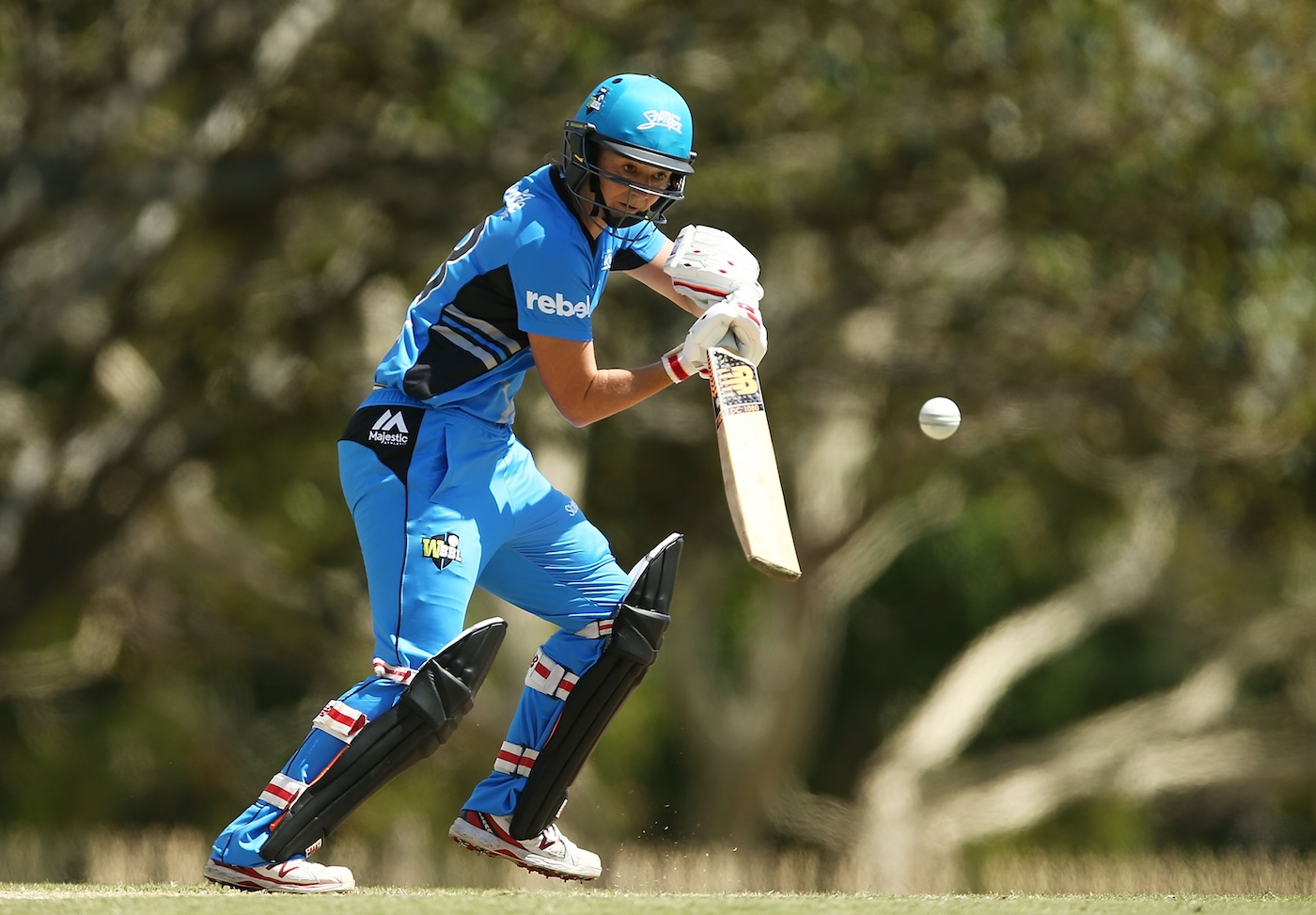
"Because she was so genuine and true to herself, she created this environment where everyone thought, 'We're not going to get judged for anything. We can let our hair down a bit and have a laugh.'
"Those five years with the Vipers will live in my memory as probably the best years of my career. Not just because of winning the trophies that we were lucky to win, and the finals that we were really fortunate to be a part of, but the fun that we were able to have as a group off the field."
June 2026: Fish, chips and family
Edwards is a busy woman these days. A once-stated ambition to run a marathon in 2026 went out the window when she became England head coach - though she did recently complete a 10k race, in spite of her notoriously dodgy knees, and Greenway, who now works alongside her as chief selector, says the two of them have taken up padel.
Edwards is famous - still, perhaps, the one genuine household name of English women's cricket. "She can't walk into anywhere now, really, without being noticed and someone talking to her," MacLeod says. "People know who she is and they want to wish her good luck."
And yet she remains down to earth, always ready to greet everyone with a warm smile, from journalists to former players. "Even now, we still have contact," says her first coach, Lear. "I'll send her a message and say, 'Well done Lottie, that's really brilliant.' And she remembers us from the past. That's amazing, isn't it?"
It says a lot about Edwards' complete lack of ego that the day she found out the ECB had named their domestic 20-over trophy after her, she was embarrassed to turn up to training with the Vipers.
"She's so humble," Adams says. "She's not in this because of her status, or her own personal career. It's genuinely a place of care and love for the game."
"Winning is in my DNA"
© Harry Murphy/Getty Images
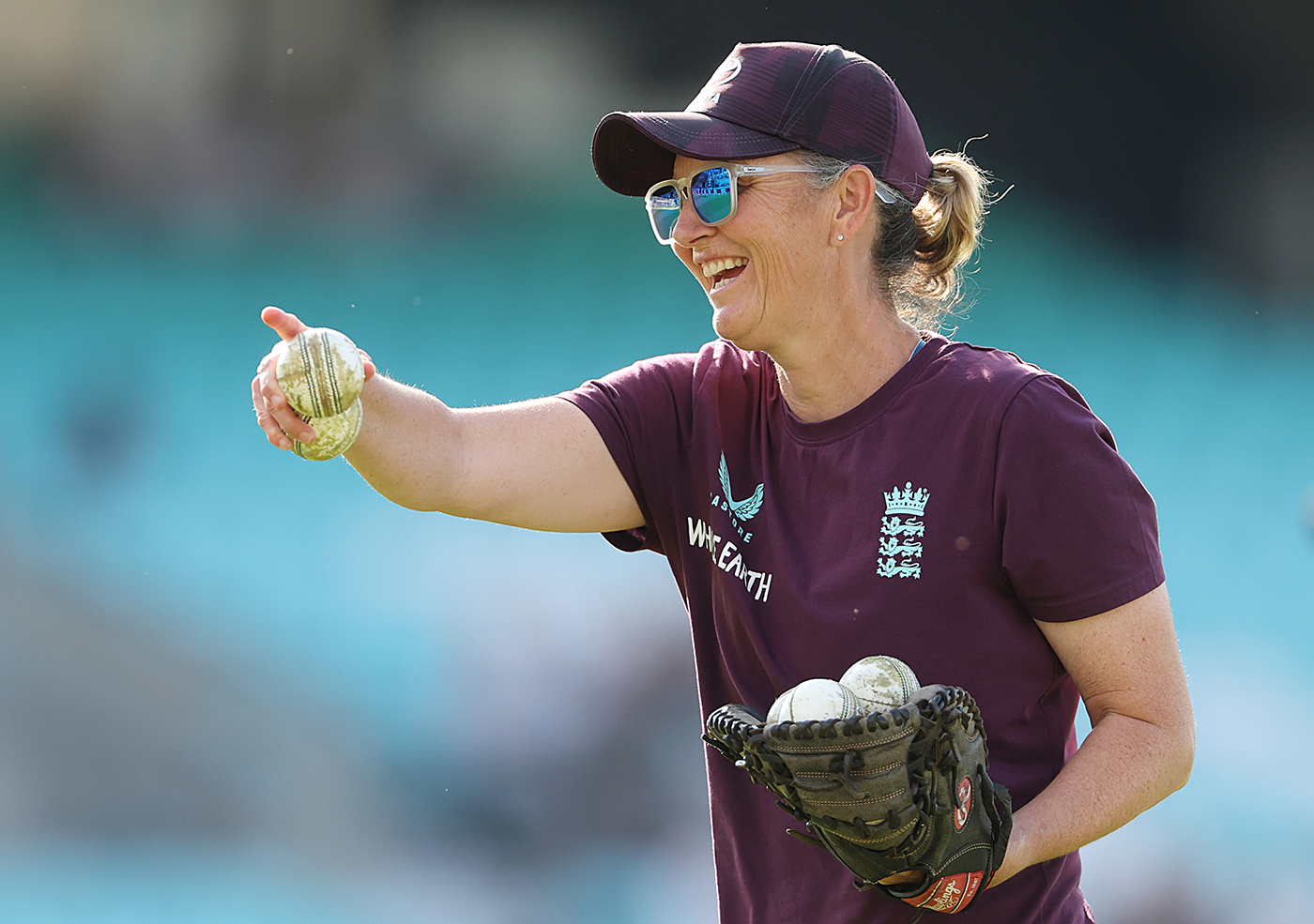
Greenway says Edwards has changed very little since they first met back in the 1990s. "She still loves ketchup and Pepsi Max. Even with all the resources in the game now, she's still not one to want to go out for a fancy meal or stay in the best hotel, and is more than happy with fish and chips on the beach somewhere.
"And I think that's testament to her dad, and her mum, Yvonne. The upbringing that they've given her is, 'Keep your feet on the floor.'"
One of the most high-pressure months of Edwards' career now lies ahead of her. Winning domestic and franchise trophies is one thing, but a World Cup - especially one at home - is a different beast altogether. The scale of the challenge she now faces has been made clear over the past 12 months: a total cultural reboot of a team which had somehow lost its way. After a crushing defeat for England in the 50-over World Cup semi-final last October, and a failure to properly blood a new generation ahead of this summer's tournament, some would say that the jury is still out as to whether Edwards' immense success in coaching can carry over into the international arena.
But it says a lot that in the course of writing this profile, I struggled to find anyone with a bad word to say about Edwards. When I tell her this, she gets emotional again.
"I'm just so lucky. I absolutely love what I do. I'd do this if I wasn't being paid to do it. It doesn't matter if it's an England game or a Vipers game or a tier-three game, I'd be there and I'd love it just as much."
What will she do when she stops coaching? Her answer tells you everything you need to know about her fierce passion for women's cricket.
"My dream is to retire somewhere in a village, start an Under-9 girls' team, and just work with them until they're 13 or 14 to give them all the skills to go on and do whatever they want to do.
"I've always loved cricket clubs. When I was growing up, my club was part of my childhood. So I'm going to go full circle basically."
It's an extraordinary answer from an extraordinary woman.
For now, though, there is a World Cup to win.
And in Lottie we trust.
Raf Nicholson is a writer on and historian of women's cricket. @RafNicholson
© ESPN Sports Media Ltd.