




He played the game with instinct and enormous flair, lived in the moment, and inspired generations
It is 9.30am on Friday, August 24, 1973 and Mum is faffing about, changing her dress and swapping fancy shoes for functional. I'm stressed. Lord's is 40 minutes in the car and we have to find a parking spot in St John's Wood. It's the morning of my first Test match, ever.
West Indies have Garry Sobers, we have Geoff Boycott. The officials have Dickie Bird.
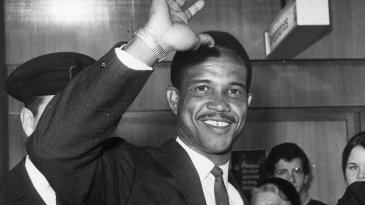
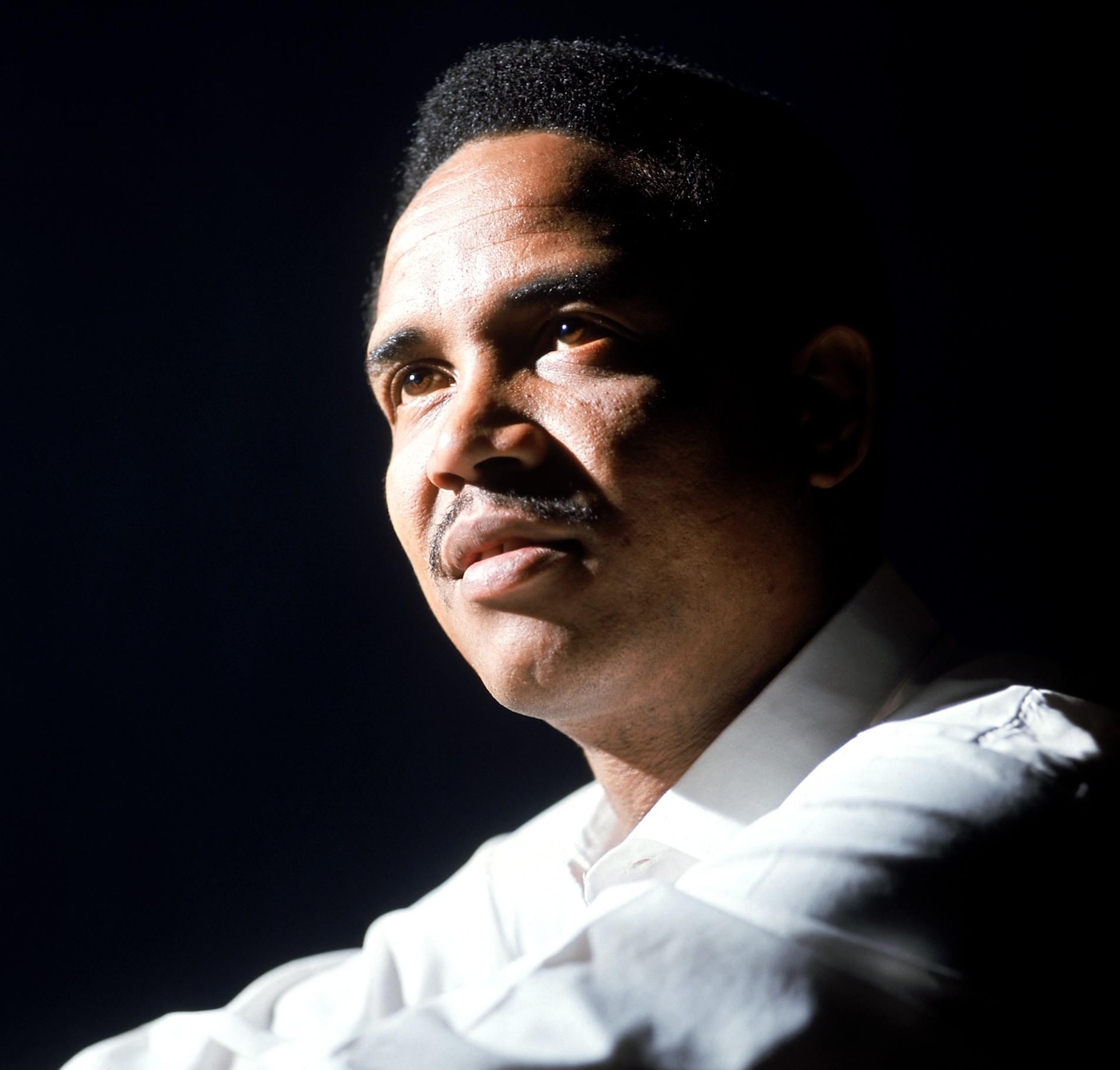
Nobody played cricket like Sobers. The bat appeared as an extension of his body. The ball, a bullet from his gun. His fingerspin was above average, his wristspin below. He caught catches for fun. His predatory ground fielding was worth the admission money alone. His movement was liquid, his speed electric, his smile warm, his hangovers legendary. He was cool. He was God. He was playing for West Indies in an hour and a half and Mum was trying on shoes.
We got there late, of course. We were guests in a box in the old Grand Stand. I was 15 years old and wore a tie and jacket to watch cricket, which felt ridiculous. The day before, Rohan Kanhai had made a hundred. I imitated his fabulous strokeplay in the small garden at home against my mate, who had a crack at bowling like Bob Willis. Kanhai drove square of the wicket with a big stride forward, his right knee often touching the ground and his bat spinning around his neck in its follow-through. He was brilliant. Bob's doppelganger on the patch of grass at home was a bit wild and not always easy to reach, but reach and smash I did, until we ran out of balls and Mum pulled the pin because the roses were lying wounded in their bed.
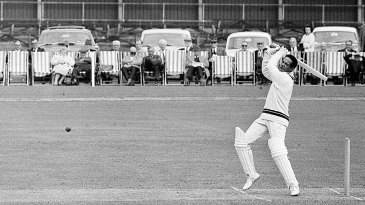
Back at Lord's the next morning Sobers began quietly, which was a worry. He had aged, and within a year had retired from the game altogether, but the arrival of Bernard Julien's boyish enthusiasm at the other end regenerated the great man and suddenly England's best were disappearing to all parts. Each of the five bowlers went for more than 100; Tony Greig for 180 but with three wickets. Bob took 4 for 118 in 35 overs. Thirty-five! Wouldn't be allowed now. The others? Geoff Arnold caned, Derek Underwood milked, Ray Illingworth mistreated.
Bow in the presence of greatness: at Lord's in 1973, Sobers, in the winter of his career, made 150 in a West Indies total of 652 for 8 declared
© PA Photos/Getty Images

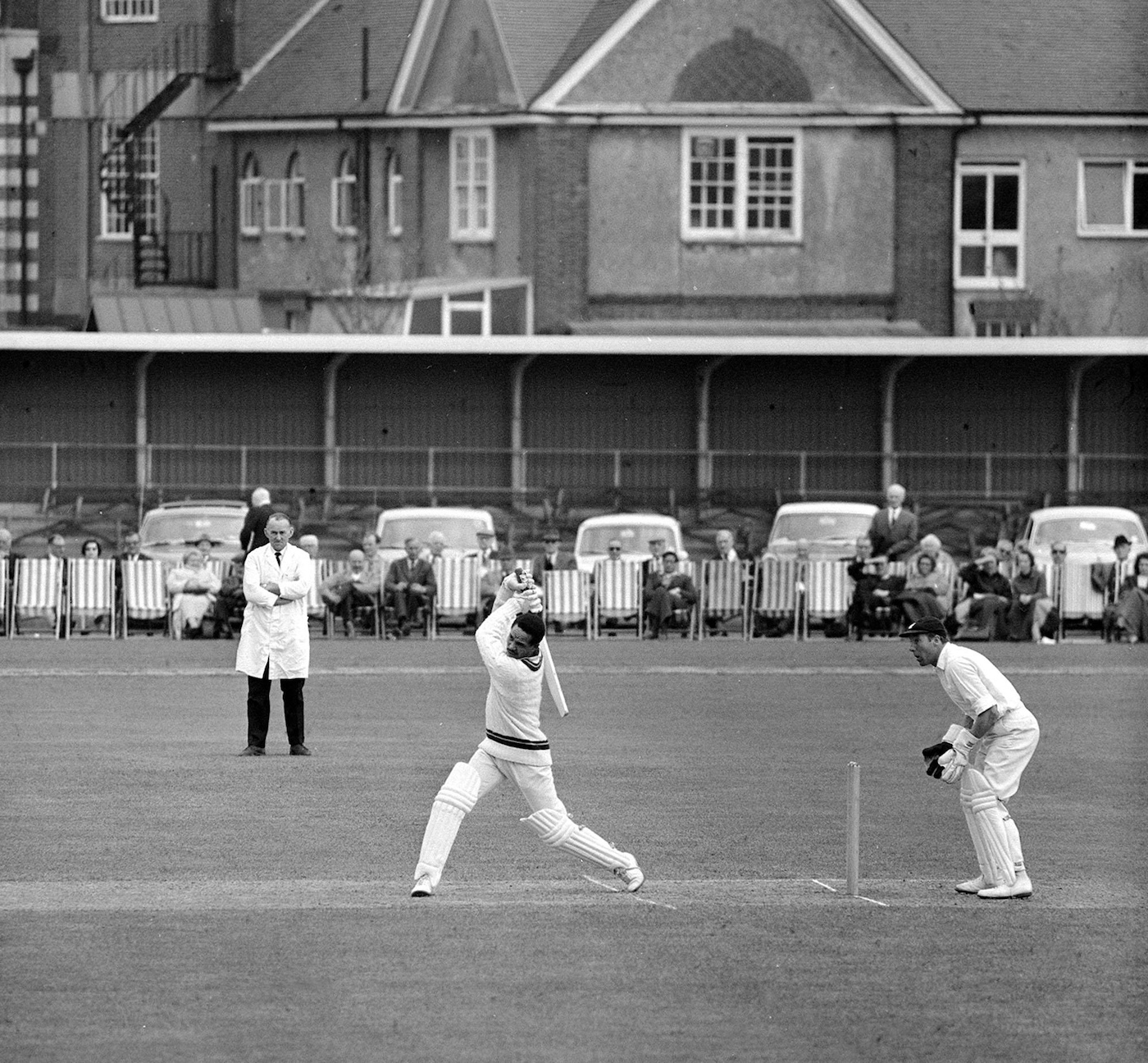
Sobers played these back-foot drives, often lifting himself off his feet with the bat speed. When the stroke had finished, the toe of that bat had completed more than a 360-degree arc and finished up by thumping into his backside. It was incredible to watch, like no one else. In the modern era, Brian Lara has been similar but without quite the sense of trying to hit the ball so damn hard.
I cannot tell you how thrilling it was to see this man in the flesh. It was an affirmation of cricket's uniquely different ways and myriad heroic achievements. For every Boycott forward-defensive, there was a Sobers back-foot drive. Both had their merit but one sent the pulse racing.
During that innings Sobers briefly retired with a stomach upset; the hangover I guess. But he came back and continued where he left off. He had every shot but not necessarily as applied to the line and length of the ball bowled. His basic principle was to play back to fast bowling and forward to slow. So sharp was his eye that he seemed to toy with the movement of the ball. The more it swung, the squarer he hit it. The more it spun, the nearer he got to it. His footwork was slick and uncomplicated, his head still and his body uber-relaxed.
There is a photograph in the Melbourne Cricket Ground media centre of Dennis Lillee in his follow-through, having released the ball, and Garry dead still in his stance at the crease, toe of the bat on the ground, and not a muscle in his body seems to have moved. Remarkable. The photograph is from the innings that Sir Donald Bradman called the best he ever saw: 254 for the Rest of the World against Australia at the MCG in 1972.
Bradman had no doubt that Sobers was the greatest cricketer. Unless you saw him, it is hard to understand why he should be rated by people of the time ahead of Jacques Kallis, for example, but he just was better than anyone else. Better than Keith Miller, Imran Khan, Ian Botham, Kapil Dev, Richard Hadlee, Ben Stokes, even Kallis. His cricket was instinctive, free-spirited, and pretty much always explosive. There was no format, no structure, nor restriction. This was just a guy who grew up on the beach and played like he was still there. No helmet, a tiny thigh pad (eventually), no worries. He played in England for Nottinghamshire, Australia for South Australia, and at home for Barbados. All who played with him revered him.
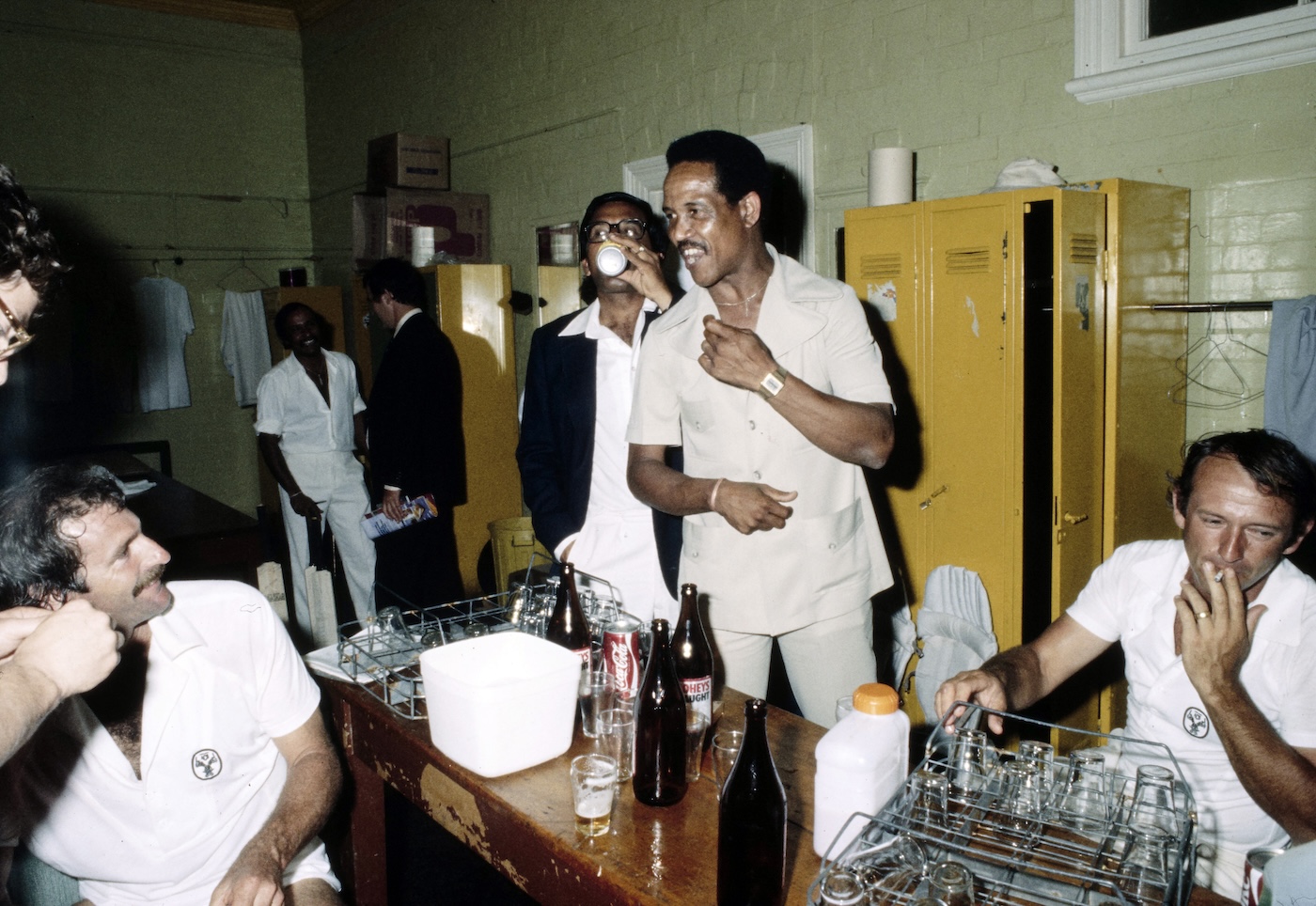
Sobers in an Australian dressing room with the antagonists of his day: Dennis Lillee, bottom left, and Doug Walters, first from right
© Hulton Archive/Getty Images
His debut for Nottinghamshire was on a cold spring morning in 1968. The Notts players were in the nets the day before the early-round Gillette Cup match and hadn't as yet met the new signing. Around midday, a slim, loose-limbed fellow strolled his way across the Trent Bridge outfield to meet his team-mates. He was wearing a sheepskin coat, collar turned up, exactly as his cricket shirts always were, to protect his neck from the chill wind. He shook all the hands and offered drinks in the evening. They gravitated to the pub, and to him, of course, but left before the witching hour to gather sleep and sweet dreams. Garry stayed a while longer.
He took three Lancashire wickets the next morning with his slippery left-arm swing and later walked to the wicket with the team cocking up the low run chase. He made 75 not out and saw them over the line. After being named Man of the Match, he wandered back into the dressing room, where he congratulated the lads: "Well played all you fellas, who we got in the next round?" The room was awestruck. The dreams were realised.
He could bowl very fast if he chose, but more often took a bit off it and swung the ball late. There is a revealing bit of footage somewhere of Boycott knocked over by a superb Sobers inswinger. In general, Geoffrey knew where his off stump was, but not against Garry.
He loved to field close to the bat and specifically to catch round the corner at backward short-leg. He was very good at it. He was picked first for West Indies as a left-arm spinner and to bat usefully down the order. Soon enough he broke Sir Len Hutton's world record score. He made 8032 runs at an average of almost 58 in Test cricket and is considered by many - Boycott and Ian Chappell among them - to be the greatest batter, never mind all-round cricketer, they have seen.
Nominated as one of Wisden's five cricketers of the 20th century - Jack Hobbs, Don Bradman, Viv Richards and Shane Warne were the others - he bestrode the stage with a majesty hitherto unseen.
In a memorable conversation with Garry and Tony Cozier on a warm Barbados night, I asked him at what point in the ball's journey from bowler's end to his own he needed to react to pick it up. "From the exact moment it leaves the hand. If the release is behind the bowler's head, it's pitched up; alongside his head, it's a good length; in front of his head, it's short. Simple." Yeah, right. And then he told us which half of the ball he would aim to hit, depending on angles and movement. Ye gods, said Tony, giggling away. Most of us see a blur a few yards away and do our best. Not Garry.
Trying to hit the ball so damn hard: Sobers with his trademark back-threatening follow-through, circa 1969
© PA Photos/Getty Images
He had his pet hates - mainly pad play and slow over rates - and loved cricketers who played with a dash. Ted Dexter was a close friend, Richie Benaud too, and Ian Chappell was an admired colleague in the South Australian team of the day. He is in everyone's greatest team, an honour given only Bradman among all others.
And now, a tad short of his 90th birthday, he has died. Around mid-afternoon yesterday, the newsfeeds said simply "Sir Garry Sobers has passed away, aged 89."
Unbearable. Thursday night in the Long Room at Lord's, Clive Lloyd led a dinner to raise money for research and screening of prostate cancer. With him to entertain the room from the stage were Viv Richards, Gordon Greenidge and Brian Lara. It was a wonderful and successful occasion. But Garry was missing and now will be missed for ever more. Those four truly great cricketers will mourn his passing with the saddest hearts. After all, it was Garry who gave the inspiration.
Lloyd played in that match at Lord's in 1973 and made some runs. Within a couple of years he was captain of West Indies and they were winning the World Cup with Richards and Greenidge in the team. It is a short life and yet seems an age ago that Mum took me to Lord's. She's no longer with us either. And oh, how she loved Garry Sobers too.
It was the Test of the bomb scare, when Dickie Bird sat on the covers, guarding that pitch with his life as thousands swarmed onto the field. It was the Test when Geoffrey was caught on the square-leg boundary in the last over of the day, hooking a Keith Boyce bouncer. (Roobish battin' is that!)
I was there for all that too. Same mother, same box in the Grand Stand, same host, same jacket and tie. For all the extraordinary memories of my first Test match live, none come close to Sir Garfield Sobers at the crease, making art out of cricket and turning all of us who revelled in his genius weak at the knees. What a man.
Mark Nicholas, the former Hampshire captain, is a TV and radio presenter and commentator
© Jiostar India Pvt Ltd.